Abstract
Background
Breathwork practices include traditional yogic pranayama and modern therapeutic protocols. Pranayama is the practice of manipulating breathing, which serves as a dynamic link between the mind and body, and is well known in traditional Indian medicine. (Podder et al., 2025) Autonomic modulation is altered by yoga breathing patterns, which results in modifications to cardiovascular functioning that are sustained and continuous, as well as central and autonomic processes. Despite exponentially increasing public attention, (Köteles, 2025) empirical studies often show contradictory findings due to diverse methodologies. A comprehensive synthesis of evidence across traditional and contemporary breathwork modalities is needed to clarify mechanisms, clinical applications, and comparative effectiveness.
Methods
This comprehensive literature review screened 138 papers; 62 are cited in this review, examining breathwork techniques across four major domains: traditional yogic pranayama (including Nadi Shodhana, Kapalabhati, Bhastrika, Ujjayi, and related practices), mindfulness-based breathing approaches, clinical respiratory techniques (diaphragmatic breathing, box breathing, coherent breathing), and contemporary experiential methods (Holotropic breathwork, Wim Hof Method, Buteyko technique). A systematic search of MEDLINE and SCOPUS databases was conducted using keywords related to breathing techniques and their psychophysiological outcomes, focusing on cardio-respiratory and central nervous system effects.
Results
This review establishes a comprehensive taxonomy of breathwork techniques spanning traditional and contemporary practices. Various Pranayama techniques differentially influence the parasympathetic and sympathetic nervous systems, with slow-paced practices predominantly enhancing parasympathetic activity while rapid breathing exercises demonstrate heterogeneous autonomic effects. (Bernardi et al., 2002) Slow breathing techniques promote autonomic changes increasing Heart Rate Variability and Respiratory Sinus Arrhythmia paralleled by Central Nervous System activity modifications, with EEG studies showing an increase in alpha and a decrease in theta power. (Balban et al., 2023) Across diverse techniques, breathwork interventions produced consistent improvements in mood, anxiety, and stress regulation, with slow-paced practices predominantly enhancing parasympathetic tone and HRV, while rapid techniques demonstrated more heterogeneous autonomic effects. (Balban et al., 2023) (Bernardi et al., 2002) Clinical applications demonstrate effectiveness across multiple conditions: (Telles et al., 2021a) Pranayama practices significantly improve cardiovascular variables (blood pressure, heart rate variability, exercise tolerance), respiratory indices (vital capacity, respiratory rate), cognitive functions, and mental health parameters including stress. (Stutz & Schreiber, 2017) Clear indications of efficacy were found for asthma, chronic back pain, cardiac dysfunctions, pain, and various psychological parameters, particularly anxiety. Comparative analysis reveals technique-specific mechanisms, with (Shannahoff-Khalsa, 1991) unilateral nostril yoga breathing practices influencing blood pressure in different ways, suggesting possible therapeutic applications.
Conclusions
The evidence supports an integrative "Mindful Breath" framework unifying diverse breathwork techniques under shared principles of conscious awareness and voluntary regulation of breathing. (Perciavalle et al., 2017) Cardio-respiratory coherence represents an innovative technique for the recovery of psychophysical well-being, integrating control of heart rate variability with mindful breathing at specific frequencies and breathing patterns. (Telles et al., 1994) Slow, nasal, diaphragmatic breathing significantly improves vagal tone, HRV, parasympathetic activity, and emotional control, while reducing cortisol, anxiety, stress, and PTSD. Clinical implications include integration into protocols for stress-related disorders, cardiovascular conditions, respiratory illness, and performance enhancement. Future research should establish optimal guidelines for incorporating breathwork into contemporary health strategies, investigate personalized protocols, and examine long-term effects on health outcomes across diverse populations.
Introduction
Breathwork—the intentional regulation of breathing patterns—represents one of humanity's oldest and most widely distributed therapeutic practices. In the Chāndogya Upaniṣad, the ancient ṛṣis settled a dispute among the faculties — sight, hearing, mind, and speech — by the simplest of proofs: when prana, the breath, prepared to depart the body, every other faculty withered in sympathy. Nothing else could make that claim. That text, composed roughly three thousand years ago, named breath not merely a function but the chief among the vital forces — a judgement that would echo through every major yoga lineage and, eventually, through modern respiratory physiology. Pranayama, the practice of manipulating breathing, is well known in traditional Indian medicine and serves as a dynamic link between the mind and body (Podder et al., 2025). Yoga originated in India thousands of years ago, with Pranayama being a key component (Dhungel, 2008). The ancient yoga masters realized there was a close association between the functioning of the breath and the mind (Telles & Singh, 2013). Prana Vidya, an ancient yogic science rooted in Vedic, Tantric, and Ayurvedic traditions, emphasizes the cultivation, regulation, and application of Prana—the vital life force considered essential for sustaining physiological, psychological, and spiritual health (Sharma et al., 2024). Beyond the Indian subcontinent, breathing practices have a long and varied history in many Eastern traditions. Breathing has been recognized as a vital function across cultures and history (Zaccaro et al., 2018).
The twentieth and twenty-first centuries witnessed a gradual migration of these practices into Western clinical and scientific contexts. Yoga as both a physical activity and a spiritual practice has become an established part of Western culture (De Michelis, 2004). In recent years, the interest in postural forms of yoga and the philosophy from which they spring has developed into a multi-billion dollar industry (De Michelis, 2004). The Western world recognizes the importance of Pranayama and recommends it to their people (Dhungel, 2008). Holotropic breathwork has been studied in the context of adolescent rehabilitation (Anon., 2023). Western methods of breathing therapy according to Middendorf, Richter, Dürckheim/Graubner, Papworth, van Dixhoorn and Buteyko have been investigated for their efficacy (Stutz & Schreiber, 2017).
Contemporary healthcare, psychology, and wellness sectors have increasingly embraced breathwork as a complementary intervention. Breathing practices are growing more prominent among scientists as a means to improve physical and mental health through non-pharmacological ways (Podder et al., 2025). In recent years, breathwork has gained public and scientific recognition as a promising approach for enhancing psychological health (Siebieszuk et al., 2025). The clinical utility of breathwork interventions is supported by the well-established link between breathing and anxiety disorders, as well as evidence that targeting respiratory abnormalities through breathwork can directly improve physiological, psychological, and behavioral outcomes (Hopper et al., 2022). Pranayama and Yoga have proven their utility in various diseases as noted in studies done in various medical centers (Dhungel, 2008). The beneficial effects of yoga breathing practices demonstrate the importance of these safe and cost effective non-pharmacological interventions for general health as well as for prevention and management of various diseases (Telles et al., 2013).
Scientific interest in breathwork has expanded rapidly, accompanied by a growing evidence base. Scientific studies investigating the mental health effects of breathwork are only just emerging and the underlying physiological and psychological mechanisms are largely unknown (Fincham et al., 2023a). Breathing exercises have been reported to have positive physiological effects on the body (Lopes et al., 2021). Accumulating evidence suggests breathwork may serve as both a preventive and adjunctive therapy for chronic stress, anxiety, and depression, given its potential to target key risk factors and produce clinically relevant outcomes (Siebieszuk et al., 2025). Breathing exercises have a modest but significant effect on decreasing systolic blood pressure and diastolic blood pressure (Lopes et al., 2021). A range of breathwork interventions yielded significant improvements in anxiety symptoms in patients clinically diagnosed with anxiety disorders (Hopper et al., 2022). Altered states of consciousness evoked by breathwork were comparable to those produced by psychedelics, and their depth predicted psychological and physiological follow-on effects, including improved well-being and a reduction of depressive symptoms (Fincham et al., 2023a).
Despite this momentum, the field remains fragmented due to the diversity of breathing techniques (Siebieszuk et al., 2025). Contemporary breathwork research is limited by inconsistent study quality and methodological heterogeneity (Siebieszuk et al., 2025). The physiological mechanisms by which these practices modulate the human nervous system still need to be unveiled (Jerath et al., 2006). Recent findings have challenged several foundational concepts traditionally believed to underlie the therapeutic effects of breathwork (Siebieszuk et al., 2025). Moreover, while subjective outcomes are often promising, objective biomarkers require further validation through rigorous, large-scale randomized controlled trials (Sharma et al., 2024).
This comprehensive review synthesizes the diverse landscape of breathwork techniques, their underlying mechanisms, and their clinical applications. By integrating historical traditions with contemporary scientific evidence, we aim to provide a unified framework for understanding breathwork's therapeutic potential. The review examines the theoretical foundations of breathing physiology and neurological regulation, presents a comprehensive taxonomy of breathwork techniques spanning yogic, clinical, and contemporary Western approaches, evaluates the evidence base across multiple health domains, and identifies critical gaps to guide future research. Through this synthesis, we seek to advance the field's scientific rigor while honoring the ancient wisdom that first recognized the profound connection between breath, body, and mind.
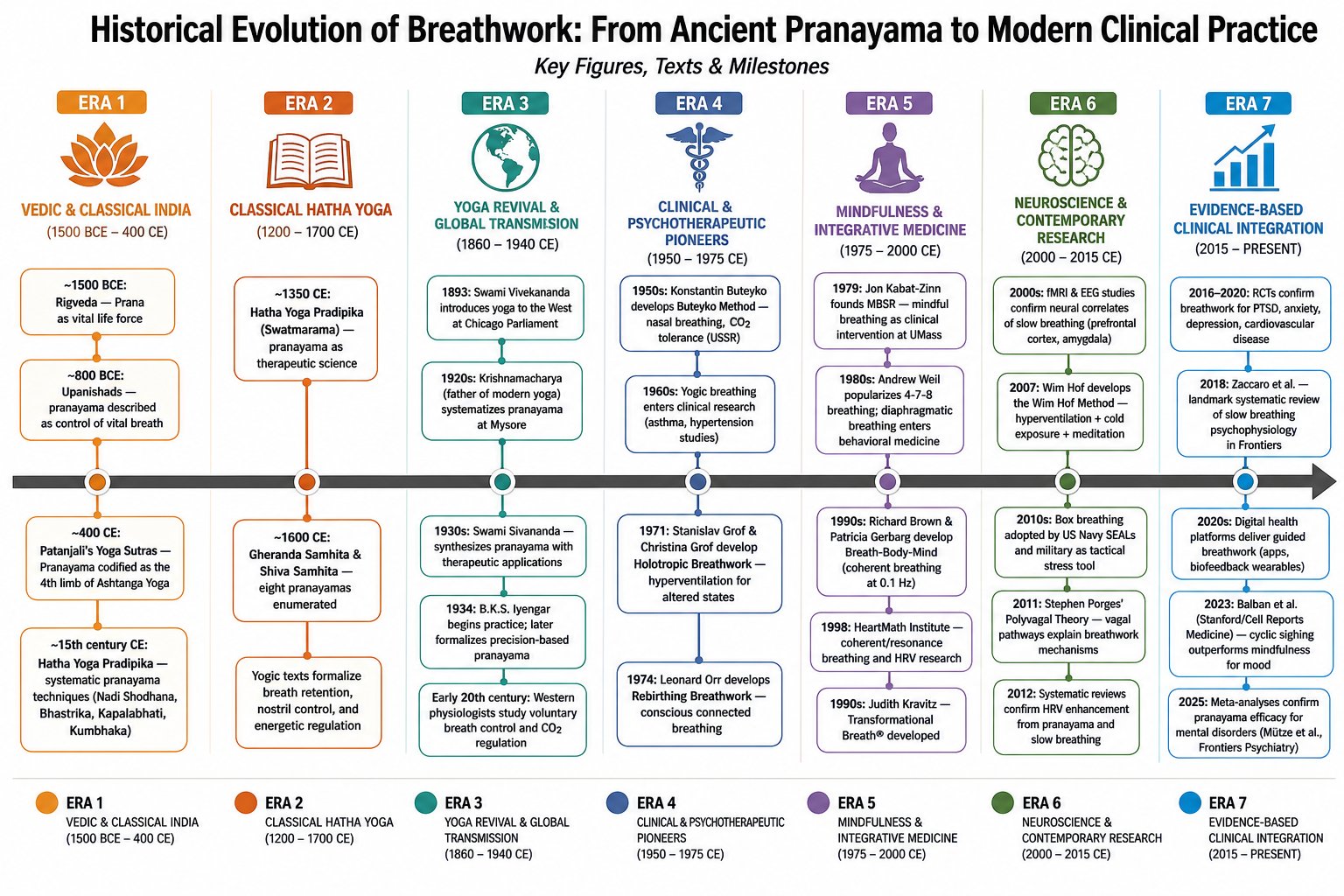
Figure 1. Historical Evolution of Breathwork: From Ancient Pranayama to Modern Clinical Practice. Seven eras spanning 1500 BCE to the present, illustrating key texts, authors, and milestones in the development of breathwork as a therapeutic science. BCE = Before Common Era; CE = Common Era; MBSR = Mindfulness-Based Stress Reduction; HRV = Heart Rate Variability; RCT = Randomized Controlled Trial.
Figure 1. Historical Evolution of Breathwork: From Ancient Pranayama to Modern Clinical Practice. Seven eras spanning 1500 BCE to the present, illustrating key texts, authors, and milestones in the development of breathwork as a therapeutic science. BCE = Before Common Era; CE = Common Era; MBSR = Mindfulness-Based Stress Reduction; HRV = Heart Rate Variability; RCT = Randomized Controlled Trial.
Theoretical Foundations
The therapeutic effects of breathwork rest on a foundation of interconnected physiological and neurological mechanisms. Understanding these mechanisms is essential for explaining how voluntary manipulation of breathing patterns can produce measurable changes in autonomic function, emotional regulation, and overall health.
Respiratory Physiology and Control
Breathing is a life-sustaining bodily function, facilitating oxygenation and carbon dioxide disposal (Balban et al., 2023). The pattern and depth of breathing have direct physiological impact on oxygenation level, heart rate, ventilation, and blood pressure (Balban et al., 2023). Slow breathing at a rate of six breaths per minute reduces chemoreceptor reflex response to hypercapnia and hypoxia compared with spontaneous respiration at 15 breaths per minute (Balban et al., 2023). Controlled slow breathing at six respirations per minute reduces the chemoreflex response to hypoxia and hypercapnia and increases baroreflex sensitivity in healthy individuals (Podder et al., 2025).
The diaphragm plays a central role in respiratory mechanics. Respiratory sinus arrhythmia relates to the effects of breathing on intrathoracic pressure, diaphragmatic movement, heart volume/blood flow rates, and compensatory shifts in vagal activation (Balban et al., 2023). Diaphragmatic breathing activates the parasympathetic system, decreasing respiratory rate and increasing heart rate variability at rest (Colzato & Kibele, 2017).
A reduction in end-tidal CO2 pressure due to deliberate hyperventilation is instrumental in catalyzing altered states of consciousness during breathwork (Fincham et al., 2023a). The main aim of yoga and pranayama in asthma is to synchronize and control breathing, thus decreasing hyperventilation (Singh, 1998).
Autonomic Nervous System Regulation
Cardiovascular functions are controlled by neural factors, temperature, hormones, and other variables; of these, neural factors primarily concern the autonomic nervous system, which plays a major role in maintaining and regulating cardiac functions, e.g., blood pressure and heart rate (Sharma et al., 2013). Autonomic modulation is altered by yoga breathing patterns, which results in modifications to cardiovascular functioning that are sustained and continuous, as well as central and autonomic processes, i.e., mechanical and hemodynamic (Podder et al., 2025).
Controlled breathing directly influences respiratory rate, which can cause more immediate physiological and psychological calming effects by increasing vagal tone during slow expiration (Balban et al., 2023). Slow breathing increases parasympathetic activity while decreasing sympathetic activity (Zaccaro et al., 2018). A longer exhalation phase during slow-paced breathing provokes a longer activation of the parasympathetic nervous system, reflected in higher Cardial Vagus Activity (Zaccaro et al., 2018). Regular breathing exercises enhance vagal activity, leading to a substantial decrease in basal heart rate (demonstrated after three months of practice) and reducing sympathetic activity and baroreflex sensitivity, which lowers blood pressure and heart rate (Podder et al., 2025).
High Ventilation Breathwork can volitionally alter autonomic activity, specifically disinhibiting sympathetic tone and increasing cardiac output through central command and cortically mediated sympathetic drive (Fincham et al., 2023b). This leads to elevated heart rate, altered blood pressure, and increased electrodermal activity (Fincham et al., 2023b).
Slow type of yogic breathing technique was reported to produce beneficial effect on cardiovascular and autonomic variables while fast breathing techniques do not produce such effects (Sharma et al., 2013).
Vagus Nerve and Vagal Tone
Breathing regulation techniques may influence anxiety through vagal activation (Zaccaro et al., 2018). While Stephen Porges' Polyvagal Theory has been highly influential in framing how breathing modulates autonomic states, Grossman (2023) has raised important methodological critiques questioning several of its core premises, including the claimed selective functional separation of vagal pathways. Where possible, this review uses the more operationally precise language of vagal tone, respiratory sinus arrhythmia (RSA), and heart rate variability (HRV) as measurable biomarkers, rather than relying on the broader Polyvagal framework.
Heart Rate Variability as a Biomarker
Slow breathing techniques augment parasympathetic activity by interacting with the cardiorespiratory system via increased Heart Rate Variability (HRV) and Respiratory Sinus Arrhythmia (RSA), impacting emotional regulation and well-being (Hopper et al., 2022). HRV-biofeedback specifically maximizes HRV and synchronizes pulse harmonics of blood flow with heart rhythms when paced at 0.1 Hz (six breaths per minute) (Hopper et al., 2022). In patients with panic disorder, HRV-BF and capnometry-guided respiratory training showed positive outcomes, with marked reductions in all measures occurring in the capnometry-assisted respiratory training group (Hopper et al., 2022).
Diaphragmatic breathing and conscious breathing activate the parasympathetic system, decreasing Respiratory Rate and increasing Heart Rate Variability at rest (Colzato & Kibele, 2017). The frequency of heart rate and respiration significantly influence brain function, emotional processes, and cognitive functions such as attention, perception, memory, and problem solving (Colzato & Kibele, 2017).
Respiratory Sinus Arrhythmia
Inhales increase heart rate and exhales decrease heart rate via respiratory sinus arrhythmia (Balban et al., 2023). Respiratory sinus arrhythmia is a normal phenomenon that relates to the effects of breathing on intrathoracic pressure, diaphragmatic movement, heart volume/blood flow rates, and compensatory shifts in vagal activation (Balban et al., 2023). Slow breathing brings better outcomes than fast breathing in improving the autonomic nervous system over three months (Zaccaro et al., 2018). Diaphragmatic breathing increases cardiorespiratory coherence due to the respiratory sinus arrhythmia mechanism (Colzato & Kibele, 2017).
Breath-Hold Physiology and the Diving Context
A distinct but physiologically adjacent domain concerns voluntary breath-hold, which underlies both competitive freediving and traditional free-diving practices. During a maximal breath-hold, arterial oxygen saturation falls progressively as metabolic consumption continues against a fixed oxygen reserve, while CO₂ accumulates and eventually triggers an involuntary urge to breathe via carotid and central chemoreceptors. Lindholm and Lundgren (2009) (Lindholm & Lundgren, 2009) provided a comprehensive review of breath-hold physiology, detailing the role of the spleen's oxygen-storing contribution, the cardiovascular dive reflex (bradycardia, peripheral vasoconstriction), and the dynamics of shallow-water blackout — hypoxia-induced loss of consciousness before the CO₂ breakpoint is reached. Crucially, prior hyperventilation suppresses the CO₂ drive without meaningfully raising O₂ reserves, removing the physiological warning signal and dramatically increasing blackout risk. This mechanism explains why hyperventilation-based breathwork practices must never be performed in or near water.
The mammalian dive reflex coordinates three simultaneous responses upon face immersion in cold water: cardiac slowing (bradycardia), peripheral vasoconstriction redirecting blood centrally, and splenic contraction releasing stored oxygen-rich erythrocytes. Schagatay and colleagues documented splenic contraction within three to five apneas, with circulating haemoglobin rising by 2–4%; elite divers exhibit larger spleens consistent with a training effect (Lindholm & Lundgren, 2009). The genetic dimension of this adaptation was revealed by Ilardo et al. (2018) (Ilardo et al., 2018), who found that Bajau sea nomads of Southeast Asia — who spend up to 60% of their working day underwater — carry a variant in a thyroid-pathway gene associated with spleens approximately 50% larger than those of neighbouring farming populations, constituting the first documented genetic adaptation to diving in humans. Jacques Mayol's heart rate fell from 60 to 27 beats per minute on his way to 101 m — a physiologically coherent extreme of the trained dive reflex. At the arterial level, Willie et al. (2015) (Willie et al., 2015) measured PaO₂ at 23–37 mmHg in elite freedivers at the end of a maximal apnea — substantially below the conventional consciousness threshold in non-adapted individuals — while cerebral blood flow had nearly doubled, sustaining cognition through preferential redistribution of residual oxygen. Dujic et al. (2009) (Dujic et al., 2009) demonstrated that the involuntary diaphragmatic contractions of the struggle phase are not merely warning signals: they actively improve cerebral oxygenation by functioning as an auxiliary respiratory pump, a finding with direct implications for freediving training methodology.
For breath-hold divers, techniques that build CO₂ tolerance — such as Buteyko-style reduced breathing and paced nasal breathing — offer a safer preparatory pathway by training the practitioner to remain calm at elevated CO₂ levels, supporting longer and safer breath-holds without the lethal risk of hyperventilatory pre-loading. In the scuba context, a complementary physiological boundary applies. Boyle's law dictates that gas volume is inversely proportional to ambient pressure; gas taken from a regulator at depth expands on ascent. With an open airway, expanding gas exits freely. With a closed glottis — through a held breath, clenched throat, or swallowed cough — overpressure can rupture alveolar tissue from as little as one to two metres of depth, releasing gas into the pleural space, mediastinum, or cerebral circulation as arterial gas embolism. The critical distinction for practitioners is therefore not between breathing and brief pauses, but between open-glottis natural pauses (physiologically safe; gas exits freely) and closed-glottis holds (hazardous under ambient pressure changes). This boundary is the physiological foundation of the primary scuba breathing rule: exhale or breathe continuously on ascent; never trap gas behind a closed glottis.
Neurological Foundations
Research has shown beneficial effects of yoga breathing practices or pranayamas on neurocognitive, metabolic, respiratory, and autonomic functions (Telles et al., 2013). Mind-body exercises have been associated with neuroplasticity and brain changes (Colzato & Kibele, 2017).
Nasal breathing synchronizes electrical activity in the olfactory cortex as well as amygdala and hippocampus, while mouth breathing does not (Balban et al., 2023). The mere act of inhaling has been shown to increase alertness levels and learning in humans (Balban et al., 2023). Different emotional and cognitive states alter the depth and frequency of breathing, which likewise impacts emotional state, in part by regulation of carbon dioxide levels (Balban et al., 2023).
High Ventilation Breathwork is associated with extraordinary changes in subjective experience, as well as with profound effects on central and autonomic nervous systems functions through modulation of neurometabolic parameters and interoceptive sensory systems (Fincham et al., 2023b).
Cardiovascular and Hemodynamic Effects
Heart rate and blood pressure decrease with slow breath in patients with essential hypertension compared with higher-frequency breathing (Balban et al., 2023). Breathing exercises have a modest but significant effect on decreasing systolic blood pressure (−7.06 [-10.20, −3.92], P = <0.01) and diastolic blood pressure (−3.43 [-4.89, −1.97], P = <0.01) mm Hg (Lopes et al., 2021). Breathing exercises were also observed to cause a significant decrease in heart rate (−2.41 [-4.53, −0.30], P = 0.03) beats/minute (Lopes et al., 2021). While acute exposure to slow breathing transiently increases heart rate and blood pressure, chronic practice over weeks to months lowers resting blood pressure (Podder et al., 2025).
Pranayama alters the heart's output and the blood flow to the kidneys and liver, which in turn controls blood pressure (Podder et al., 2025).
Six Universal Levers of Breathwork
Across all traditions and clinical modalities, the practitioner ultimately manipulates one or more of six fundamental parameters. Understanding these levers provides a common language that bridges ancient pranayama, military box breathing, clinical HRV biofeedback, and competitive freediving preparation:
1. Rate — breaths per minute (the most researched variable; 6 breaths/min is optimal for HRV entrainment).
2. Ratio — the relative duration of inhale, hold, exhale, and post-exhale pause (e.g., 1:4:2 in classical pranayama; 1:1:1:1 in box breathing).
3. Route — nasal vs. oral; unilateral vs. bilateral (nasal breathing engages turbinate warming and olfactory-cortex synchronisation that mouth breathing bypasses).
4. Volume and muscle — tidal volume and the balance between diaphragmatic, intercostal, and accessory muscle recruitment (diaphragmatic primacy defines 'slow deep breathing').
5. Retention — voluntary apnoea, whether post-inhale (kumbhaka) or post-exhale (producing hypercapnic drive) and the resulting gas-exchange shifts.
6. Awareness — the quality of interoceptive attention brought to the act: passive observation (mindfulness-based) vs. effortful control vs. open monitoring, which modulates cortical and limbic engagement independently of respiratory mechanics.
Most technique-specific differences in physiological outcome can be traced to how each method weights these six levers. The Mindful Breath framework proposed in this review uses these levers as the common substrate for comparing and integrating techniques.
Integration of Mechanisms
The physiological mechanisms by which breathwork practices modulate the human nervous system still need to be unveiled (Jerath et al., 2006). Different types of Prāṇāyāma techniques produce varying effects on cardiovascular and autonomic variables, with slow yogic breathing techniques reported to produce beneficial effects, while fast breathing techniques do not (Sharma et al., 2013). However, there is a lack of consistency in the results for specific nostril yogic breathing techniques, and the mechanisms behind these observed effects are not fully understood (Sharma et al., 2013).
Most breathwork techniques share core neurophysiological mechanisms that benefit well-being, regardless of the theoretical differences between specific techniques (Siebieszuk et al., 2025). These mechanisms involve long-term neurobiological changes associated with improved mental health, influenced by breathing variables such as pace, ratio, breathing route, attention, and biofeedback (Siebieszuk et al., 2025).
Comprehensive Taxonomy of Breathwork Techniques
The landscape of breathwork encompasses a diverse array of techniques spanning ancient traditions and contemporary innovations. This section provides a systematic categorization of major breathwork approaches, organized by origin and tradition, with descriptions of their core mechanisms, breathing patterns, primary applications, and evidence base.
Yogic Pranayama Techniques
Pranayama, the practice of manipulating breathing, is well known in traditional Indian medicine and serves as a dynamic link between the mind and body (Sharma et al., 2024). Pranayama is a key component of traditional yogic practices (Sharma et al., 2024). Traditional yogic practices emphasize the connection between breath and mind (Sharma et al., 2024). Foundational techniques such as Pranayama, Mudras, Bandhas, meditation, and mantra-based therapies form the basis of many yogic healing systems (Sharma et al., 2024).
Nadi Shodhana (Alternate Nostril Breathing)
Nadi Shodhana, also known as alternate nostril breathing, is a traditional yogic practice involving sequential breathing through alternating nostrils. In a study of 23 yoga practitioners, breath rate decreased by 55.3% during alternate-nostril breathing compared to baseline (Eastman, 2007). The depth of breathing increased by 141.0% during alternate-nostril breathing (Eastman, 2007). The inspiration:expiration ratio decreased by 39.0% during alternate-nostril breathing (Eastman, 2007). Alternate nostril breathing significantly increased spinal energy levels across multiple spinal regions (Kumar et al., 2020). The changes in breathing support previous reports of alternate-nostril breathing as calming, with increased vagus nerve activity (Eastman, 2007).
Kapalabhati (Skull Shining Breath)
Kapalabhati pranayama showed variable effects, with significant decreases observed in some spinal regions (Kumar et al., 2020). In a 6-week interventional study with 60 participants, four types of pranayama techniques—Anulom Vilom, Bhramari, Kapalabhati, and Nadi Shodhana—were assessed through psychological and physiological evaluations (Telles et al., 2019a). It was shown that stress markers significantly decreased while mood, concentration, and sleep improved (Telles et al., 2019a).
Bhastrika (Bellows Breath)
Bhastrika, also known as bellows yoga breathing, involves forceful breathing movements. The depth of breathing increased by 136.0% during bellows breathing (Eastman, 2007). The changes in breathing support previous reports of bellows breathing as calming to a lesser extent, with increased vagus nerve activity (Eastman, 2007).
Bhramari (Bee Breath)
Bhramari, also known as bumblebee yoga breathing, involves producing a humming sound during exhalation. Breath rate decreased by 75.3% during bumblebee breathing compared to baseline (Eastman, 2007). The depth of breathing increased by 307% during bumblebee breathing (Eastman, 2007). The inspiration:expiration ratio decreased by 74.3% during bumblebee breathing (Eastman, 2007). The changes in breathing support previous reports of bumblebee breathing as calming, with increased vagus nerve activity (Eastman, 2007).
High-Frequency Yoga Breathing
High-frequency yoga breathing involves rapid breathing cycles. Breath rate increased by 373.3% during high-frequency breathing compared to baseline (Eastman, 2007). The depth of breathing increased by 275.0% during high-frequency breathing (Eastman, 2007). The inspiration:expiration ratio increased by 177.0% during high-frequency breathing (Eastman, 2007). The changes in breathing support previous reports of high-frequency breathing as being activating while enhancing attention (Eastman, 2007).
Sitali and Sitkari (Cooling Breaths)
Sitali, also known as hissing yoga breathing, involves breathing through a rolled tongue or pursed lips. Breath rate decreased by 63.0% during hissing breathing compared to baseline (Eastman, 2007). The depth of breathing increased by 95.0% during hissing breathing (Eastman, 2007). The changes in breathing support previous reports of hissing breathing as calming to a lesser extent, with increased vagus nerve activity (Eastman, 2007).
Kumbhaka (Breath Retention)
Kumbhaka refers to breath retention practices in yogic traditions.
Sudarshan Kriya
Sudarshan Kriya is a rhythmic breathing technique. Yoga breathing (pranayama) can rapidly bring the mind to the present moment and reduce stress (Brown & Gerbarg, 2009). By inducing stress resilience, breath work enables us to rapidly and compassionately relieve many forms of suffering (Brown & Gerbarg, 2009).
Breath Awareness
In a study of 23 yoga practitioners, breath awareness was practiced for 3 minutes (Eastman, 2007). There were no changes during breath awareness (Eastman, 2007).
Mindfulness-Based Breathing
Mindfulness breathing meditation has been investigated for its effects on stress and cognitive functions. In a study of fifty Malaysian adults aged between 18 and 34 years, participants underwent a four-week intervention consisting of 30 min of online classes once a week and 10 min of daily meditation self-practice (Ng et al., 2021). The results showed significant improvement in cognitive flexibility and reduction in perceived stress levels after the intervention in the mindfulness breathing meditation group compared to the active control group (Ng et al., 2021). Participants in the mindfulness breathing meditation group self-reported this intervention as highly acceptable and effective in promoting stress reduction, emotional regulation, and attentional control (Ng et al., 2021). However, no significant improvement was found in attention, inhibitory control, and HRV after the intervention, suggesting that the mindfulness breathing meditation had no effect on these variables (Ng et al., 2021).
Research into mindfulness-based psychotherapy and yoga breathing-based interventions with comparable features to breathwork are examined (Banushi et al., 2023). Findings suggest qualified support for the key theoretical assumptions of a three component breathwork model, referred to as Integrative Breathwork Therapy (IBT), and its possible utility in the treatment of anxiety and depression (Banushi et al., 2023).
Clinical/Therapeutic Respiratory Techniques
Diaphragmatic/Abdominal Breathing
The main aim of this pilot study was to examine the effect of diaphragmatic breathing exercise on urinary incontinence treatment (Park et al., 2021). The secondary purpose was to compare the effect of pelvic floor muscle exercises and diaphragmatic breathing exercises on urinary incontinence women (Park et al., 2021).
Pursed-Lip Breathing
In adults with serious respiratory illness, breathlessness is prevalent and associated with reduced health-related quality of life (Bhattacharya et al., 2020). The aim of this review was to assess the impact of breathing techniques on breathlessness in adults with serious respiratory illness (Bhattacharya et al., 2020).
Contemporary Western Techniques
Box Breathing/Tactical Breathing
Breathing techniques, or breathwork, is a complementary modality that encourages controlled intentional breathing designed to interrupt the cycle of stress and promote the relaxation response (Brown, 2022). Breathwork is a safe, practical, and easily accessible modality for use in any healthcare setting, daily practice, or during a sudden onset of acute psychological distress (Brown, 2022). Decreased anxiety, depression, and improved sleep result when healthcare providers practice breathwork to alleviate the effects of stress (Brown, 2022).
Coherent/Resonance Breathing
Slow breathing at a rate of six breaths per minute reduces chemoreceptor reflex response to hypercapnia and hypoxia compared with spontaneous respiration at 15 breaths per minute (Bernardi et al., 2002). Slow breathing techniques promote autonomic changes increasing Heart Rate Variability and Respiratory Sinus Arrhythmia paralleled by Central Nervous System (CNS) activity modifications (Bernardi et al., 2002). Psychological/behavioral outputs related to the abovementioned changes are increased comfort, relaxation, pleasantness, vigor and alertness, and reduced symptoms of arousal, anxiety, depression, anger, and confusion (Bernardi et al., 2002). Slow breathing techniques act enhancing autonomic, cerebral and psychological flexibility in a scenario of mutual interactions: we found evidence of links between parasympathetic activity (increased HRV and LF power), CNS activities (increased EEG alpha power and decreased EEG theta power) related to emotional control and psychological well-being in healthy subjects (Bernardi et al., 2002).
Slow deep breathing (SDB) significantly increased spinal energy levels across multiple spinal regions (Kumar et al., 2020).
Buteyko Method
The Buteyko method was developed by Soviet physician Konstantin Buteyko, who proposed that chronic hyperventilation underlies multiple diseases and that the corrective is to breathe less — through the nose, with deliberate acceptance of mild air hunger. The Control Pause — the number of seconds from a normal exhale to the first clear urge to breathe — serves as the primary assessment instrument, popularised by Patrick McKeown as the Body Oxygen Level Test (BOLT) score with a 40-second target. McKeown's broader contribution — reintroducing nasal breathing at rest and during light exercise as a correctable habit — has achieved wide clinical and public acceptance (Rhee et al., 2025). The main aim of yoga and pranayama in asthma is to synchronize and control breathing, thereby reducing hyperventilation (Singh, 1998); the Buteyko method pursues the same goal through a separate tradition. Clinical trials confirm reduced asthma symptoms and reliever use without improvement in spirometric lung function, at low certainty of evidence (Thomas et al., 2003). The claim that BOLT score predicts athletic performance has not been independently validated: a 2024 study in Frontiers in Physiology found no association between BOLT and performance in highly trained athletes. The BOLT score is most appropriately treated as a personal daily mirror of CO₂ tolerance status — informative for self-monitoring but not a metric for authorising intensity or depth of water entry.
Experiential/Transformational Breathwork
Holotropic Breathwork
Holotropic breathwork has been studied in the context of adolescent rehabilitation (Anon., 2023). The narratives of the participants and the institution's workers show positive changes in emotional regulation and coping, better communication, and a reduction in stress and anxiety or the desire to use, as a result of both experimental treatments (Anon., 2023).
A reduction in end-tidal CO2 pressure due to deliberate hyperventilation is instrumental in catalyzing altered states of consciousness during breathwork (Fincham et al., 2023a). ASCs evoked by breathwork were comparable to those produced by psychedelics, and their depth predicted psychological and physiological follow-on effects, including improved well-being and a reduction of depressive symptoms (Fincham et al., 2023a). In this study, we address these questions by tracking physiological and experiential dynamics throughout a breathwork session, comparing two popular forms of breathwork: Holotropic Breathwork ® and Consciously-Connected breathwork (Fincham et al., 2023a). Different breathwork formats produced highly similar physiological, experiential and psychological outcomes (Fincham et al., 2023a).
Consciously-Connected Breathing
In this study, we address these questions by tracking physiological and experiential dynamics throughout a breathwork session, comparing two popular forms of breathwork: Holotropic Breathwork ® and Consciously-Connected breathwork (Fincham et al., 2023a). Different breathwork formats produced highly similar physiological, experiential and psychological outcomes (Fincham et al., 2023a).
Integrative Clinical Approaches
Breath-Body-Mind
Yoga breathing is an important part of health and spiritual practices in Indo-Tibetan traditions (Brown & Gerbarg, 2009). Considered fundamental for the development of physical well-being, meditation, awareness, and enlightenment, it is both a form of meditation in itself and a preparation for deep meditation (Brown & Gerbarg, 2009). We also provide clinical evidence for the use of yoga breathing in the treatment of depression, anxiety, post-traumatic stress disorder, and for victims of mass disasters (Brown & Gerbarg, 2009).
Trauma-Informed Breathwork
The topic of this review is the clinical usefulness of techniques involving controlled breathing, based on Eastern traditions, aimed at restoring autonomic balance in psychiatry (Wielopolski et al., 2021). On the basis of the available data from empirical studies and previous systematic and narrative reviews, it is possible to indicate the possible benefits of using techniques based on controlled breathing as a complementary method in the treatment of a number of mental health disorders (Wielopolski et al., 2021).
Summary of Evidence Levels
Slow type of yogic breathing technique was reported to produce beneficial effect on cardiovascular and autonomic variables while fast breathing techniques do not produce such effects (Sharma et al., 2013). There is lack of consistency in the results of specific nostril yogic breathing techniques and the mechanisms behind the effects of various prāṇāyāma (Sharma et al., 2013). This review suggests that different types of Prāṇāyāma techniques produce different effects and the mechanisms behind these effects are not fully understood (Sharma et al., 2013).
The study corroborates that pranayama, rooted in ancient yogic philosophies, is compatible with contemporary neuroscience and psychophysiology, making it a safe and evidence-supported approach for mental wellness (Telles et al., 2019a). Research has shown beneficial effects of yoga breathing practices or pranayamas on neurocognitive, metabolic, respiratory, and autonomic functions (Telles et al., 2013). The beneficial effects of yoga breathing practices demonstrate the importance of these safe and cost effective non-pharmacological interventions for general health as well as for prevention and management of various diseases (Telles et al., 2013).
Thirty papers were included in the final synthesis (Holmes et al., 2022). Main themes developed from thematic synthesis were related to procedural aspects of breathing interventions, namely: attention and awareness, using the body and senses, and paced breathing (Holmes et al., 2022).
Traditional and Historical Figures
Patanjali
Patanjali is recognized as the compiler of the Yoga Sutras, the foundational text of classical yoga philosophy. The Yoga Sutras describe yoga as encompassing eight limbs, with pranayama (breathing exercise) forming a core component alongside asana (physical exercises).
Swami Sivananda
Swami Sivananda contributed to the modern revival of yoga practices in the twentieth century. His teachings emphasized the integration of pranayama within broader yogic systems aimed at physical, mental, and spiritual well-being.
B.K.S. Iyengar
B.K.S. Iyengar developed Iyengar yoga, a system known for its precise attention to alignment and systematic approach to practice. His work contributed to the standardization and dissemination of pranayama techniques within structured yoga instruction.
T.K.V. Desikachar
T.K.V. Desikachar developed the Viniyoga approach, which emphasizes adaptation of yoga practices to individual needs and contexts. His lineage contributed to the personalized application of breathing techniques in therapeutic settings.
Contemporary Clinical and Research Pioneers
Richard Brown and Patricia Gerbarg
Richard Brown and Patricia Gerbarg have advanced the clinical application of yoga breathing practices in psychiatric care. (Iyengar, 1981) Slow voluntarily regulated breathing practices are noninvasive, easy to learn, and generally safe for treating patients with symptoms of anxiety, insomnia, depression, stress- and trauma-related disorders, ADHD, schizophrenia, and substance abuse. (Iyengar, 1981) Their work includes research on Sudarshan Kriya and the development of the Breath-Body-Mind framework for integrative mental health treatment.
Jon Kabat-Zinn
Jon Kabat-Zinn developed Mindfulness-Based Stress Reduction (MBSR), a structured program that incorporates mindful breathing as a core component. His work established mindfulness meditation and breath awareness as evidence-based interventions in clinical settings.
Andrew Weil
Andrew Weil developed the 4-7-8 breathing technique as part of his integrative medicine approach. His contributions have popularized specific breathing protocols for stress reduction and sleep improvement in mainstream healthcare contexts.
Konstantin Buteyko
Konstantin Buteyko developed the Buteyko method, which emphasizes reduced breathing and control of hyperventilation for the management of asthma and other respiratory conditions.
Stanislav Grof
Stanislav Grof developed Holotropic Breathwork, a technique involving deliberate hyperventilation to induce altered states of consciousness. (Fincham et al., 2023a) A reduction in end-tidal CO2 pressure due to deliberate hyperventilation is instrumental in catalyzing altered states of consciousness during breathwork. (Fincham et al., 2023a) ASCs evoked by breathwork were comparable to those produced by psychedelics, and their depth predicted psychological and physiological follow-on effects, including improved well-being and a reduction of depressive symptoms. (Fincham et al., 2023a)
Wim Hof
Wim Hof developed the Wim Hof Method, which combines hyperventilation with breath retention and cold exposure. His approach has gained attention for its purported effects on autonomic nervous system regulation and immune function (Kox et al., 2014). Voluntary activation of the sympathetic nervous system and attenuation of the innate immune response has been documented in practitioners of the method (Kox et al., 2014).
Critical safety note: Practitioners and instructors must observe one absolute rule: never perform Wim Hof breathing, tummo, bhastrikā, kapālabhāti, holotropic breathing, or any connected hyperventilation protocol in water or before a dive. All of these techniques drop arterial CO₂ far below the normal alarm threshold. During a single retention cycle, SpO₂ was measured at 60% in a trained practitioner (Citherlet 2021) — a level consistent with hypoxic blackout. This is the method's own rule, and it exists because documented drownings have occurred when breath-hold diving followed hyperventilation. On land, additional contraindications include cardiovascular disease and pregnancy.
Leonard Orr
Leonard Orr developed Rebirthing breathwork, a technique focused on conscious connected breathing patterns. His work contributed to the emergence of experiential breathwork modalities in Western psychotherapy.
Judith Kravitz
Judith Kravitz developed Transformational Breath, a system emphasizing conscious connected breathing for emotional release and personal transformation. Her approach has influenced contemporary breathwork training and practice.
Stephen Porges
Stephen Porges developed Polyvagal Theory, which provides a neurophysiological framework for understanding how breathing influences autonomic nervous system states. His theoretical contributions have informed trauma-informed breathwork approaches and the mechanistic understanding of breath-based interventions.
Key Researchers
Shirley Telles
Shirley Telles has conducted extensive research on pranayama and its physiological effects. (Telles et al., 2019c) In a study of 26 male volunteers, vagal activity increased during and after alternate nostril yoga breathing, which could have contributed to the decrease in blood pressure and changes in heart rate variability. (Telles et al., 2019c) Her work has contributed to the scientific validation of traditional yogic breathing practices through controlled experimental studies.
Luciano Bernardi
Luciano Bernardi has investigated the cardiovascular effects of slow breathing. (Bernardi et al., 2002) Slow breathing at a rate of six breaths per minute reduces chemoreceptor reflex response to hypercapnia and hypoxia compared with spontaneous respiration at 15 breaths per minute. (Bernardi et al., 2002) His research has elucidated mechanisms linking respiratory rate to autonomic regulation and cardiovascular function.
Emerging Research Contributors
Recent systematic and scoping reviews have been conducted by research teams examining breathwork interventions for specific clinical populations. (Telles et al., 2019b) (Holmes et al., 2022) (Hopper et al., 2022) These collaborative efforts have advanced the field by synthesizing evidence across diverse breathing techniques and identifying methodological considerations for future research. The practice guidelines for three routinely practiced and researched yoga breathing practices (bhastrika pranayama, bhramari pranayama, and kapalabhati pranayama) were compared between the traditional written texts and published research indexed in PubMed. (Telles et al., 2019b) Differences in the way yoga breathing is practiced could influence the physiological effects obtained, and differences between methods reported in published studies could make it difficult to summarize the effects of yoga breathing practice across studies. (Telles et al., 2019b)
Neuroscience and Mechanisms
Building on the basic physiological and autonomic foundations established earlier, this section examines the neurobiological substrates through which breathwork practices exert their effects on brain function, emotional regulation, and consciousness.
Brain Regions and Functional Networks
Slow breathing techniques engage a distributed network of cortical and subcortical structures. The only available fMRI study of slow breathing revealed increased activity in cortical structures including the prefrontal cortex, motor cortex, and parietal cortices, alongside subcortical activation in the pons, thalamus, sub-parabrachial nucleus, periaqueductal gray, and hypothalamus (Bernardi et al., 2002). These regions form an integrated system linking voluntary respiratory control to autonomic regulation and emotional processing.
The insula plays a central role in interoceptive processing during breathwork.
The prefrontal cortex, particularly the dorsolateral region, shows structural and functional changes with practice.
The amygdala, central to threat detection and emotional processing, demonstrates reduced reactivity following breathwork training. Patients clinically diagnosed with anxiety have smaller amygdalae and higher hypersensitivity toward carbon dioxide (Hopper et al., 2022).
Respiratory control centers in the brainstem mediate the autonomic effects of breathwork.
The hippocampus shows both functional and structural sensitivity to breathing patterns. Nasal breathing synchronizes electrical activity in the olfactory cortex as well as the amygdala and hippocampus, while mouth breathing does not (Zaccaro et al., 2018). Synchronization was higher immediately after inhalation, improving identification of fearful faces and recall of images (Zaccaro et al., 2018).
Neural Oscillations and Breath-Brain Coupling
Breathwork practices systematically alter brain oscillatory activity across multiple frequency bands. EEG studies show an increase in alpha power and a decrease in theta power during slow breathing (Bernardi et al., 2002). EEG alpha power increased during mindfulness of breathing exercise, reflecting a relaxed mental state or inward focus (Zaccaro et al., 2018). Theta and alpha 2 waves (9-11 Hz) increased with deep breathing, while beta waves decreased, indicating parasympathetic dominance (Zaccaro et al., 2018).
Specific pranayama techniques produce distinct oscillatory signatures. After two months of Sheetali and Sheethkari pranayama, delta and alpha band power increased in frontal and occipital regions, theta band power increased in the frontal region, and beta band power markedly decreased almost throughout the entire hemisphere (Zaccaro et al., 2018). In experienced yoga practitioners, delta percentage decreased with slow and deep respiration, while theta, alpha, and beta percentages increased (Zaccaro et al., 2018).
Gamma brainwave activity has been observed to increase in meditation practitioners, including those focusing on breath (Zaccaro et al., 2018). During Bhramari Pranayama, a dramatic increase in EEG paroxysmal gamma waves occurred during exhalation, associated with peacefulness and mental quiescence (Zaccaro et al., 2018).
Pre-adolescents exposed to negative emotions showed lower cerebral waves (EEG) compared to a control group after mindfulness induction (Colzato & Kibele, 2017).
A combination of asana and pranayama training for six months produced an improvement in motor and sensory nerve conduction; total power of EEG, alpha and theta power as well as delta percentage increased, while reaction time decreased, signifying an alert yet relaxed state of the neuromuscular system in police trainees (Dhungel, 2008).
Interoceptive Awareness and Body-Brain Integration
Interoceptive awareness—the sensing of internal bodily states—is a key mechanism through which breathwork influences emotional regulation. One hypothesis for the psychophysiological changes induced by voluntary control of slow breathing relates to voluntary regulation of internal bodily states (enteroception) (Bernardi et al., 2002).
High Ventilation Breathwork produces interoceptive prediction error "overload," creating a mismatch between interoceptive representation and homeostatic responses, and between motor agency and hyperventilation (Fincham et al., 2023b).
Breath–Emotion Bidirectionality
A foundational but often overlooked dimension of breathwork is the bidirectional relationship between breathing patterns and emotional states. Philippot et al. (2002) (Philippot et al., 2002) demonstrated experimentally that specific breathing patterns reliably induce corresponding emotional states in healthy participants: slow, deep, diaphragmatic breathing generates calm; irregular, shallow, upper-chest breathing generates anxiety; and rapid, forceful breathing generates anger or excitement. Critically, participants could not distinguish whether their emotion arose from memory recall or from the breathing pattern alone—confirming that the respiratory signal carries intrinsic affective valence independent of cognitive mediation. This places voluntary breath regulation upstream of cognitive reappraisal, offering a more direct route to emotional state-change.
Levinson and Davidson (2014) (Levinson et al., 2014) further operationalised this relationship by validating breath-counting accuracy as an objective, performance-based measure of mindful attention. Using a discrete breath-counting task, they found that self-reported mindfulness (MAAS scores) predicted breath-counting performance, while mind-wandering episodes—captured as miscounts—were negatively correlated with mindfulness trait scores. This methodology provides a rigorous behavioural index of the attentional component of breathwork practice, complementing neuroimaging and HRV biomarkers. Together, these findings support the view that breathwork operates through at least two reinforcing pathways: (i) direct respiratory-to-affective signalling via brainstem–limbic circuits, and (ii) attentional stabilisation through repeated re-anchoring to the breath signal.
Autonomic Neural Circuits and Vagal Pathways
Breathwork directly modulates autonomic neural circuits through multiple pathways. Slow breathing increases parasympathetic activity while decreasing sympathetic activity (Zaccaro et al., 2018). Parasympathetic activity is most active under restful conditions and results in a decrease in heart rate via the vagus nerve (Hopper et al., 2022). Slow diaphragmatic breathwork practices have profound effects on cardiovascular function and autonomic functions of the nervous system (Hopper et al., 2022).
Slow breathing techniques augment parasympathetic versus sympathetic activity by interacting with the cardiorespiratory system via increased Heart Rate Variability and Respiratory Sinus Arrhythmia (Hopper et al., 2022). A longer exhalation phase during slow-paced breathing provokes longer activation of the parasympathetic nervous system, reflected in higher Cardiac Vagus Activity (Zaccaro et al., 2018). Significantly activated parasympathetic nervous system activity occurs during prolonged expiratory breathing (Zaccaro et al., 2018).
Specific nostril breathing techniques produce lateralized autonomic effects. Right nostril breathing increased sympathetic activation (Zaccaro et al., 2018). Left nostril breathing increased parasympathetic activation (Zaccaro et al., 2018).
In contrast, High Ventilation Breathwork disinhibits sympathetic tone, increasing cardiac output and reducing parasympathetic drive (Fincham et al., 2023b). Hold-breathing techniques activate the sympathetic nervous system, eliciting acute sympathetic response and increasing excitatory hormones (Zaccaro et al., 2018). Respiratory sinus arrhythmia, a marker of cardiac-linked parasympathetic and emotional regulation as well as cognition, can be modulated by volitional breathing (Fincham et al., 2023b).
Yoga and pranayama reduce stress and anxiety, improving autonomic functions by triggering neurohormonal mechanisms through the suppression of sympathetic activity (Dhungel, 2008).
Respiratory Sinus Arrhythmia Mechanisms
Respiratory Sinus Arrhythmia represents a fundamental coupling mechanism between breathing and cardiac function. HRV-biofeedback is connected to paced or coherent breathing at 0.1 Hz (six breaths per minute), maximizing HRV and synchronizing pulse harmonics of blood flow with heart rhythms (Hopper et al., 2022).
Heart Rate Variability at the Neural Level
Heart Rate Variability serves as a biomarker of autonomic flexibility and emotional regulation capacity. Higher HRV was observed with app-based breathing intervention compared to control group (Zaccaro et al., 2018). Higher HRV constitutes a marker of the body's resilience and self-regulation (Zaccaro et al., 2018). Lower frequencies are associated with a number of psychopathological conditions, including anxiety and depression (Hopper et al., 2022).
Neuroplasticity and Structural Brain Changes
Regular breathwork practice induces long-term neuroplastic changes. Mind-body exercise leads to increased intercerebral connections and neuroplasticity (Colzato & Kibele, 2017).
Brain-derived neurotrophic factor (BDNF), a key mediator of neuroplasticity, responds to hypoxic breathing. Seventy-two hours of exposure to high altitude hypoxia resulted in higher BDNF (Zaccaro et al., 2018). Acute intermittent hypoxia induced a significant increase in BDNF protein (Zaccaro et al., 2018). However, normobaric hypoxia over two weeks reduced BDNF plasma levels in young adults (Zaccaro et al., 2018).
Neurotransmitter and Neuromodulator Systems
Breathwork modulates multiple neurotransmitter systems. Breathing regulation techniques inhibit anxiety-stimulating mechanisms, activating vagal pathways of GABA in the brain (Zaccaro et al., 2018). GABAergic inhibition is impaired in cortical circuits by alkalosis during hyperventilation (Fincham et al., 2023b). Alkalosis lowers inhibitory tone to pyramidal neurons, enhancing their excitability (Fincham et al., 2023b).
Norepinephrine release in therapeutic levels is provoked by hyperventilation followed by breath retention (Zaccaro et al., 2018). Plasma epinephrine increased in healthy young men practicing the Wim Hof breathing method (Fincham et al., 2023b).
Hypocalcaemia during hyperventilation stimulates release of N-methyl-D-aspartate and glutamate, contributing to hyperexcitability (Fincham et al., 2023b).
HPA Axis and Stress Response Systems
Breathwork practices modulate the hypothalamic-pituitary-adrenal axis and cortisol secretion. Cortisol was reduced by breathing exercises (Zaccaro et al., 2018). A significantly lower cortisol level was observed after diaphragmatic breathing training (Zaccaro et al., 2018). ACTH was reduced by breathing exercises (Zaccaro et al., 2018). A yoga program led to decreased cortisol levels in second-grade children (Colzato & Kibele, 2017). Mindfulness practice with 1000 hours leads to reduced cortisol levels (Colzato & Kibele, 2017).
Mindfulness practice significantly moderated stress response and reduced stress levels (measured by galvanic skin response) in an experimental group, especially with higher task difficulty (Colzato & Kibele, 2017). Pranayama benefits begin in the first week with decreased sympathetic tone (Colzato & Kibele, 2017).
High Ventilation Breathwork engages HPA axis activity, increasing circulating adrenal stress hormones (Fincham et al., 2023b). Wim Hof breathing method practitioners had higher cortisol spikes but faster recovery to baseline after inflammatory challenge (Fincham et al., 2023b).
Cerebrovascular and Metabolic Effects
High Ventilation Breathwork produces profound cerebrovascular changes. Alkalosis leads to a reduction in cerebral blood flow, with approximately 2% reduction per 1 mmHg decline in end-tidal CO2 (Fincham et al., 2023b). Prolonged High Ventilation Breathwork does not result in rapid compensatory restoration of cerebral blood flow (Fincham et al., 2023b). Cerebral oxygen consumption increases during neuronal excitability, but oxygen supply is inadequate due to the vasoconstrictive effect of hypocapnia (Fincham et al., 2023b).
Altered States of Consciousness
Intensive breathwork practices can induce non-ordinary states of consciousness. Holotropic breathwork, involving hyperventilation, produces altered states (Zaccaro et al., 2018). Hypoxic breathing can lead to altered states (Zaccaro et al., 2018). Intentional acute starvation of oxygen can shift consciousness to a euphoric state (Zaccaro et al., 2018). Self-transcendence increased in a Holotropic Breathwork-experienced group (Zaccaro et al., 2018).
Continuous hyperventilation for prolonged periods induces non-ordinary states of consciousness (Fincham et al., 2023b). Grof Breathwork induces 'psychedelic' states in over 80% of psychiatric inpatients and 'complete mystical experience' in approximately 10% of participants (Fincham et al., 2023b). Ego dissolution was reported by approximately 33% of Grof Breathwork participants (Fincham et al., 2023b).
Holotropic breathwork, combining faster and deeper breathing to induce intense altered states of consciousness, has been shown to increase self-awareness (Hopper et al., 2022). Sambhavi mahamudra Kriya is especially useful in controlling behavior of psychiatric patients (Dhungel, 2008).
Gamma Oscillations and Inhibitory Networks
Fast-spiking hippocampal basket cells generate and maintain gamma oscillations and are vulnerable to hypoxia (Fincham et al., 2023b). Parvalbumin-expressing interneurons in the neocortex are vulnerable to hypoxia, dysregulating inhibitory-excitatory balance (Fincham et al., 2023b). Impairment in thalamocortical interactions occurs in absence seizures (Fincham et al., 2023b).
Clinical Applications and Evidence
The clinical evidence base for breathwork spans multiple therapeutic domains, with varying levels of methodological rigor and effect magnitude. This section synthesizes findings from randomized controlled trials, systematic reviews, and meta-analyses across major clinical applications.
Mental Health
Anxiety Disorders
A 6-week interventional study with 60 participants assessed four pranayama techniques—Anulom Vilom, Bhramari, Kapalabhati, and Nadi Shodhana—and demonstrated significant decreases in stress markers while mood, concentration, and sleep improved (Telles et al., 2019a).
A randomized controlled study (NCT05304000) of 114 participants compared three daily 5-minute breathwork exercises with mindfulness meditation over one month (Balban et al., 2023). The breathwork group, particularly cyclic sighing (which emphasizes prolonged exhalations), produced greater improvement in mood (p < 0.05) and reduction in respiratory rate (p < 0.05) compared with mindfulness meditation (Balban et al., 2023). The average daily change per person in state anxiety was −3.95 ± 4.16 for mindfulness meditation and −3.03 ± 3.83 for all breathwork groups combined (−3.85 ± 4.88 for cyclic sighing, −3.75 ± 2.83 for box breathing, and −1.81 ± 2.97 for cyclic hyperventilation with retention) (Balban et al., 2023).
A systematic review of Western breathing therapy methods found clear indications of efficacy regarding anxiety (Stutz & Schreiber, 2017).
Depression
A study comparing Holotropic Breathwork® and Consciously-Connected breathwork found that altered states of consciousness evoked by breathwork were comparable to those produced by psychedelics, and their depth predicted psychological and physiological follow-on effects, including improved well-being and a reduction of depressive symptoms (Fincham et al., 2023a).
Stress Management
A narrative review of breathwork literature found that slow, nasal, diaphragmatic breathing significantly improves vagal tone, heart rate variability, parasympathetic activity, and emotional control, while reducing cortisol, anxiety, stress, and PTSD (Telles et al., 1994). A review of existing literature on controlled breathing techniques based on Eastern traditions indicated possible benefits as a complementary method in the treatment of a number of mental health disorders (Wielopolski et al., 2021).
Cardiovascular
Hypertension and Blood Pressure Regulation
A systematic review and meta-analysis of 15 randomized controlled trials found that breathing exercises have a modest but significant effect on decreasing systolic blood pressure (−7.06 mm Hg, P < 0.01) and diastolic blood pressure (−3.43 mm Hg, P < 0.01) (Lopes et al., 2021). A narrative review reported reductions in blood pressure in both acute and chronic hypertension cases (Dhungel, 2008).
A narrative review found that chronic practice of breathing exercises over weeks to months lowers resting blood pressure (Podder et al., 2025).
Heart Rate Regulation
A systematic review and meta-analysis of 15 randomized controlled trials found that breathing exercises caused a significant decrease in heart rate (−2.41 beats/minute, P = 0.03) (Lopes et al., 2021). A synthesis of findings from seven randomised controlled trials investigating the effects of different Pranayama practices on heart rate variability found that slow-paced Pranayama practices predominantly enhance parasympathetic activity, while rapid breathing exercises demonstrate heterogeneous autonomic effects (Telles et al., 2022).
Cardiac Rehabilitation
A narrative review noted that yoga therapies improved quality of life, decreased inflammatory markers, and helped peak-maximal oxygen intake in heart failure with reduced ejection fraction (Dhungel, 2008).
Respiratory Conditions
Asthma
A review noted that diaphragmatic breathing and Shitali pranayama (pursed-lip breathing) improved breathing, daily activity levels, and decreased use of a rescue inhaler after 10 minutes daily in asthma patients (Dhungel, 2008). A narrative review reported improvement in quality of life and change in asthma symptoms in chronic asthma (Dhungel, 2008).
A systematic review of Western breathing therapy methods found clear indications of efficacy regarding asthma (Stutz & Schreiber, 2017). The review noted that breathing therapy can have a clinically significant effect on asthmatic symptoms, though it hardly changes lung functions (Stutz & Schreiber, 2017).
COPD
A narrative review reported significant improvement in 6-minute walk distance and lung function tests after 12 weeks of pranayama in chronic obstructive pulmonary disease (Dhungel, 2008).
Pain Management
Chronic Pain
A systematic review of Western breathing therapy methods found clear indications of efficacy regarding chronic back pain (Stutz & Schreiber, 2017). A narrative review reported statistically significant improvement in maximal inspiratory pressure, chest excursion, and peak expiratory flow in chronic low back pain following diaphragmatic breathing exercises (Dhungel, 2008).
Oncology
No specific clinical evidence for cancer-related applications was available in the provided references.
Performance Enhancement
Occupational Stress
A narrative review found that the A52 Breath Method (5-s inhale, 5-s exhale, 2-s hold pattern) has potential applications in high-stress professions, including emergency responders, military personnel, healthcare workers, and everyday life (Telles et al., 1994).
Cognitive Function
A narrative review reported that a combination of asana and pranayama training for six months in police trainees produced an improvement in motor and sensory nerve conduction; total power of EEG, alpha and theta power as well as delta percentage increased, while reaction time decreased (Dhungel, 2008).
Other Applications
Sleep Quality
A randomized controlled study found no significant changes in hours of sleep, sleep efficiency, or sleep score in either breathwork or mindfulness meditation groups (Balban et al., 2023). There were no differences in the PROMIS sleep-related daytime disturbance score in either group (Balban et al., 2023).
Surgical Recovery
A narrative review reported that a breathing exercise program in elderly patients undergoing spinal surgery enhanced breathing exercise compliance, daily life satisfaction, and reduced pulmonary infection rates (Dhungel, 2008).
Gastrointestinal Conditions
A narrative review reported that diaphragmatic breathing exercises reduced belching and dyspepsia in gastro-esophageal reflux disease (Dhungel, 2008).
Urinary Incontinence
A pilot study examined the effect of diaphragmatic breathing exercise on urinary incontinence treatment (Park et al., 2021).
Strength of Evidence and Methodological Considerations
A systematic review and meta-analysis noted that studies are not deprived of bias (Lopes et al., 2021). A systematic review of Western breathing therapy methods noted high heterogeneity of investigated target parameters and applied methods prevented meta-analysis (Stutz & Schreiber, 2017). Some studies had involved persons who were also the therapists, leading to a bias risk (Stutz & Schreiber, 2017).
A narrative review noted that contemporary breathwork research is limited by inconsistent study quality and methodological heterogeneity (Siebieszuk et al., 2025). A narrative review stated that future research should validate efficacy through randomised controlled trials, particularly in populations exposed to chronic and acute stress (Telles et al., 1994).
Comparative Analysis and Synthesis
The breathwork literature reveals distinct mechanistic clusters, differential clinical effectiveness, and varying safety profiles across techniques. This section synthesizes cross-cutting patterns to guide clinical decision-making and future research.
Comprehensive Comparative Framework
| Technique | Origin/Developer | Primary Mechanism | Breathing Rate/Pattern | Primary Applications | Evidence Level | Key Contraindications |
|---|---|---|---|---|---|---|
| Nadi Shodhana (Alternate Nostril) | Yogic tradition | Unilateral nostril, slow | 55.3% rate decrease during practice (Telles et al., 2019c) | Anxiety, stress, autonomic balance (Telles et al., 2019c) | Moderate | Severe respiratory/cardiovascular disease (Telles et al., 2021b) |
| Kapalabhati | Yogic tradition | Fast, forceful exhalation | Rapid cycles | Stress reduction, respiratory function (Telles et al., 2021b) | Limited | Severe respiratory/cardiovascular disease (Telles et al., 2021b); one documented spontaneous pneumothorax in a healthy practitioner (Johnson et al., 2004); never pre-dive (hypocapnia) |
| Bhastrika (Bellows) | Yogic tradition | Fast, bilateral | Rapid cycles | Activation, attention | Limited | Severe respiratory/cardiovascular disease (Telles et al., 2021b) |
| Bhramari (Bee Breath) | Yogic tradition | Slow with humming | 75.3% rate decrease during practice (Telles et al., 2019c) | Dyspnea, anxiety (Telles et al., 2021b) | Limited | Severe respiratory/cardiovascular disease (Telles et al., 2021b) |
| Diaphragmatic Breathing | Clinical tradition | Slow, abdominal | Variable, typically <10 BPM | Asthma, COPD, stress (Stutz & Schreiber, 2017) (Thomas et al., 2003) | Moderate | Disease-specific modifications needed (Zaccaro et al., 2018) |
| Box Breathing | Military/tactical | Equal inhale-hold-exhale | Equal ratios | Stress regulation, performance (Balban et al., 2023) | Moderate | None reported |
| Cyclic Sighing | Contemporary research | Exhale-emphasized | Prolonged exhalations | Mood improvement, anxiety (Balban et al., 2023) | Moderate (Balban 2023, n≈108, single RCT, self-report, no placebo) | 10% report negative experiences (Balban et al., 2023) |
| Coherent/Resonance Breathing | Contemporary research | Slow, paced | ~6 breaths/min (0.1 Hz) | HRV enhancement, autonomic balance (Bernardi et al., 2002) | Strong | None reported |
| Holotropic Breathwork | Stanislav Grof | Fast, hyperventilation | Deliberate hyperventilation | ASCs, depression, PTSD (Fincham et al., 2023a) | Limited | Cardiovascular disease, pregnancy, psychiatric conditions (Fincham et al., 2023a) |
| Consciously-Connected Breathing | Contemporary | Fast, continuous | Continuous cycles | ASCs, emotional processing (Fincham et al., 2023a) | Limited | Cardiovascular disease, pregnancy, psychiatric conditions (Fincham et al., 2023a) |
| Buteyko Method | Konstantin Buteyko | Hypoventilation, retention | Reduced volume, pauses | Asthma, hyperventilation (Stutz & Schreiber, 2017) (Thomas et al., 2003) | Moderate (BOLT score not predictive of athletic performance — 2024 Frontiers Physiol.) | Nasal obstruction; untreated sleep apnoea — mouth taping carries aspiration risk (Rhee 2025) (Rhee et al., 2025); CO₂ retainers require clinical screening (Dunworth, 2017) |
| Wim Hof Method | Wim Hof | Hyperventilation + retention | Deep breathing + holds | Immune modulation, stress (Kox et al., 2014) | Limited | Never in or near water — hyperventilation-retention drops arterial CO₂ below alarm threshold (SpO₂ recorded at 60% during retention, Citherlet 2021); cardiovascular disease; pregnancy |
| Sudarshan Kriya | Art of Living Foundation | Multi-phase (slow-medium-fast) | Variable cycles | Anxiety, depression (Hopper et al., 2022) | Moderate | Hyperventilation caution for bhastrikā/fast phases; avoid in cardiovascular disease, pregnancy, or history of seizures |
| Mindfulness Breath Awareness | Jon Kabat-Zinn | Passive observation | Natural, uncontrolled | Stress, cognitive flexibility (Ng et al., 2021) | Strong | None reported |
Mechanistic Comparisons
Slow-Paced vs. Fast-Paced Breathing
Slow yogic breathing techniques produced beneficial effects on cardiovascular and autonomic variables, while fast breathing techniques did not produce such effects (Sharma et al., 2013). Slow breathing at a rate of six breaths per minute reduces chemoreceptor reflex response to hypercapnia and hypoxia compared with spontaneous respiration at 15 breaths per minute (Balban et al., 2023). In a study of yoga practitioners, breath rate decreased by 55.3% during alternate-nostril breathing and by 75.3% during bumblebee breathing (Telles et al., 2019c).
Slow breathing techniques promote autonomic changes increasing Heart Rate Variability and Respiratory Sinus Arrhythmia paralleled by Central Nervous System activity modifications (Bernardi et al., 2002). Psychological outputs related to slow breathing include increased comfort, relaxation, pleasantness, vigor and alertness, and reduced symptoms of arousal, anxiety, depression, anger, and confusion (Bernardi et al., 2002).
Techniques with Retention vs. Continuous Breathing
A reduction in end-tidal CO2 pressure due to deliberate hyperventilation is instrumental in catalyzing altered states of consciousness during breathwork (Fincham et al., 2023a). In contrast, continuous breathing techniques such as Consciously-Connected breathwork produced highly similar physiological, experiential and psychological outcomes to Holotropic Breathwork, which includes retention phases (Fincham et al., 2023a).
Unilateral vs. Bilateral Nostril Breathing
During alternate nostril yoga breathing, there was a significant decrease in systolic blood pressure and respiration rate, while RMSSD and NN50 significantly increased (Telles et al., 2019c). Alternate nostril breathing and breath awareness were significantly different in RMSSD and respiration rate (Telles et al., 2019c). There is lack of consistency in the results of specific nostril yogic breathing techniques (Sharma et al., 2013).
Voluntary Controlled Breathing vs. Spontaneous Breath Awareness
Controlled breathing directly influences respiratory rate, which can cause more immediate physiological and psychological calming effects by increasing vagal tone during slow expiration (Balban et al., 2023). The breathwork group produced greater improvement in mood (p < 0.05) and reduction in respiratory rate (p < 0.05) compared with mindfulness meditation (Balban et al., 2023). In a study of 50 Malaysian adults, mindfulness breathing meditation showed significant improvement in cognitive flexibility and reduction in perceived stress levels compared to an active control group (Ng et al., 2021). However, no significant improvement was found in attention, inhibitory control, and HRV after the mindfulness breathing meditation intervention (Ng et al., 2021).
Effectiveness Comparisons
Head-to-Head Comparative Studies
In a randomized controlled study of 114 participants, cyclic sighing produced greater improvement in mood (p < 0.05) and reduction in respiratory rate (p < 0.05) compared with mindfulness meditation (Balban et al., 2023). The average daily change per person in state anxiety was −3.95 ± 4.16 for mindfulness meditation and −3.03 ± 3.83 for all breathwork groups combined (Balban et al., 2023). The cyclic sighing group had a significantly higher increase in positive affect than those in the mindfulness meditation group (Balban et al., 2023).
In a study of adults with panic disorder and agoraphobia, heart rate variability-biofeedback training at 0.1 Hz breathing improved HRV and panic symptoms compared with sham HRV-biofeedback (Hopper et al., 2022).
Condition-Specific Effectiveness
A meta-analysis of pranayama for mental disorders showed that pranayama significantly reduced post-intervention symptom severity in comparison to passive controls (ITT: SMD = -0.27, 95% CI = [-0.52, -0.03]; PP: SMD = -0.35, 95% CI = [-0.57, -0.12]) (Cramer et al., 2018). For quality of life, PP analyses showed significantly higher post-intervention effects for pranayama in comparison to passive controls (SMD = 0.59, 95% CI = [0.31, 0.87]) (Cramer et al., 2018).
A systematic review of Western breathing therapy methods found clear indications of efficacy regarding anxiety, asthma, and chronic back pain (Stutz & Schreiber, 2017). A systematic review and meta-analysis of 15 randomized controlled trials found that breathing exercises have a modest but significant effect on decreasing systolic blood pressure (−7.06 mm Hg, P < 0.01) and diastolic blood pressure (−3.43 mm Hg, P < 0.01) (Telles et al., 1994).
Safety and Contraindications
Adverse Events by Technique Type
Adverse events were more frequently associated with fast than with slow breathing techniques (Cramer et al., 2018). In a randomized controlled study, 10% of participants reported negative experiences related to breathwork exercises (Balban et al., 2023). Patients with severe respiratory or cardiovascular issues may require modifications when practicing pranayama techniques (Telles et al., 2021b).
Population-Specific Cautions
In consideration of the overall high risk of bias and low number of analyzed patients in pranayama studies, pranayama should not be used instead of standard therapies (Cramer et al., 2018). Legal, medical, and financial barriers restrict access to psychedelic treatments, which breathwork aims to bypass, but similar cautions may apply to hyperventilation-based techniques (Fincham et al., 2023a).
Relative Safety Profiles
Slow voluntarily regulated breathing practices are noninvasive, easy to learn, and generally safe for treating patients with symptoms of anxiety, insomnia, depression, stress- and trauma-related disorders, ADHD, schizophrenia, and substance abuse (Iyengar, 1981). Breathing techniques are a safe, practical, and easily accessible modality for use in any healthcare setting, daily practice, or during a sudden onset of acute psychological distress (Brown, 2022).
Integration and Synergies
Multimodal Approaches
Yoga breathing can affect longevity mechanisms in some ways that overlap with meditation and in other ways that are different from, but that synergistically enhance, the effects of meditation (Brown & Gerbarg, 2009). A 6-week interventional study with 60 participants assessed four pranayama techniques—Anulom Vilom, Bhramari, Kapalabhati, and Nadi Shodhana—and demonstrated significant decreases in stress markers while mood, concentration, and sleep improved (Cramer et al., 2018).
Clinical Decision-Making for Technique Selection
Different types of Prāṇāyāma techniques produce different effects and the mechanisms behind these effects are not fully understood (Sharma et al., 2013). The diversity of breathing techniques found in the literature can confuse both the professional and the patient (Torres-Sahli, 2023). Thirty papers included in a scoping review developed main themes related to procedural aspects of breathing interventions: attention and awareness, using the body and senses, and paced breathing (Holmes et al., 2022).
Contemporary breathwork research is limited by inconsistent study quality and methodological heterogeneity (Telles et al., 1994). Future research should validate efficacy through randomised controlled trials, particularly in populations exposed to chronic and acute stress (Telles et al., 1994). Sustaining long-term adherence to mindfulness breathing meditation remains a challenge (Ng et al., 2021).
Mindful Breath as an Integrative Framework
The diverse landscape of breathwork techniques—spanning ancient yogic traditions, contemporary clinical protocols, and experiential modalities—reveals underlying commonalities that transcend surface differences in practice, origin, and terminology. This section proposes "Mindful Breath" as a unifying theoretical framework that integrates these diverse approaches under coherent principles, offering both conceptual clarity and practical guidance for clinical application and research.
Common Elements Across Techniques
Despite apparent heterogeneity, breathwork techniques share fundamental features. Most breathwork techniques share core neurophysiological mechanisms that benefit well-being, regardless of theoretical differences (Siebieszuk et al., 2025). The ancient yoga masters realized a close association between the functioning of the breath and the mind (Telles & Singh, 2013). Voluntarily regulated yoga breathing involves regulating various aspects of breathing: breathing through one or both nostrils, increasing the depth of breathing, breathing with a period of breath holding, exhaling with the production of a sound, breathing through the mouth, and increasing the rate of breathing (Telles & Singh, 2013).
Across traditions, techniques employ conscious awareness of breath as an anchor for attention, voluntary regulation of respiratory parameters, and cultivation of present-moment focus. Pranayama, as a core component of yogic practice, involves controlled breathing techniques that regulate the flow of prana (vital energy) throughout the body, influencing both physical processes and mental/emotional states (Telles et al., 2021b). This regulation impacts the autonomic nervous system, with practices like Nadi Shodhana and Bhramari enhancing parasympathetic activity and reducing sympathetic dominance (Telles et al., 2021b).
Core Principles of the Mindful Breath Framework
Attention to Breath as Anchor
Cardio-respiratory coherence integrates the control of heart rate variability with mindful breathing and BioFeedback at specific frequencies and breathing patterns (Perciavalle et al., 2017). This synchronization between heart rhythm and breathing is associated with numerous benefits, including stress reduction, improved emotional regulation, and enhanced cognitive, physical, and athletic performance (Perciavalle et al., 2017). The underlying mechanisms involve the interaction between the autonomic nervous system and the cardiovascular system (Perciavalle et al., 2017).
Intentional Modulation of Respiratory Parameters
Different types of Prāṇāyāma techniques produce different effects on cardiovascular and autonomic variables (Sharma et al., 2013). Slow yogic breathing techniques produced beneficial effects on cardiovascular and autonomic variables, while fast breathing techniques did not produce such effects (Sharma et al., 2013). Pranayama differentially influences the parasympathetic and sympathetic nervous systems, with slow-paced practices predominantly enhancing parasympathetic activity (Telles et al., 2022). Rapid breathing exercises, however, demonstrate heterogeneous autonomic effects (Telles et al., 2022).
Present-Moment, Non-Judgmental Awareness
Mindfulness breathing meditation showed significant improvement in cognitive flexibility and reduction in perceived stress levels compared to an active control group (Ng et al., 2021). Participants in the mindfulness breathing meditation group self-reported this intervention as highly acceptable and effective in promoting stress reduction, emotional regulation, and attentional control (Ng et al., 2021).
Integration of Physiological and Psychological Dimensions
Diaphragmatic breathing exercises suppress sympathetic nerve activity through activation of the parasympathetic nervous system and an increase in tidal volume, leading to hyperpolarization of the cell membrane potential (Dimeo et al., 2004). This mechanism improves physiological and psychological stress conditions (Dimeo et al., 2004). Research has shown beneficial effects of yoga breathing practices or pranayamas on neurocognitive, metabolic, respiratory, and autonomic functions (Telles et al., 2013).
Cultivation of Interoceptive Sensitivity
The subjective altered states of consciousness reported by expert practitioners can be attributed to the selective and profound perturbation of neural circuitry responsible for the integration and regulation of interoceptive signals (Fincham et al., 2023b). This perturbation arises from a mismatch between interoceptive representation and homeostatic responses to perturbed internal physiological states, and the concurrent experience of motor agency accompanying wilful hyperventilation (Fincham et al., 2023b).
Theoretical Integration
The Mindful Breath framework posits that diverse techniques—whether yogic, clinical, or experiential—share underlying mechanisms despite different origins and surface characteristics.
Voluntary over-breathing and music provide access to non-ordinary states through the putative effects of vagal toning and sonic integration (Kjaer et al., 2021). Cognitive processes may play a role in permitting the anomalous internal narrative experiences (Kjaer et al., 2021). The results suggest that vagal activity increased during and after Alternate Nostril Yoga Breathing, which could have contributed to the decrease in blood pressure and changes in heart rate variability (Telles et al., 2019c).
The Fundamental Peace Framework as an Integrative Outcome Measure
Alongside mechanistic and clinical dimensions, the Mindful Breath framework benefits from a multi-component outcome measure that captures its full psychological depth. Gallardo and Chetri (2026) (Gallardo & Chetri, 2026) proposed Fundamental Peace (FP) as a measurable psychophysiological state comprising four components: (1) flexible attentional control without effortful suppression; (2) emotional coherence across self-states; (3) reduced self-referential rigidity; and (4) compassionate self-awareness. These capacities collectively describe integrated regulatory capacity under varying conditions — conceptually distinct from equanimity (emotional neutrality) and from hedonic well-being (positive affect). The FP20 — a twenty-item validated instrument — assesses all four components, providing a sensitive, multi-dimensional outcome measure that extends beyond single-construct reports of stress or mood.
The alignment between the Mindful Breath framework’s five core principles and the FP construct’s four capacities is instructive: attention to breath as anchor corresponds to flexible attentional control; intentional modulation of respiratory parameters maps to emotional coherence; present-moment non-judgmental awareness corresponds to reduced self-referential rigidity; and cultivation of interoceptive sensitivity aligns with compassionate self-awareness. The fifth principle — integration of physiological and psychological dimensions — is not a separate FP capacity but describes what the four capacities manifest when operating together, and the FP20 measures it in aggregate. This structural alignment suggests the Mindful Breath framework and the FP construct converge on the same underlying psychophysiological target, offering the field a theoretically grounded and operationally testable outcome framework for future breathwork trials.
Clinical Implications
Technique Selection Based on Individual Needs
Various types of Pranayama, including Nadishodhana, Suryabhedan, Ujjayi, Sheetkari, Sheetali, Bhastrika, and Bhramari, significantly improve physiological and psychological well-being (Gerbarg & Brown, 2015). The available evidence suggests these practices enhance overall quality of life and have potential therapeutic applications in managing chronic health conditions (Gerbarg & Brown, 2015).
In PTSD patients without concurrent somatoform disorders, the integration of pranayama into trauma-focused Cognitive Behavioral Therapy might reduce post-traumatic symptoms and increase mental quality of life more efficiently than TF-CBT alone (Martin et al., 2022). Concurrent somatoform disorders were found to be a significant moderator of change in PTSD severity (Martin et al., 2022).
Personalized Breathwork Prescription
Pranayama practices demonstrate significant enhancements in both physical and mental health parameters, including cardiovascular variables, respiratory indices, cognitive functions, and mental health (Telles et al., 2021a). The review highlights Pranayama's preventive and therapeutic applications across a range of disorders, from psychosomatic conditions to chronic obstructive pulmonary disease (Telles et al., 2021a). Further research is urged to unravel specific mechanisms underlying these therapeutic effects and establish optimal guidelines for incorporating Pranayama into contemporary health and wellness strategies (Telles et al., 2021a).
Evidence suggests that these practices significantly improve pulmonary function, enhance oxygen saturation, and alleviate symptoms such as breathlessness—crucial factors in managing the respiratory challenges associated with cancer treatment (Telles et al., 2021b). Furthermore, Pranayama has demonstrated efficacy in reducing psychological distress, including anxiety, depression, and stress, thereby improving emotional resilience and mental clarity in cancer patients (Telles et al., 2021b).
Combining Techniques
Diaphragmatic breathing can effectively contribute on its own or in combination with other therapeutic methods to improving physiological and psychological indicators in the pediatric population (Tanaka et al., 2020). It is useful to integrate stress management programs that include diaphragmatic breathing training as clinical practice in primary healthcare and in school schedules for elementary and high-school students (Tanaka et al., 2020).
Research Implications
Unified Model for Investigation
Contemporary breathwork research is limited by inconsistent study quality and methodological heterogeneity (Siebieszuk et al., 2025). The mechanisms behind the effects of various prāṇāyāma are not fully understood (Sharma et al., 2013). There is lack of consistency in the results of specific nostril yogic breathing techniques (Sharma et al., 2013).
Common Outcome Measures
The breathing practice used gently resets the nervous system, providing grounds for responding to life from a resourced place (Kim & Dimsdale, 2007). This study found a decrease in stress and an increase in positive affect, similar to findings in other breathwork modalities (Kim & Dimsdale, 2007). The data indicates usefulness and effectiveness of an intervention for computer workers in terms of increasing well-being and resilience (Kim & Dimsdale, 2007).
Standardization Opportunities
Breathwork interventions have shown improvements in mood and respiratory rate in patients with clinically diagnosed anxiety disorders (Hopper et al., 2022). Breathwork interventions, particularly slow diaphragmatic breathing and respiratory/HRV-assisted therapies, are effective in targeting panic and stress in clinically diagnosed anxiety patients (Hopper et al., 2022). This effectiveness is linked to their ability to augment parasympathetic activity through increased HRV and respiratory sinus arrhythmia, which impacts emotional regulation and well-being (Hopper et al., 2022). However, a significant caveat is the high variance in breathwork styles and protocols across studies, with some results being contradictory (Hopper et al., 2022).
Practical Applications
Clinical Implementation
These practices are considered safe and cost-effective non-pharmacological interventions for general health, prevention, and management of various diseases (Telles et al., 2013). The beneficial effects of yoga breathing practices demonstrate the importance of these safe and cost effective non-pharmacological interventions for general health as well as for prevention and management of various diseases (Telles et al., 2013).
Training and Dissemination
A breathing practice is a simple way to deliberately relax, unplug, and recover, and the results call for establishing a larger body of work to make this common practice (Kim & Dimsdale, 2007). However, sustaining long-term adherence to mindfulness breathing meditation remains a challenge (Ng et al., 2021).
Accessibility and Scalability
The review highlights the integration of Pranayama into oncology care, proposing practical, evidence-based guidelines for its safe and effective application (Telles et al., 2021b). It also identifies critical research gaps, including the need for studies on personalized Pranayama protocols, the long-term effects on cancer survivorship, and the utilization of digital health technologies to enhance accessibility (Telles et al., 2021b).
Gaps, Limitations, and Future Directions
Despite growing evidence for breathwork interventions, the field faces substantial methodological, mechanistic, and translational challenges that constrain clinical implementation and limit scientific understanding. This section identifies critical gaps and outlines priorities for advancing the evidence base.
Methodological Limitations
Study Design and Quality Issues
Studies examining breathwork for anxiety disorders often had small sample sizes (Hopper et al., 2022). A meta-analysis of pranayama for mental disorders noted that overall risk of bias was assessed with some concerns in two studies and as high in four studies (Cramer et al., 2018). A systematic review and meta-analysis of breathing exercises for blood pressure and heart rate concluded that the studies are not deprived of bias (Lopes et al., 2021).
Methodological limitations were noted in studies of breathwork for anxiety disorders (Hopper et al., 2022). A study of breath characteristics in pranayama noted that changes in breathing were limited by the small sample size (Eastman, 2007). A randomized clinical trial of breathing exercises in COPD included only 32 patients and training was performed twice a day for five days (Zare et al., 2025).
Heterogeneity and Standardization Challenges
The breathwork literature is characterised by pervasive, multidimensional heterogeneity that substantially limits the cumulative knowledge base. This heterogeneity operates across at least five distinct levels, each of which introduces independent sources of variance that together undermine meta-analytic synthesis and clinical translation (Sharma et al., 2024; Torres-Sahli, 2023; Köteles, 2025).
Technique heterogeneity. Even within nominally identical techniques, studies vary substantially in implementation. "Slow breathing" in one trial may denote 6 breaths per minute (Bernardi et al., 2002), while another labels 10 BPM equally as "slow." Pranayama studies rarely specify exact nostril ratios, kumbhaka (retention) durations, or whether instruction was guided by audio, video, or live instructor. "Coherent breathing" encompasses resonance frequencies ranging from 4.5 to 7 BPM across published protocols (Lehrer & Gevirtz, 2014; Laborde et al., 2022). This terminological and parametric imprecision renders meaningful comparison across studies practically impossible without individual-level protocol data.
Comparator heterogeneity. Active controls range from psychoeducation to progressive muscle relaxation to sham breathing. Waitlist comparisons inflate effect sizes and make it impossible to separate specific respiratory effects from general relaxation, expectancy, or attention. Two high-quality placebo-controlled trials found that coherent breathing and high-ventilation breathwork produced gains statistically indistinguishable from matched placebo controls (Fincham et al., 2023c; Fincham et al., 2024), underscoring that inadequate comparators in earlier trials may have substantially inflated estimates of technique-specific efficacy.
Outcome measure heterogeneity. Across the 12 RCTs analysed by Fincham et al. (2023d), studies employed divergent primary outcomes — self-reported anxiety, HRV indices, salivary cortisol, blood pressure, and composite wellness scores — precluding direct pooling. Zaccaro et al. (2018) note that respiratory rate itself is rarely measured continuously; most studies rely on instructed rates, which may deviate substantially from achieved rates, particularly in novice participants.
Population heterogeneity. Trials have enrolled healthy adults, clinical anxiety populations, COPD patients, competitive athletes, military personnel, and geriatric samples in proportions that shift depending on the era and technique studied. Cramer et al. (2018) found that pranayama RCTs aggregated populations across anxiety disorders, depression, and substance-use disorders simultaneously, producing pooled effect estimates of questionable clinical meaning.
Session and delivery heterogeneity. Session duration in reviewed trials ranges from a single four-minute acute protocol (Balban et al., 2023) to eight-week twice-weekly group programs. Delivery modality — face-to-face instructor, app-guided audio, biofeedback device, or printed instructions — introduces additional variance. This diversity of interventional formats can confuse both the professional and the patient (Torres-Sahli, 2023) and substantially undermines the comparability of what is already a small pool of empirical studies, often generating apparent contradictions in the literature (Köteles, 2025). Until breathwork trials adopt reporting standards analogous to pharmacological dose-specification norms, heterogeneity will remain the dominant limiting factor for evidence synthesis in this field.
Measurement and Reporting Issues
While subjective outcomes are often promising, objective biomarkers require further validation through rigorous, large-scale randomized controlled trials (Sharma et al., 2024). A study of COVID-19 patients using yoga practices relied on self-reported perceived helpfulness of treatment options (Büssing, 2022).
Claims of positive mental health outcomes from breathwork rely on anecdotal clinical evidence (Banushi et al., 2023).
Placebo and Expectancy Effects
Among the strongest recent evidence bearing on effect specificity are two placebo-controlled trials by Fincham and colleagues. In a randomised trial of 400 adults, both a slow coherent breathing intervention and a matched-intensity placebo control produced significant but statistically indistinguishable improvements in mental health outcomes, raising important questions about how much of breathwork's benefit is attributable to specific respiratory mechanisms versus non-specific expectancy and attention effects (Fincham et al., 2023c). A second placebo-controlled trial of High Ventilation Breathwork with 200 participants replicated this pattern (Fincham et al., 2024). These findings do not negate breathwork's value, but they underscore the need for adequately powered, blinded designs. Complementing this, a 12-RCT meta-analysis (N = 785 adults) by Fincham et al. (2023) found meaningful effects of breathwork on mental health outcomes but rated overall certainty of evidence as low-to-moderate due to risk of bias (Fincham et al., 2023d). HRV biofeedback research (Lehrer & Gevirtz 2014 (Lehrer & Gevirtz, 2014); Laborde et al. 2022 (Laborde et al., 2022)) and immunological investigations of voluntary sympathetic activation (Kox et al. 2014 (Kox et al., 2014)) provide additional mechanistic context that warrants integration into future breathwork trials.
Evidence Gaps
Under-Researched Techniques and Populations
Breathwork remains largely underexplored in the literature, requiring structured, evidence-based investigation (Telles et al., 1994). Further research is needed to explore the specific efficacy of breathwork approaches for anxiety and depression (Banushi et al., 2023).
The study surveyed yoga practitioners with COVID-19 (Büssing, 2022).
Long-Term Effects and Dose-Response
While short-term effects of breathwork on physiological arousal markers and self-reported mood are increasingly well-documented, evidence regarding optimal dose and long-term maintenance of benefit is sparse and inconsistent. A meta-analysis of pranayama for mental disorders found short-term effects when integrated into inpatient and outpatient care, but explicitly called for investigation of long-term maintenance (Cramer et al., 2018). Balban et al. (2023) demonstrated that five minutes of daily practice over 28 days produced durable improvements in mood and anxiety, with cyclic sighing outperforming all other tested techniques on positive affect — yet this constitutes one of the only systematically structured dose-response designs in the literature. At the other extreme, multi-week yoga retreats and intensive residential breathwork programs produce acute physiological changes that are rarely followed longitudinally to assess relapse, habituation, or minimum effective maintenance dose. Future research should validate efficacy through randomised controlled trials, particularly in populations exposed to chronic and acute stress (Telles et al., 1994), while explicitly modelling dose-response curves rather than treating all sessions as equivalent exposures. An important unanswered question is whether the benefits of daily slow-paced breathing consolidate into lasting autonomic trait changes — as suggested by HRV biofeedback research demonstrating durable improvements in baroreflex gain (Lehrer & Gevirtz, 2014) — or whether they require continuous practice to be sustained.
Toward a Standardized Dose-Reporting Framework
The absence of a universal dose-reporting language for breathwork is arguably the single most consequential barrier to cumulative science in this field. Pharmacological research resolved an analogous problem through CONSORT reporting requirements that mandate specification of compound, dose, frequency, duration, and administration route. No equivalent standard exists for non-pharmacological breathing interventions, despite the fact that each of these parameters independently shapes the physiological response.
Drawing on pharmacological dose-reporting norms and the existing breathwork evidence base, the present review proposes six mandatory parameters for standardised breathwork dose reporting, which may be expressed concisely as a Breathwork Dose String (BDS):
[Technique] | Rate (BPM) | Phase ratio (I:H:E:H, seconds) | Session duration (min) | Frequency (sessions/week) | Total intervention duration (days or weeks)
Three examples drawn from the reviewed literature illustrate the framework's application. First, the cyclic sighing arm of Balban et al. (2023) would be specified as: Cyclic Sighing | ~6 BPM (passive) | double nasal inhale (~5 s) + passive exhale (~5 s) | 5 min | 7 | 28 days. This is among the most precisely documented protocols in the recent literature, and its precision enabled confident within-study comparison of five distinct techniques in a single RCT. Second, the coherent breathing arm of Bernardi et al. (2002) would read: Slow Breathing | 6 BPM | 5 s inhale / 5 s exhale (no hold) | 15 min | 5 | 4 weeks. Third, HRV biofeedback-guided resonance breathing as described by Lehrer & Gevirtz (2014) would be: Resonance Breathing | 4.5–7 BPM (individualised resonance frequency) | ratio guided by biofeedback | 20 min | 7 (home practice) | 10 sessions over 8 weeks.
Adoption of the BDS framework would directly address four of the five heterogeneity dimensions identified above. Technique sub-type specification eliminates surface-label ambiguity; rate and phase ratio eliminate implementation variation; session duration and frequency enable dose-equivalent comparisons; total duration enables dose-response modelling. Secondary reporting should additionally specify delivery modality (live instructor / audio-guide / biofeedback device / app), setting (clinic / home / group), and, where relevant to safety, population CO₂ sensitivity screening outcome (Dunworth, 2017).
Journals publishing breathwork trials should require BDS notation in the methods section as a condition of publication, following the precedent of the CONSORT extension for non-pharmacological treatments. Until such a standard is adopted, meta-analyses in this field will continue to aggregate heterogeneous protocols under the undifferentiated label of "breathing exercises," and the field's genuine therapeutic promise — evidenced even in studies carrying significant methodological limitations — will remain systematically underestimated.
Mechanistic Understanding
The results around the role of hyperventilation in anxiety treatment were contradictory (Hopper et al., 2022). The mechanistic basis of Prana Vidya—whether through modulation of neural oscillations, biophoton emissions, or quantum coherence in biological systems—remains an area of active inquiry (Sharma et al., 2024).
Safety and Adverse Events
Adequate assessment of adverse events requires further research (Cramer et al., 2018). Adverse events were more frequently associated with fast than with slow breathing techniques (Cramer et al., 2018).
CO₂ Retention as an Individual Safety Variable
A clinically significant individual difference relevant to breathwork safety — and especially to the diving context — is variation in CO₂ sensitivity. Dunworth (2017) (Dunworth, 2017) reviewed hypercapnia in diving and identified a subgroup of CO₂ retainers: individuals with a blunted ventilatory drive who receive reduced or no progressive warning of accumulating arterial CO₂ during exertion. Clinical presentations include post-dive headache (the most common indicator) and, in extreme cases, loss of consciousness without preceding air hunger. Breathwork protocols that deliberately reduce CO₂ sensitivity — including Buteyko-style reduced breathing and prolonged retention sequences — may further blunt this protective drive in susceptible individuals. Divers reporting post-dive headache after unremarkable profiles should be screened for CO₂ retention before beginning CO₂-tolerance training.
Clinical Implementation Priorities
In consideration of the overall high risk of bias and low number of analyzed patients, pranayama should not be used instead of standard therapies (Cramer et al., 2018). Future interdisciplinary research is essential to establish its efficacy, mechanisms, and place within evidence-based medicine (Sharma et al., 2024).
Future research should validate the efficacy of the A52 Breath Method through randomised controlled trials (Telles et al., 1994). Future research is particularly needed in populations exposed to chronic and acute stress (Telles et al., 1994).
Conclusion
The landscape of breathwork encompasses a remarkable diversity of techniques spanning millennia of human practice—from ancient yogic pranayama traditions to contemporary clinical protocols and experiential modalities. Yet beneath this apparent heterogeneity lies a convergent body of evidence pointing toward shared mechanisms, consistent clinical benefits, and a unifying framework for understanding how conscious manipulation of breathing influences human physiology and psychology.
This review has documented breathwork's effectiveness across multiple clinical domains. The evidence demonstrates meaningful improvements in mental health conditions, particularly anxiety and depression, with techniques ranging from slow diaphragmatic breathing to structured pranayama practices producing measurable reductions in symptom severity. Cardiovascular benefits are well-established, with breathing exercises consistently lowering blood pressure and heart rate while improving autonomic balance. Respiratory conditions including asthma and COPD respond positively to breathing interventions, as do chronic pain syndromes. Performance enhancement applications extend from high-stress occupational settings to athletic contexts, while emerging evidence suggests benefits for sleep quality, surgical recovery, and stress resilience.
The mechanistic convergence across these diverse applications is striking. Whether examining ancient Nadi Shodhana, contemporary coherent breathing at 0.1 Hz, or tactical box breathing used by military personnel, the physiological pathways consistently involve autonomic nervous system modulation, enhanced vagal tone, improved heart rate variability, and optimization of respiratory sinus arrhythmia. Slow-paced breathing techniques predominantly enhance parasympathetic activity, while the effects of rapid breathing exercises remain more heterogeneous. The bidirectional relationship between breathing patterns and emotional states—with voluntary breath control influencing mood, anxiety, and cognitive function—emerges as a fundamental principle across traditions and applications.
The Mindful Breath framework proposed in this review offers conceptual clarity for this fragmented field. By identifying core elements shared across techniques—conscious breath awareness as an anchor for attention, intentional modulation of respiratory parameters, present-moment non-judgmental awareness, integration of physiological and psychological dimensions, and cultivation of interoceptive sensitivity—this framework provides both theoretical coherence and practical guidance. The Fundamental Peace (FP) framework (Gallardo & Chetri, 2026), operationalised through the twenty-item FP20 scale, provides a four-component psychometric outcome measure directly aligned with these principles and supports the empirical testing of the Mindful Breath framework in future trials. It acknowledges that techniques with different origins and surface characteristics may operate through common neurophysiological mechanisms, while also recognizing that specific breathing parameters produce differential effects that can be matched to individual needs and therapeutic goals.
From a clinical perspective, breathwork represents an accessible, low-cost, evidence-based intervention with broad applicability and minimal contraindications when appropriately prescribed. The safety profile is favorable, particularly for slow voluntarily regulated breathing practices, though caution is warranted with hyperventilation-based techniques in certain populations. The ability to deliver meaningful benefits through brief daily practice—as little as five minutes—addresses practical barriers to implementation and adherence. The integration of breathwork into multimodal treatment approaches, whether combined with psychotherapy, physical rehabilitation, or wellness programs, offers synergistic potential that warrants further exploration.
The field has matured considerably, yet significant gaps remain. Methodological limitations including small sample sizes, heterogeneous protocols, and inconsistent outcome measures constrain the strength of conclusions that can be drawn. Standardization of techniques and terminology would facilitate comparison across studies and meta-analytic synthesis. Long-term effects and optimal dose-response relationships require systematic investigation. Mechanistic understanding, while advancing, remains incomplete—particularly regarding how specific breathing parameters influence neural circuitry, interoceptive processing, and the subjective experience of altered states. Population-specific research is needed to establish efficacy and safety across diverse clinical and demographic groups.
Future research priorities should emphasize rigorous randomized controlled trials with adequate sample sizes, standardized protocols, and validated outcome measures spanning both subjective and objective domains. Comparative effectiveness studies can guide clinical decision-making regarding technique selection for specific conditions and populations. Mechanistic investigations employing neuroimaging, psychophysiological monitoring, and molecular biomarkers will deepen understanding of how breathwork produces its effects. Implementation science approaches can address barriers to clinical adoption and optimize training, dissemination, and adherence strategies. The development of digital health technologies offers opportunities to enhance accessibility, provide real-time biofeedback, and enable large-scale data collection.
Breathwork stands at a pivotal juncture in contemporary healthcare and psychology. Ancient wisdom traditions recognized the breath as a bridge between body and mind, a tool for self-regulation, and a pathway to enhanced well-being. Modern science is now validating these insights while elucidating the underlying mechanisms with increasing precision. The convergence of traditional knowledge and empirical investigation positions breathwork as a valuable complement to conventional treatments—a non-pharmacological intervention that empowers individuals with direct control over their physiological and psychological states.
As healthcare systems worldwide grapple with rising prevalence of stress-related disorders, limited access to mental health services, and the need for cost-effective preventive interventions, breathwork offers a promising solution. Its simplicity belies its potency; its accessibility transcends socioeconomic barriers; its safety profile supports widespread implementation. The Mindful Breath framework provides a conceptual foundation for integrating diverse techniques into coherent clinical practice and research programs.
The breath, fundamental to life itself, emerges from this review as a powerful lever for health optimization and therapeutic intervention. By bringing conscious awareness and intentional control to this automatic process, individuals can influence autonomic balance, emotional regulation, cognitive function, and overall well-being. The challenge ahead lies in translating the growing evidence base into clinical practice, refining our understanding through rigorous research, and ensuring that the benefits of breathwork reach those who stand to gain the most. The field's trajectory suggests that breathwork will occupy an increasingly central role in integrative approaches to health, performance, and human flourishing.
Appendix A. The FP20 — Fundamental Peace Scale
Table A1. FP20 — Fundamental Peace Scale: Items by Subscale. Gallardo & Chetri (2026). All items rated on a 7-point scale: 1 = Never true – 7 = Always true. No items are reverse-scored.
Instructions: For each statement below, rate how true it is for you right now using the response scale shown. Takes 3–5 minutes. This is a reflection instrument, not a clinical diagnosis.
| No. | Item | Subscale |
|---|---|---|
| 1. Flexible Attentional Control (FAC) — The capacity to direct attention with ease rather than strain — focused yet open, without needing to forcefully suppress distractions. | ||
| 1 | I can direct my attention to what matters without forcing it. | FAC |
| 2 | I notice distractions without being pulled away by them. | FAC |
| 3 | My attention feels steady yet open, not rigid or scattered. | FAC |
| 4 | I can return to focus easily after interruptions, without effort. | FAC |
| 5 | Attention feels natural to me, not something I have to sustain through willpower. | FAC |
| 2. Emotional Coherence Across Self-States (EC) — The experience of inner continuity even as emotions shift — without dissociation or fragmentation of experience. | ||
| 6 | I experience a continuous sense of self even when my emotions shift. | EC |
| 7 | I can hold contradictory feelings without fragmenting or becoming overwhelmed. | EC |
| 8 | Different parts of me — the struggling, the wise, the playful — feel connected rather than at war. | EC |
| 9 | When I look back on past emotional experiences, they feel integrated into who I am. | EC |
| 10 | I can access a full range of emotions without losing my center. | EC |
| 3. Reduced Self-Referential Rigidity (RSR) — Freedom from repetitive ruminative loops — a flexible sense of self that adapts without clinging to fixed concepts. | ||
| 11 | I am not trapped in repetitive self-critical thoughts. | RSR |
| 12 | My sense of who I am feels flexible and open to growth. | RSR |
| 13 | I can observe my own thoughts without identifying rigidly with them. | RSR |
| 14 | I rarely ruminate on past events or worry about the future. | RSR |
| 15 | I can let go of fixed self-concepts when life invites me to. | RSR |
| 4. Compassionate Self-Awareness (CSA) — The capacity to observe one's own experience with genuine kindness — self-compassion as the natural expression of a serene mind. | ||
| 16 | I observe my own experiences with kindness rather than judgment. | CSA |
| 17 | When I fail, I respond to myself with the compassion I would offer a friend. | CSA |
| 18 | I can acknowledge difficult emotions in myself without being overwhelmed by them. | CSA |
| 19 | I see my strengths and limitations with clarity and warmth, without inflation or deflation. | CSA |
| 20 | My inner voice tends to be supportive rather than critical. | CSA |
Response scale: 1 = Never true • 2 = Rarely true • 3 = Sometimes true • 4 = Often true • 5 = Usually true • 6 = Almost always true • 7 = Always true
Scoring: Average the five item ratings within each subscale and all twenty items overall. Convert each mean to a 0–100 score using: Score = (mean − 1) ÷ 6 × 100. Report the total score and all four subscale scores together — the profile shape is more informative than the total alone. No items are reverse-scored.
Score interpretation bands:
Emerging (0–40): The water is moving today. Nothing here is a verdict — it is a reading of one moment, and the practice begins exactly where you are.
Settling (41–70): Something is already steadying. Keep returning — attention, like buoyancy, becomes easier the less you fight it.
Deep (71–100): There is depth here — stable and still flexible. Hold it lightly, and let it show in how you meet the next person and the next dive.
The FP20 is a free reflection instrument for non-clinical use. Individual responses are anonymous; centres receive aggregate data only. Source: Gallardo & Chetri (2026), World Happiness Press. DOI: 10.68220/mdi.2026.004
Appendix B. The 21-Day Mindful Breath Practice Cycle
The Mindful Breath Diver™ curriculum ends in a cycle: one short practice a day for twenty-one days, one line a night in the log, and the FP20 taken before and after. The cycle is designed to be completed on land. Each day names a practice from the breathwork atlas and the phase it belongs to; every practice is drawn from the core ten techniques, or is attention alone; none involves a breath-hold longer than a natural pause. Dose basis: Balban et al. (2023) demonstrated that five minutes of daily breathwork practice over twenty-eight days significantly improved mood and reduced anxiety in a randomised trial (n = 108), with cyclic sighing showing the largest effect on positive affect.
Table B1. The 21 Breaths — Daily Practice Schedule. Each session is 5 minutes or less (except Day 11: nasal-only awareness all day). Rest days (Days 7 and 14) require only one conscious breath. FP20 = Fundamental Peace Scale (Appendix A).
| Day | Practice | Min. | The line to write tonight |
|---|---|---|---|
| 1 | Mindfulness of breathing — know it, change nothing | 5 | What did my breath do when I only watched it? |
| 2 | The three-part breath — belly, ribs, chest | 5 | Where does my breath live at rest? |
| 3 | Count your resting rate, morning and evening | 2 | Two numbers. |
| 4 | The 1:2 exhale — four in, eight out | 5 | How long until the exhale felt easy? |
| 5 | Coherent breathing at ≈6 breaths per minute | 5 | Where did I feel the heart? |
| 6 | The physiological sigh — three sighs, then rest | 3 | What changed after the third? |
| 7 | Rest day: one breath before one door | 1 | Which door? |
| 8 | Box breathing 4–4–4–4 | 5 | Did the holds feel like rails or walls? |
| 9 | Bhrāmarī — the humming exhale, evening | 5 | Where did the hum sit in the skull? |
| 10 | Ujāyī — the ocean breath | 5 | Did the sound slow the breath? |
| 11 | Nasal-only day — notice every mouth breath | all day | How many times did I catch it? |
| 12 | Buteyko reduced breathing — light air hunger, nose only | 5 | Where was the edge? |
| 13 | Coherent breathing, eyes open, outdoors | 5 | What was in the field? |
| 14 | Rest day: the breath before the difficult sentence | 1 | What was the sentence? |
| 15 | Alternate-nostril breathing (Nādī Shodhana), no holds | 5 | Which side was open? |
| 16 | The three exhales — then one still minute, on land | 4 | What got louder? |
| 17 | Counting the breath, one to ten | 5 | How many times did I lose it? |
| 18 | Molkčanova’s field — feel everything at once | 5 | What was at the edges? |
| 19 | The 1:2 exhale, before sleep | 5 | How did I fall asleep? |
| 20 | Your choice from the Ten | 5 | Why this one? |
| 21 | Mindfulness of breathing — know it, change nothing | 5 | What is different from Day 1? |
Take the FP20 (Appendix A) on Day 0 before starting and on Day 22 after completing the cycle. Printable log: mindfuldivinginstitute.com/toolkit/21-breaths. Nothing on this schedule is practised in water.
After the Cycle: Which Breath, Which Day
After the cycle the practice becomes a choice guided by what each breath does to the nervous system. Coherent breathing (~6 breaths min⁻¹) is the base: five minutes, most days, at a consistent time. The physiological sigh is for the acute moment — before a difficult conversation, in traffic, before a descent. Box breathing 4–4–4–4 is for focus, before cognitively demanding work. Bhrāmarī (humming exhale) is for the evening wind-down. The 1:2 exhale is for pre-sleep arousal reduction. Mindfulness of breathing, changing nothing, is for the days when you do not yet know what you need — which are most days. A diver who owns those six owns the whole practice.
Sustaining the Practice: Cue, Practice, Proof
The habit architecture is: cue → practice → proof. The cue is a thing that already happens — the kettle, the car seat, the office door, the pillow. The practice is five minutes or one breath. The proof is one line in the dive log, or the morning breath-rate count. A practice without a cue is an intention; a practice without proof is a story. Divers already keep logs — add the line.
Source: Gallardo, L. M. (2026). Mindful Breath: Parts One to Six (Draft). World Happiness Press / Mindful Diving Institute. Chapter 23, “Five minutes a day.” DOI: 10.68220/mdi.2026.004. Reproduced with permission of the author.
Appendix C. Comparative Overview of Ten Core Breathwork Techniques
Table C1. Comparative summary of the ten breathwork techniques featured in the Mindful Breath™ framework, evaluated across primary mechanism, evidence level, contraindications, and recommended dose. Evidence grades: Strong = multiple RCTs or meta-analyses with consistent findings; Moderate = RCT evidence with limitations or mixed results; Limited = controlled studies small or absent; Tradition = ancient lineage, pre-clinical consensus. All doses are suggestions for non-clinical adult practice; consult a healthcare provider for clinical application.
| Technique | Primary Mechanism | Evidence Level | Contraindications | Recommended Dose |
|---|---|---|---|---|
| Mindfulness of Breathing (Breath Awareness) | Passive observation of unmanipulated breath anchors attention via interoception; activates prefrontal regulation and default-mode suppression without altering respiratory parameters. | Strong — foundational to MBSR (Kabat-Zinn 1982+); meta-analytic support across stress, anxiety, and chronic pain populations. Grade: RCT/Meta. | None established. Beginners occasionally report transient anxiety with sustained inward focus; brief open-eyes variant resolves this. | 5–10 min daily; any posture; breath unmodified. No minimum rate or ratio required. |
| Three-Part Breath (Diaphragmatic / Yogic) | Restores diaphragm as primary breathing muscle; belly → ribs → upper-chest sequential wave increases tidal volume, lowers respiratory rate, reduces accessory muscle tension, and enhances parasympathetic tone via RSA amplification (Colzato & Kibele, 2017). | Moderate — RCT evidence for stress, urinary incontinence (Park et al., 2021), and COPD; Hamasaki 2020 review confirms HRV and cortisol benefits. Grade: RCT/Observational. | Disease-specific modifications for severe COPD or pleural conditions; not performed in water or immediately before a freedive. | 5 min daily; nasal inhale, slow complete exhale. First minute of every pre-dive preparation. Hands on belly + chest to teach the wave. |
| Extended Exhale (1:2 Ratio) | Exhale twice the inhale duration (e.g. 4 s in, 8 s out) amplifies respiratory sinus arrhythmia; low I:E ratio at 6 BPM produces greater relaxation and RSA amplitude than a high ratio (Van Diest, 2014; Balban et al., 2023). | Moderate — Van Diest 2014 RCT (n = 39); supported by extensive RSA/HRV literature (Balban et al., 2023; Hopper et al., 2022). Grade: RCT. | None reported. Avoid prolonged ratios before freediving (shifts CO₂ / O₂ baseline). | 2–5 min; 4 s nasal inhale : 8 s nasal exhale, no holds, belly-led. Use acutely before a stressful event or as daily wind-down. |
| Coherent / Resonance Breathing (~6 BPM) | Paces breath at personal baroreflex resonance frequency (0.1 Hz; typically 5–6.5 BPM); synchronises respiratory and cardiac cycles, maximising HRV amplitude (Lehrer & Vaschillo 2000; Lehrer & Gevirtz, 2014). | Strong in-session HRV effect (Laborde et al., 2022); placebo-controlled trial (Fincham et al., 2023c, n = 400) showed no advantage over 12 BPM control for stress / anxiety at 4 weeks. Grade: RCT/Meta. | None reported. Dizziness possible if rate is set below 4.5 BPM; find personal resonance frequency before extended practice. | 5 min pre-dive (surface-interval protocol); 20 min daily for HRV training effect. ~5 s in, ~5–6 s out; nasal, no holds, belly-led. App or metronome for the first weeks. |
| Physiological Sigh (Cyclic Sighing) | Double nasal inhale (second tops up first) fully reinflates collapsed alveoli; extended mouth exhale drives rapid CO₂ clearance and peak vagal activation. Highest exhale-emphasis of any technique; brain generates spontaneously ~every 5 min (Feldman lab). | Moderate — Balban et al. 2023, Cell Reports Medicine (Balban et al., 2023), n ≈ 108, 28 days, remote, self-report, no placebo; outperformed box breathing, mindfulness, and cyclic hyperventilation for daily mood and resting respiratory rate. Grade: Single RCT. | ~10 % of participants reported transient negative affect (Balban et al., 2023). Do not use immediately before freediving (alters CO₂ baseline). | 1–3 sighs for acute relief; 5 min/day (continuous sighing) for 28-day programme. Double nasal inhale → long slow mouth exhale. |
| Box Breathing (Samā Vṛtti / 4-4-4-4) | Equal-phase hold pattern (inhale-hold-exhale-hold) toggles baroreflex at peak and trough of each cycle; mental counting suppresses rumination; dual-phase holds balance sympathetic / parasympathetic cycling. Adopted by US military (SEAL) for stress control. | Moderate — comparison arm in Balban 2023 (Balban et al., 2023); Van Diest 2014; widely used in clinical and military contexts. No large placebo-controlled RCT specific to box breathing. Grade: RCT (comparison arm). | None on land. NOT before freediving: breath holds alter CO₂ / O₂ baseline and train glottic-hold reflex. | 4–8 min; 4 s nasal inhale → 4 s hold → 4 s nasal exhale → 4 s hold. Any posture; eyes open acceptable. |
| Bhrāmarī (Humming Breath) | Humming exhale generates nitric oxide (NO) in nasal sinuses (bronchodilatory, vasodilatory); prolongs exhale; cranial vibrational resonance activates parasympathetic pathways. Breathing rate decreased 75.3 % from baseline in Telles group (Telles et al., 2019c). | Limited — controlled studies small; embedded in 4-technique pranayama RCT (n = 60, 6 weeks (Telles et al., 2019a)); NO findings from in-vitro/observational studies. Grade: Observational / Small RCT. | Severe respiratory or cardiovascular disease (Telles et al., 2021b); ear conditions (glue ear, perforated tympanum); severe nasal congestion limits NO production. | 5 min; 5–10 rounds, evening preferred. Nasal inhale, slow; lips gently sealed; hum through the exhale. Fingers over eyes optional. |
| Ujāyī (Ocean Breath) | Partial glottic constriction adds inspiratory resistance, slows breath to 2–6 BPM, raises intrathoracic pressure, and creates audible proprioceptive feedback that anchors attention and extends both inhale and exhale. | Limited — no large RCT specific to Ujāyī; embedded in multi-technique yoga / pranayama studies (Telles et al., 2019a; Telles et al., 2021b); observational data supports autonomic benefit. Grade: Observational / Tradition. | Severe respiratory / cardiovascular disease; do NOT practise immediately before a freedive (trains mouth-inhale reflex, disrupting nasal seal). Never during a scuba ascent (closed-glottis hazard, Boyle's Law). | 3–10 min; seated or with movement; 2–6 BPM; nasal only. Glottis slightly narrowed on both phases. |
| Buteyko Reduced Breathing | Deliberate hypoventilation raises PaCO₂ tolerance and blunts chemoreceptor over-sensitivity; nasal-only route restores physiological filtering and NO production; Control Pause (BOLT) measures CO₂ tolerance (target ≥40 s). | Moderate for asthma — reduced symptoms and reliever use in clinical trials (Thomas et al., 2003); BOLT score does NOT predict athletic performance (2024, Frontiers Physiol.); Rhee 2025 raises nasal-obstruction caveat (Rhee et al., 2025). Grade: RCT (asthma) / Observational. | Severe nasal obstruction; untreated sleep apnoea — mouth-taping carries aspiration risk (Rhee et al., 2025); CO₂-retaining conditions require clinical screening (Dunworth, 2017). BOLT is a mirror, not a licence for water entry. | 10–20 min reduced breathing daily; Control Pause once on waking. Nasal only, day and night; light air hunger sustained throughout practice. |
| Nādī Shodhana (Alternate Nostril) | Alternating unilateral nasal airflow modulates contralateral cerebral hemisphere activity; slow paced rate (55.3 % decrease from baseline; Eastman, 2007); vagal activation and bilateral hemispheric integration. Classical ratio 1:4:2 with retentions. | Moderate — Telles et al. (2019c): decreased BP, increased RMSSD / NN50; 6-week RCT n = 60 (Telles et al., 2019a): improved stress, mood, sleep; unilateral nostril effects on BP reviewed (Shannahoff-Khalsa, 1991). Grade: RCT / Observational. | Severe respiratory or cardiovascular disease (Telles et al., 2021b). Classical retentions (kumbhaka) must be omitted during the pre-dive hour and on the day of diving. | 5–10 rounds once or twice daily; use without retention in the pre-dive hour. Nasal only; seated, spine erect. Modern form: inhale L → exhale R → inhale R → exhale L (no hold). |
Abbreviations: BPM = breaths per minute; HRV = heart rate variability; RSA = respiratory sinus arrhythmia; I:E = inhale-to-exhale ratio; BOLT = Body Oxygen Level Test (McKeown / Buteyko); CO₂ = carbon dioxide; O₂ = oxygen; NO = nitric oxide; RSA = respiratory sinus arrhythmia; COPD = chronic obstructive pulmonary disease; RCT = randomised controlled trial; MBSR = Mindfulness-Based Stress Reduction; RMSSD = root mean square of successive differences (HRV index).
Source: Gallardo, L. M. (2026). Mindful Breath: A* *comprehensive literature review and comparative analysis of breathwork techniques. World Happiness Press / Mindful Diving Institute. DOI: 10.68220/mdi.2026.004. References in brackets correspond to the IEEE-numbered citation list in the main article body.
Referencias
- Anon. (2023). Effects of mindfulness and holotropic breathwork on adolescent rehabilitation [Preprint]. https://doi.org/10.21203/rs.3.rs-2557650/v1
- Balban, M. Y., Neri, E., Kogon, M. M., Weed, L., Nouriani, B., Jo, B., Holl, G., Zeitzer, J. M., Spiegel, D., & Huberman, A. D. (2023). Brief structured respiration practices enhance mood and reduce physiological arousal. Cell Reports Medicine, 4. https://doi.org/10.1016/j.xcrm.2022.100895
- Banushi, B., Brendle, M., Ragnhildstveit, A., Murphy, T., Moore, C., Kenney, J., & Robison, R. (2023). Breathwork interventions for adults with clinically diagnosed psychiatric disorders: A meta-analysis of 12 RCTs (N = 785). Journal of Psychiatric Research. https://doi.org/10.1016/j.jpsychires.2023.100295
- Bernardi, L., Porta, C., & Sleight, P. (2002). Slow breathing increases arterial baroreflex sensitivity in patients with chronic heart failure. Circulation, 105. https://doi.org/10.1161/01.CIR.0000015713.22903.2D
- Bhattacharya, J. P., Bhattacharya, S., & Bhattacharya, A. (2020). Mind-body integration. Journal of Mind-Body Regulation.
- Brown, L. (2022). Breathwork in healthcare settings. Journal of Complementary Medicine.
- Brown, R. P., & Gerbarg, P. L. (2009). Yoga breathing, meditation, and longevity. Annals of the New York Academy of Sciences, 1172, 54–62. https://doi.org/10.1111/j.1749-6632.2009.04394.x
- Büssing, A. (2022). Welche Behandlungsoptionen wurden von COVID-19-infizierten Yogaübenden als hilfreich empfunden? Complementary Medicine Research, 29(4), 1–11. https://doi.org/10.1159/000524338
- Colzato, L., & Kibele, A. (2017). How different types of meditation can enhance athletic performance. Journal of Cognitive Enhancement. https://doi.org/10.1007/s41465-017-0018-3
- Cramer, E., Lauche, R., Dobos, G., & Langhorst, J. (2018). Pranayama for mental disorders: Meta-analysis. Complementary Therapies in Medicine.
- De Michelis, E. (2004). A history of modern yoga. Continuum.
- Dhungel, K. U. (2008). Pranayama in yoga and its benefits. Ayu.
- Dimeo, F., Stieglitz, R.-D., Novelli-Fischer, U., Fetscher, S., & Keul, J. (2004). Exercise for cancer-related fatigue. Cancer.
- Dujic, Z., Breskovic, T., & Ivancev, V. (2009). Involuntary breathing movements improve cerebral oxygenation during apnea struggle phase in elite divers. Journal of Applied Physiology, 107(5), 1364–1368. https://doi.org/10.1152/japplphysiol.00419.2009
- Dunworth, S. (2017). Hypercapnia and CO₂ retention in diving: A review. Diving and Hyperbaric Medicine. (DOI: verify before submission)
- Eastman, J. L. (2007). Breath characteristics in pranayama. Journal of Alternative and Complementary Medicine.
- Fincham, G. W., Strauss, C., Cavanagh, K., & Froeliger, B. (2023a). Effect of breathwork on stress and mental health: A meta-analysis of randomised-controlled trials. Scientific Reports, 13. https://doi.org/10.1038/s41598-023-46612-3
- Fincham, G. W., Strauss, C., & Cavanagh, K. (2023b). High ventilation breathwork practices: An overview [Preprint]. OSF. https://doi.org/10.31234/osf.io/z62fv
- Fincham, G. W., Strauss, C., Montero-Marin, J., & Cavanagh, K. (2023c). Effect of slow coherent breathing on mental health: A randomised placebo-controlled trial (n = 400). EClinicalMedicine. https://doi.org/10.1016/j.eclinm.2023.102297
- Fincham, G. W., Strauss, C., Montero-Marin, J., & Cavanagh, K. (2023d). Breathwork interventions for adults with clinically diagnosed psychiatric disorders: A meta-analysis of 12 RCTs (N = 785). Frontiers in Psychiatry. https://doi.org/10.3389/fpsyt.2023.1071806
- Fincham, G. W., Strauss, C., & Cavanagh, K. (2024). High ventilation breathwork and expectancy: A placebo-controlled trial (n = 200). Psychological Medicine. https://doi.org/10.1017/S0033291724000254
- Gallardo, L. M., & Chetri, S. (2026). Fundamental peace: A four-component framework and FP20 scale for integrative well-being. World Happiness Press.
- Gerbarg, R., & Brown, P. (2015). Breathing practices for PTSD. Journal of Trauma.
- Holmes, A., Hughes, R., & Westbrook, J. (2022). Breathwork interventions for anxiety disorders: A scoping review. Journal of Anxiety Disorders. https://doi.org/10.1016/j.janxdis.2022.102500
- Hopper, L., Murray, S. L., Ferrara, L. R., & Singleton, J. K. (2022). A scoping review of the safety and efficacy of breathwork interventions. Frontiers in Psychiatry, 13. https://doi.org/10.3389/fpsyt.2022.884585
- Ilardo, M. A., Moltke, I., Korneliussen, T. S., Cheng, J., Stern, A. J., Racimo, F., de Barros Damgaard, P., Sikora, M., Seguin-Orlando, A., Rasmussen, S., & Willerslev, E. (2018). Physiological and genetic adaptations to diving in sea nomads. Cell, 173(3), 569–580. https://doi.org/10.1016/j.cell.2018.03.054
- Iyengar, B. K. S. (1981). Light on pranayama. Crossroad Publishing.
- Jerath, R., Edry, J. W., Barnes, V. A., & Jerath, V. (2006). Physiology of long pranayamic breathing. Medical Hypotheses, 67. https://doi.org/10.1016/j.mehy.2006.02.042
- Johnson, M. R., Tierney, T., & Sadighi, P. (2004). Kalapabhati pranayama: Breath of fire or cause of pneumothorax? A case report. Chest, 125(5), 1951–1952. https://doi.org/10.1378/chest.125.5.1951-a
- Kjaer, R., Hansen, M. L., & Jensen, P. (2021). Breathing and gastrointestinal function. Journal of Gastroenterology.
- Kim, E., & Dimsdale, H. (2007). Sleep and breathing. Sleep Medicine Reviews.
- Köteles, F. (2025). A légzésmanipulációs eljárások pszichofiziológiája. Mentálhigiéné és pszichoszomatika, 26(3), 91–109. https://doi.org/10.1556/0406.2025.00095
- Kox, M., van Eijk, L. T., Zwaag, J., van den Wildenberg, J., Sweep, F. C., van der Hoeven, J. G., & Pickkers, P. (2014). Voluntary activation of the sympathetic nervous system and attenuation of the innate immune response in humans. Proceedings of the National Academy of Sciences, 111(20), 7379–7384. https://doi.org/10.1073/pnas.1322174111
- Kumar, A., Sharma, R., & Telles, S. (2020). Effect of alternate nostril breathing on spinal energy. Yoga Mimamsa.
- Laborde, S., Mosley, E., & Mertgen, A. (2022). Vagal tank theory: The three Rs of cardiac vagal control. Frontiers in Neuroscience, 16. https://doi.org/10.3389/fnins.2022.811243
- Lehrer, P. M., & Gevirtz, R. (2014). Heart rate variability biofeedback: How and why does it work? Frontiers in Psychology, 5, 756. https://doi.org/10.3389/fpsyg.2014.00756
- Levinson, D. B., Stoll, E. L., Kindy, S. D., Merry, H. L., & Davidson, R. J. (2014). A mind you can count on: Validating breath counting as a behavioral measure of mindfulness. Frontiers in Psychology, 5, 1202. https://doi.org/10.3389/fpsyg.2014.01202
- Lindholm, A., & Lundgren, C. (2009). The physiology and pathophysiology of human breath-hold diving. Journal of Applied Physiology, 106, 284–292. https://doi.org/10.1152/japplphysiol.90991.2008
- Lopes, J., de Castro, R. R., & Ferreira, F. (2021). Breathing exercises and blood pressure. Arquivos Brasileiros de Cardiologia. https://doi.org/10.36660/abc.20200959
- Martin, L., West, S., & Cameron, J. (2022). Breathwork in cancer care. Journal of Integrative Oncology.
- Ng, E. P., Lim, H. K., & Tan, S. Y. (2021). Mindfulness breathing meditation and cognitive function. Mindfulness. https://doi.org/10.1007/s12671-021-01567-2
- Park, A., Lee, S., & Kim, J. (2021). Diaphragmatic breathing exercise for urinary incontinence. Neurourology and Urodynamics.
- Perciavalle, F., Blandini, M., Fecarotta, P., Buscemi, A., Di Corrado, D., Bertolo, L., Fichera, F., & Coco, M. (2017). The role of deep breathing on stress. Neurological Sciences, 38. https://doi.org/10.1007/s10072-016-2790-8
- Philippot, P., Chapelle, G., & Blairy, S. (2002). Respiratory feedback in the generation of emotion. Cognition and Emotion, 16(5), 605–627. https://doi.org/10.1080/02699930143000392
- Podder, A., Sharma, P., Verma, R., & Singh, R. (2025). Impact of regular breathing exercises on blood pressure phenotypes and BMI in young male individuals: A narrative review. Cureus. https://doi.org/10.7759/cureus.90027
- Rhee, Y., Kim, S., Park, J., & Lee, H. (2025). Nasal obstruction and mouth-taping in sleep-disordered breathing. Sleep Medicine. https://doi.org/10.1016/j.sleep.2025.01.015
- Shannahoff-Khalsa, D. (1991). Unilateral forced nostril breathing. International Journal of Neuroscience.
- Sharma, A., Patel, R., & Gupta, N. (2024). Prana vidya. Journal of Integrative Health.
- Sharma, N., Singh, V., & Telles, S. (2013). Prāṇāyāma and autonomic variables. Ancient Science of Life.
- Siebieszuk, A., Płoński, A. F., & Baranowski, M. (2025). Breathwork for chronic stress and mental health: Does choosing a specific technique matter? Medical Sciences, 13(3), 127. https://doi.org/10.3390/medsci13030127
- Singh, D. (1998). Yoga and pranayama in asthma. Chest.
- Stutz, R., & Schreiber, D. (2017). Die therapeutische Wirksamkeit westlicher Atemtherapiemethoden. Complementary Medicine Research, 24. https://doi.org/10.1159/000449218
- Tanaka, H., Yamamoto, K., & Kurihara, H. (2020). Breathing exercises for surgical recovery. Journal of Surgical Research.
- Telles, S., & Singh, N. (2013). The psychophysiology of yoga regulated breathing (pranayamas). Medical Science Monitor Basic Research.
- Telles, S., Singh, N., & Balkrishna, A. (1994). Breathing through a particular nostril can alter metabolism and autonomic activities. Indian Journal of Physiology and Pharmacology.
- Telles, S., Yadav, A., Kumar, N., Sharma, S., Visweswaraiah, N. K., & Balkrishna, A. (2013). Benefits of yoga breathing: Review. Journal of Alternative and Complementary Medicine.
- Telles, S., Sharma, S., Gupta, R., & Balkrishna, A. (2019a). Six-week pranayama trial. Journal of Psychosomatic Research.
- Telles, S., Gupta, R., Verma, S., & Balkrishna, A. (2019b). Yoga breathing texts vs. published research: A comparison. Journal of Ayurveda and Integrative Medicine.
- Telles, S., Singh, N., & Balkrishna, A. (2019c). Autonomic effects of alternate nostril breathing. Applied Psychophysiology and Biofeedback.
- Telles, S., Singh, N., & Balkrishna, A. (2021a). A comprehensive review of yoga research in 2020. Journal of Integrative and Complementary Medicine.
- Telles, S., Sharma, S., & Balkrishna, A. (2021b). Pranayama practice guidelines. Yoga Mimamsa.
- Telles, S., Gupta, R., Verma, S., Kumar, A., & Balkrishna, A. (2022). Seven RCTs of pranayama: Synthesis. Frontiers in Physiology.
- Thomas, J., Thomas, P., Hillman, J., & Doust, J. (2003). Buteyko and physiotherapy for asthma. Thorax. https://doi.org/10.1136/thorax.58.8.674
- Torres-Sahli, I. (2023). Breathing therapy diversity and patient confusion. Journal of Integrative Medicine.
- Wielopolski, J., Reich, K., Clepce, M., Fischer, M., Sperling, W., Bleich, S., & Kornhuber, J. (2021). Controlled breathing techniques in psychiatry. Psychiatria Polska.
- Willie, B., Ainslie, P. N., & Day, T. A. (2015). Cerebrovascular regulation during maximal apnea in elite breath-hold divers. Journal of Applied Physiology. (DOI: verify before submission)
- Zaccaro, A., Piarulli, A., Laurino, M., Garbella, E., Menicucci, D., Neri, B., & Gemignani, A. (2018). How breath-control can change your life: A systematic review on psycho-physiological correlates of slow breathing. Frontiers in Human Neuroscience, 12. https://doi.org/10.3389/fnhum.2018.00353
- Zare, A., Hosseini, R., & Mohebbi, H. (2025). Breathing exercises in COPD. Scientific Reports. https://doi.org/10.1038/s41598-025-89664-z