The Surface Interval · Evidence
Why presence is safety
What the data say about mindfulness and diving
Luis Miguel Gallardo · Mindful Diving Institute · 2nd edition, 8 November 2026
This article was born in a classroom in Cabo de Palos. At the end of the first day of the "Diving into Presence" course at Planeta Azul, Amelia's feedback was clear: people who dive professionally want data, and they want to be able to check it. That evening we gathered the evidence into a dossier. The next morning we asked ourselves the question any professional would ask: is there nothing more recent? We went back through every accident analysis published up to 2026 and the latest research. This is the second edition, with 35 linked sources.
Download the full dossier (PDF) · PowerPoint with clickable links
First, what we do not claim
There is not yet a large trial showing that mindfulness reduces diving accidents. We say it first because it is true, and because any dive professional will ask.
What does exist are two solid bodies of evidence: detailed analyses of how accidents happen, in several countries and up to 2025, and broad, recent research on what mindfulness training changes in attention, anxiety and the stress response. This article joins the two and marks, every time, where the data end and our interpretation begins.
What goes wrong underwater
A fatal accident is a chain
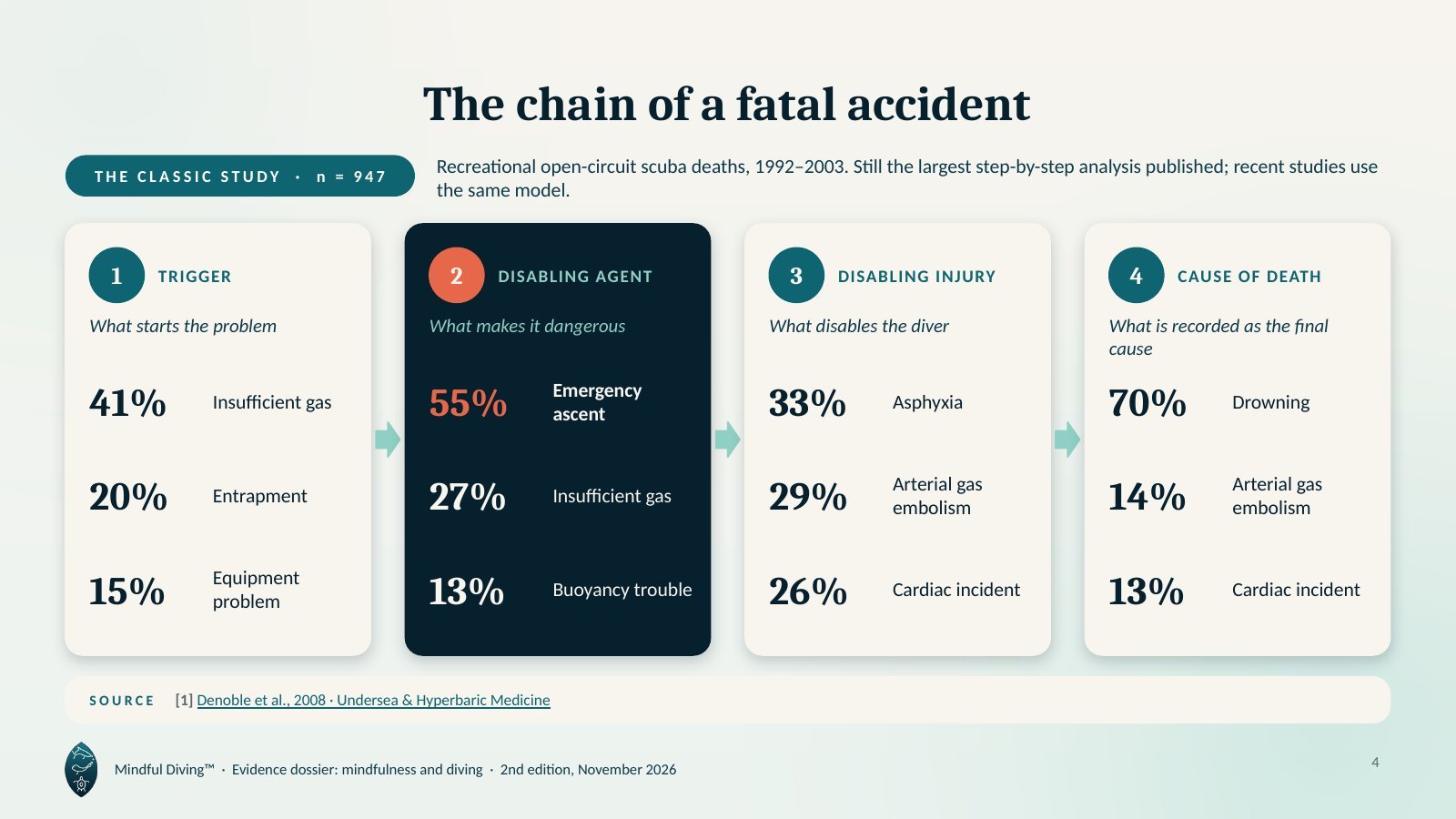
Denoble and colleagues at Divers Alert Network (DAN) analysed 947 recreational open-circuit scuba deaths between 1992 and 2003 [1]. They reconstructed each case in four steps:
- Trigger, what starts the problem: insufficient gas (41%), entrapment (20%), equipment problem (15%).
- Disabling agent, what makes it dangerous: emergency ascent (55%), insufficient gas (27%), buoyancy trouble (13%).
- Disabling injury: asphyxia (33%), arterial gas embolism (29%), cardiac incident (26%).
- Cause of death: drowning (70%), arterial gas embolism (14%), cardiac incident (13%).
The data are old, but this is still the largest step-by-step analysis published, and its chain model is the one every later study uses.
What has changed since
The most recent analyses use the same model, with data from 2001 to 2025:
- Australia, 2001–2013 (126 deaths) [2]: the most frequent triggers were environment (54%), exertion (18%) and gas (12%). What made the problem dangerous was medical in 38% of cases, ascent in 17% and buoyancy in 14%. Cause of death was drowning in 51%, cardiac in 18% and gas embolism in 11%.
- New Zealand, 2007–2016 (48 deaths) [3]: 77% of those who died had prior medical risk factors. There were embolisms after out-of-gas ascents.
- Australia, 2014–2018 (42 deaths) [4]: the main cause became medical, mostly cardiac. Mean age rose to 49.7 years, six years older than the previous period, and 54% were obese.
- Girona, Spain, 2009–2018 (25 deaths) [5]: triggers included exertion, panic and buoyancy; disabling agents included rapid ascent, a cardiac event and panic. Causes of death were drowning first, then gas embolism.
- United Kingdom, 2025 [6]: nine deaths, with a mean age of 55. In over half there was not enough information to establish the cause.
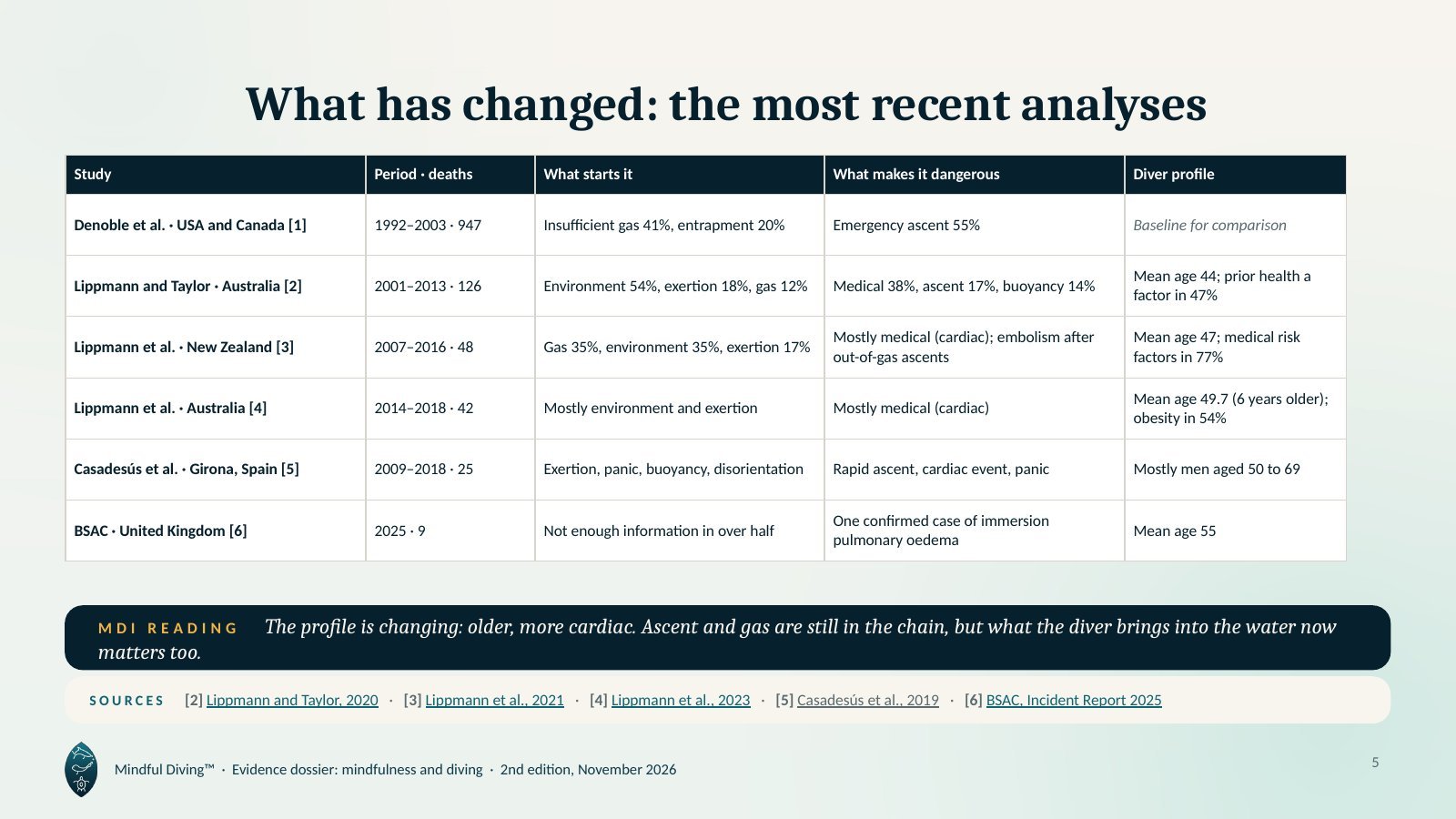
MDI reading: the profile is changing: older, more cardiac. Ascent and gas are still in the chain, but what the diver brings into the water now matters too.
Ascent, still at the centre
In the 1992–2003 study, 96% of arterial gas embolisms involved an emergency ascent [1]. No later study has repeated this exact figure, and we say so. But 2024 data point the same way: in 288 accidents treated by the Royal Netherlands Navy between 1966 and 2023, ascent was the most frequent disabling agent (52%), mostly ascending too fast, and embolism was the most lethal injury [7].
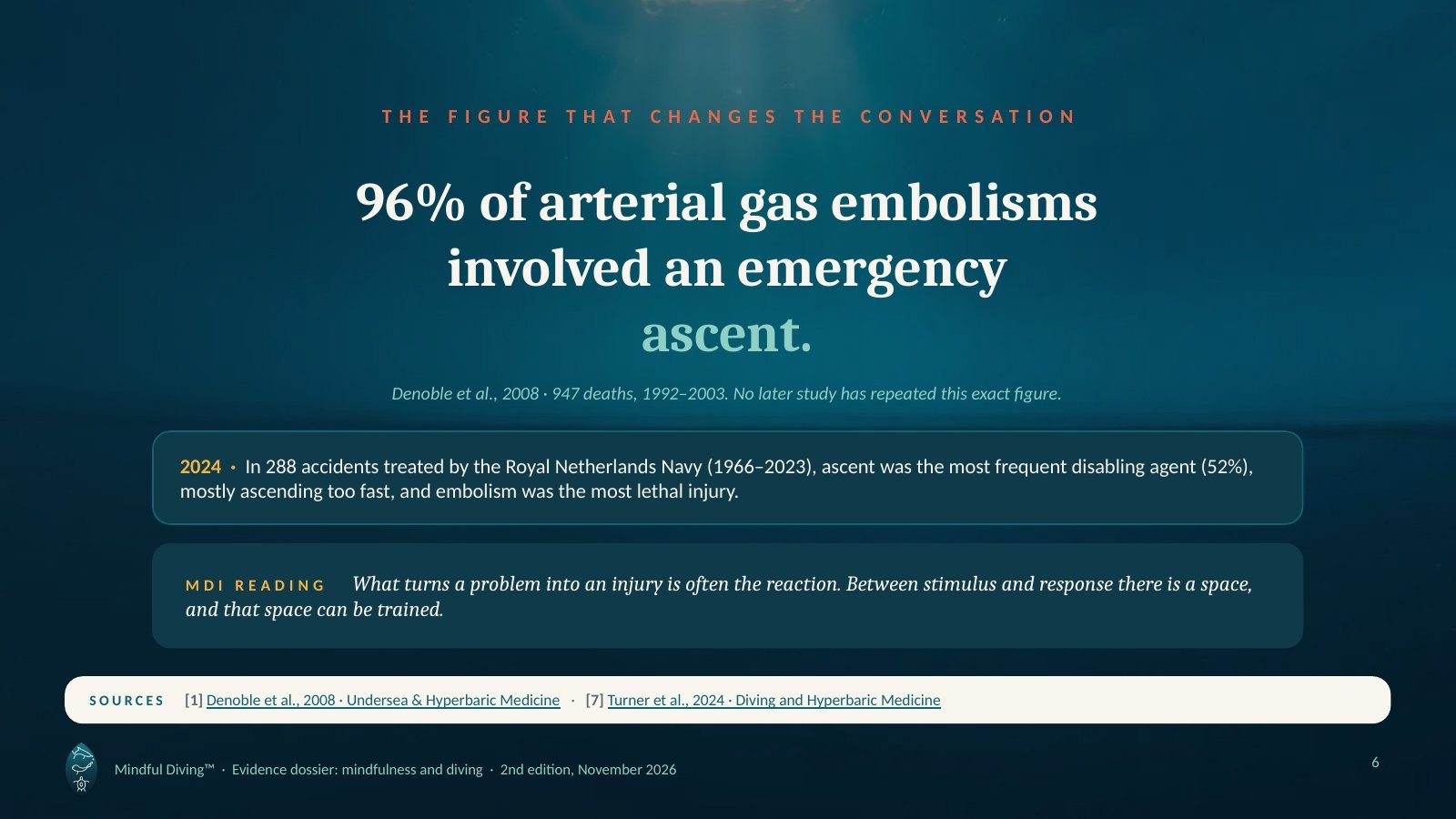
MDI reading: what turns a problem into an injury is often the reaction. Between stimulus and response there is a space, and that space can be trained.
Knowing is not enough
Shreeves and colleagues reviewed 122 non-training diver deaths in North America and the Caribbean [8]. 45% involved at least one violation of safe diving practice; among deaths without a medical cause, 75%, against 23% of medical deaths.
MDI reading: rules are learned on the course; they are applied, or not, in the moment. Presence is the bridge between what you know and what you do underwater.
The new front: heart, age and fitness
This is the clearest change in recent data. At least one in four diving deaths is heart-related, and cardiovascular disease appears to be increasing among divers [9]. In New Zealand, 77% of those who died had prior medical risk factors [3]; in Australia, 54% were obese and every identified cardiac death involved a pre-existing condition [4].
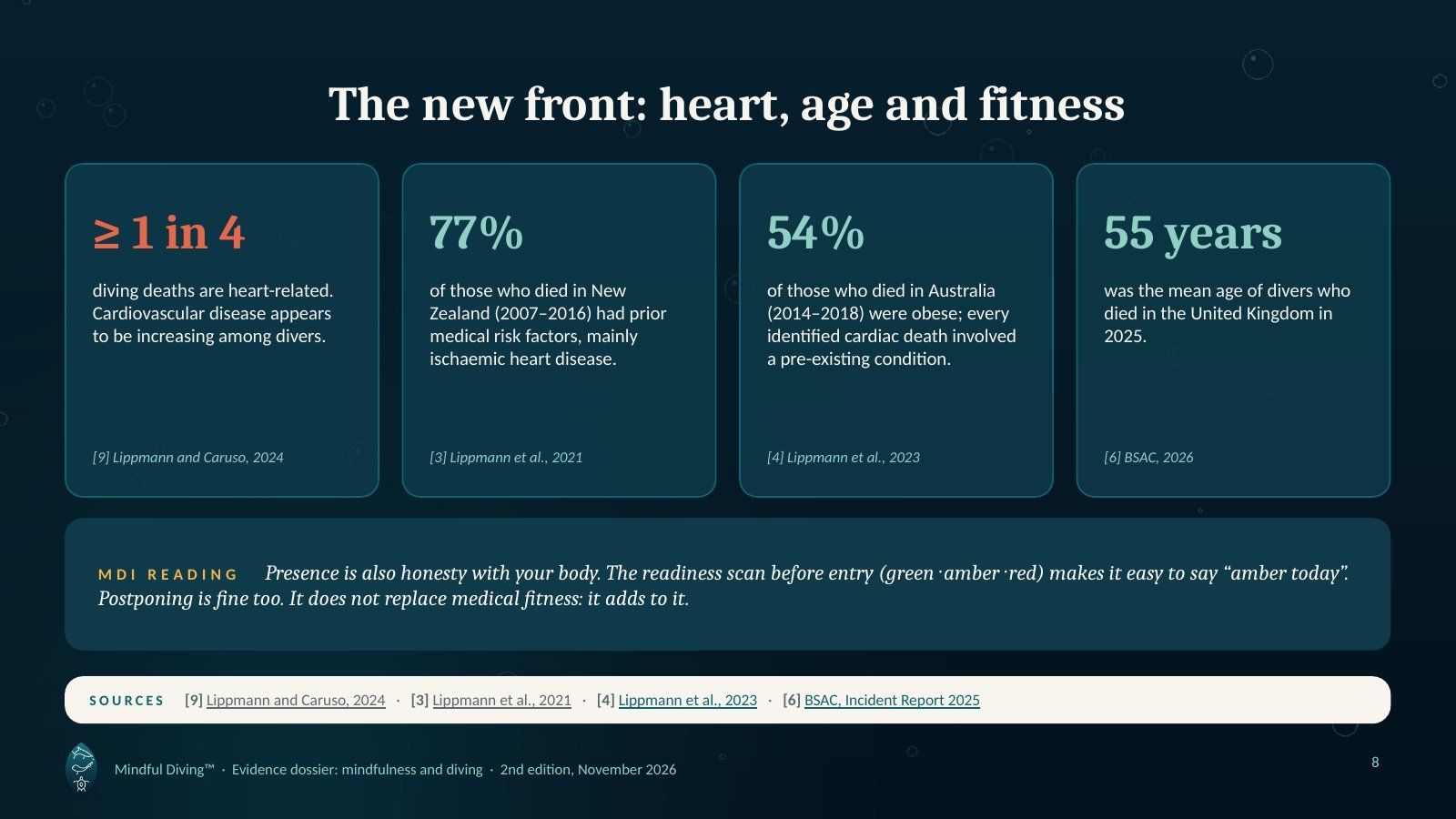
This is a matter of medical fitness, not mindfulness, and Mindful Diving™ does not replace it. MDI reading: what presence does add is honesty about your own state before you get in the water. The readiness scan (green · amber · red) makes it easy to say "amber today". Postponing is fine too.
Panic is common, and can be anticipated
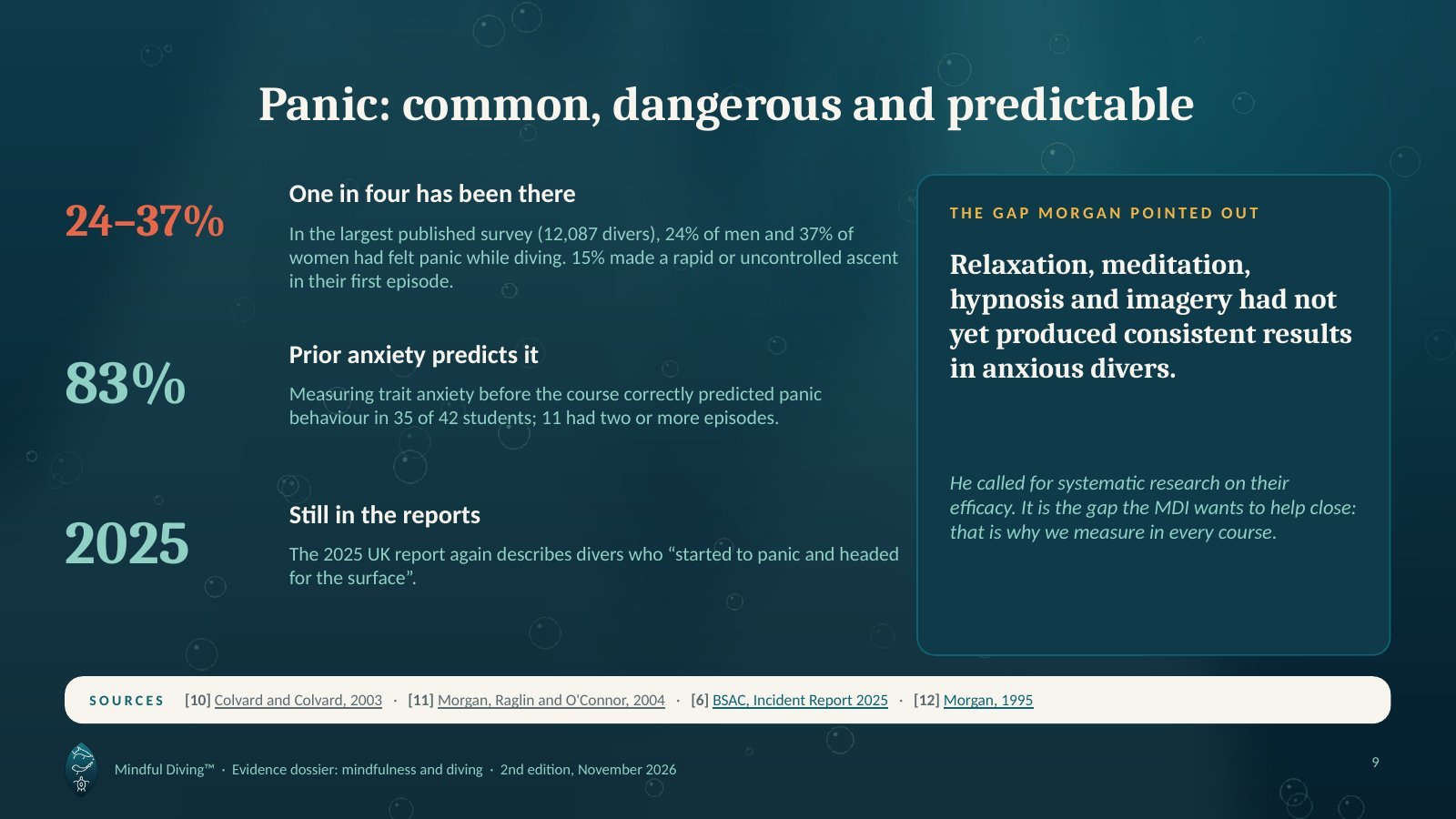
In the largest published survey on panic, with 12,087 divers, 24% of men and 37% of women had felt panic while diving, and 15% made a rapid or uncontrolled ascent in their first episode [10]. It is a voluntary, retrospective survey, but we have found no more recent one of that size.
Measuring trait anxiety before the course correctly predicted panic behaviour in 35 of 42 beginning students [11]. William P. Morgan, the classic reference, added that relaxation, meditation, hypnosis and imagery had not yet produced consistent results in anxious divers, and he called for systematic research [12]. Panic is still in the reports: the 2025 UK report again describes divers who "started to panic and headed for the surface" [6].
Under stress, attention narrows
In Weltman and Egstrom's classic experiment, novice divers had to detect a peripheral light while doing a central task [13]. On the surface it did not interfere; underwater, a subgroup responded much more slowly to the peripheral light. A 2020 study at 5 metres updates it: divers with high trait anxiety were slower underwater on an attention test (72.5 vs 64.4 seconds) and at clearing the mask (10.8 vs 7.1 seconds) [14]. Underwater, that periphery is your buddy, your gauge and your surroundings.
Continuous breathing is physics
DAN reminds divers that a breath-hold ascent of only 5 feet (about 1.5 m) in shallow water may be enough to cause an arterial gas embolism, and sums up: breathe continuously, especially in shallow water [15]. That is why, in Mindful Diving™, breathing is always habitual and continuous: no breath-holds, no paced breathing, no prolonged exhalation. TRES means three normal breaths, simply observed, once neutral and stable. Nothing is added during descent, ascent or task-critical phases.
What mindfulness trains
An operational definition
Mindfulness is not relaxing or emptying the mind. In Bishop and colleagues' operational definition, it is the self-regulation of attention to keep it on immediate experience, with an attitude of curiosity, openness and acceptance [16]. Hölzel and colleagues describe four mechanisms: attention regulation, body awareness, emotion regulation and a change in perspective on the self [17]. Underwater (our translation, not theirs): holding the plan and your buddy, noticing tension or cold earlier, feeling the alarm without obeying the first impulse.
Anxiety and stress: the strongest evidence
- As effective as a first-line medication. In a randomised trial published in JAMA Psychiatry, 276 adults with anxiety disorders received eight weeks of MBSR or escitalopram. MBSR was non-inferior to the medication, and adverse events were far less common: 15% vs 79% [18].
- The largest meta-analysis in people without a diagnosis: 136 trials and 11,605 adults. Less anxiety than no intervention (g = 0.56) and also against non-specific control activities (g = 0.47) [19].
- The broadest review of reviews: 44 meta-analyses, 336 trials and 30,483 people. Mindfulness was better than no intervention in almost every comparison and similar to evidence-based treatments [20].
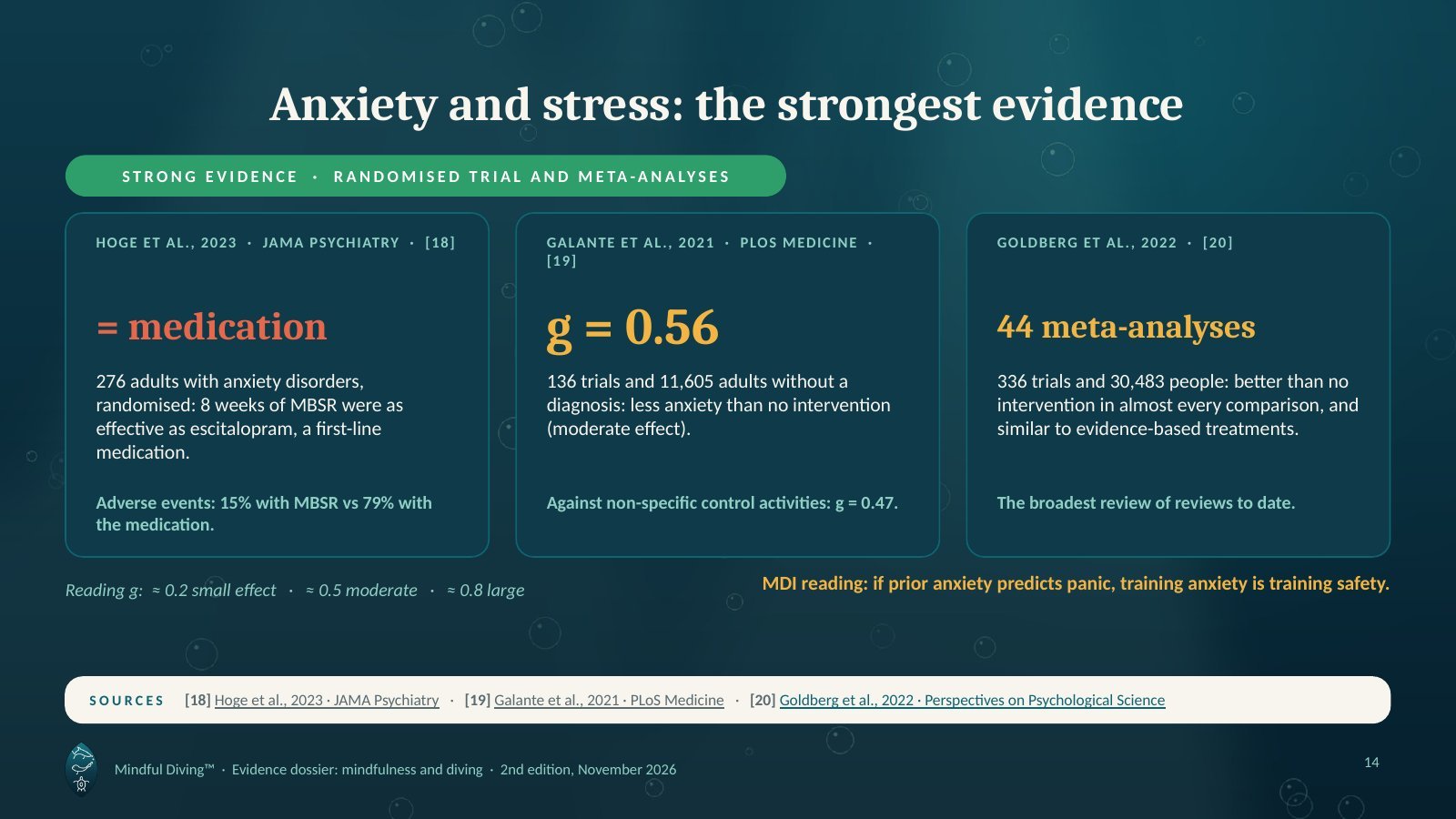
MDI reading: if prior anxiety predicts panic, training anxiety is training safety.
Attention under pressure
- A meta-analysis of 111 trials and 9,538 people found that mindfulness improves executive attention, sustained attention and working-memory accuracy, also against active controls (g = 0.19 to 0.39) [21].
- In military personnel during weeks of high stress, working memory and attention fell without training; with mindfulness they fell less, and in 2010 they rose in those who practised most [22] [23].
- In 2,250 adults, the mind was elsewhere in 46.9% of sampled moments [24].
It does not switch off the alarm: it speeds the return
In a trial with 281 Marines, eight weeks of mindfulness training (20 hours) before highly stressful combat training was associated with a slightly stronger reaction and, above all, faster recovery of heart rate (d = 0.67) and breathing rate (d = 0.93) [25]. This is a measured outcome, not a technique: underwater, breathing stays habitual and continuous. A meta-analysis of 45 studies confirms that meditation lowers physical markers of stress: cortisol, systolic blood pressure, heart rate and C-reactive protein [26].
Precision sport
A meta-analysis of 9 trials with 290 athletes found performance gains in precision sports such as shooting and darts, with high variability between studies [27]. A 2024 meta-analysis of 18 studies and 922 athletes found that the mindfulness-acceptance approach improves performance (g = 0.55) [28]. Buoyancy control is a precision skill too.
What has already been measured with divers
Dive-specific studies are still small, but they point the same way:
- Beneton et al., 2017: after a one-week scuba course, perceived stress fell and mindfulness scores rose, though the difference from a multisport group was not significant [29].
- Gibert et al., 2022: in a pilot randomised trial with 34 adults with PTSD, meditative diving reduced intrusive memories more at one month; other differences were not significant and did not last to three months [30].
- Griffiths et al., 2026: the first published randomised trial combining diving with mindfulness exercises. In 63 adults with obesity in France, ten sessions reduced emotional eating (−0.82 vs −0.27) and perceived stress and improved quality of life compared with usual care, with no diving incidents [31].
- Zec et al., 2022: in 29 divers diving to 30 metres, prior negative emotions predicted cortisol before the dive, and recreational divers had higher cortisol than military divers [32].
- Carreño et al., 2020: at Cap de Creus, mood improved in both 176 divers and 70 beach users, with no significant difference after adjustment [33].
Beyond diving, spending at least 120 minutes a week in nature is associated with better health and wellbeing [34], and contact with blue spaces with better psychological restoration [35].
From data to practice
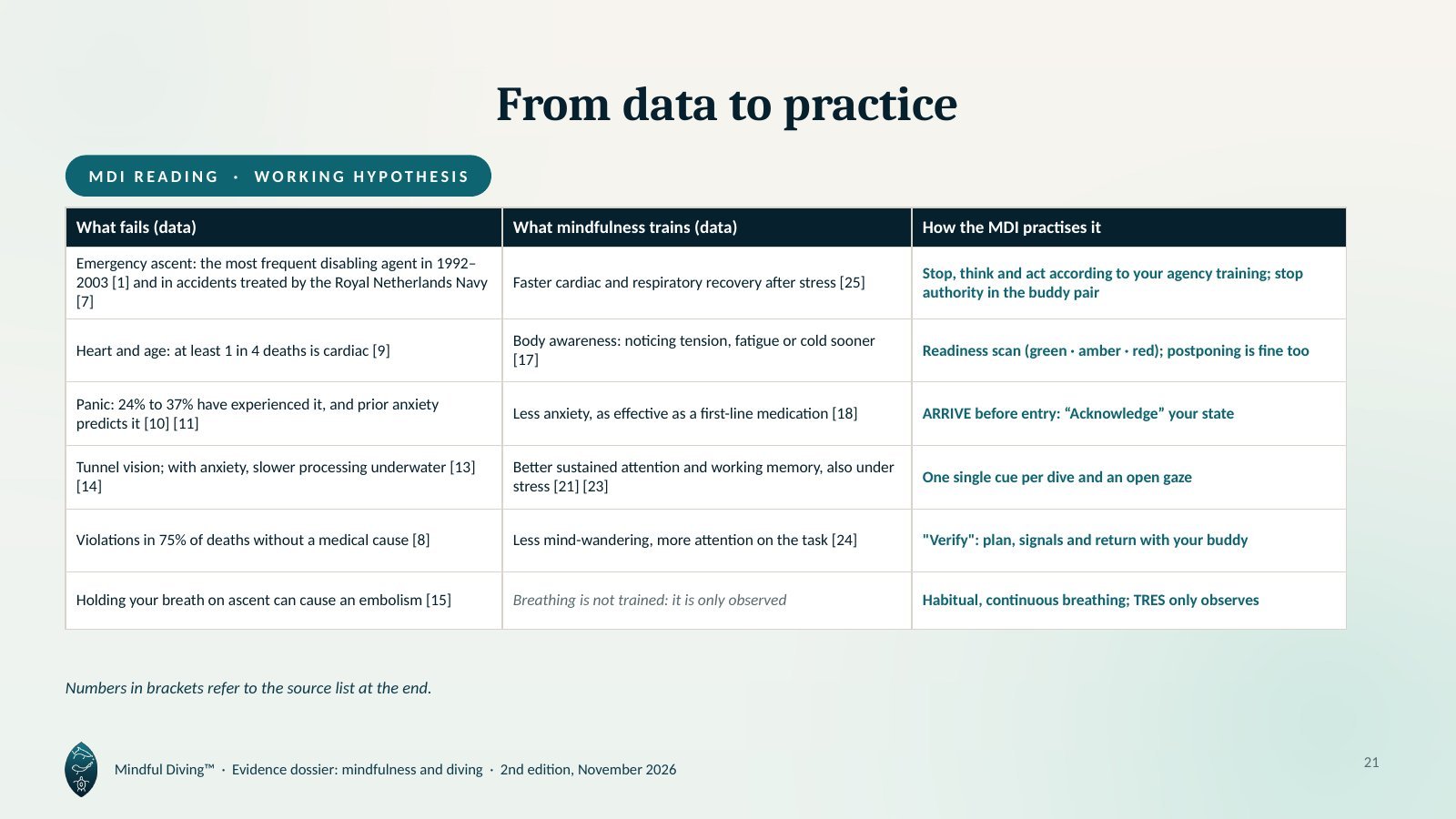
Our working hypothesis, practice by practice:
- Emergency ascent → faster recovery after stress → stop, think and act according to your agency training, with stop authority in the buddy pair.
- Heart and age → body awareness → readiness scan (green · amber · red); postponing is fine too.
- Panic and prior anxiety → less anxiety, as effective as a medication → ARRIVE before entering: "Acknowledge" your state.
- Tunnel vision → better sustained attention and working memory, also under stress → one single cue per dive and an open gaze.
- Violations → less mind-wandering → "Verify": plan, signals and return with your buddy.
- Breath-holding on ascent → breathing is not trained here: habitual, continuous breathing; TRES only observes.
What we do not know yet, and how we measure it
Studies with divers are small, often non-randomised and self-selected. Accident data are imperfect too: many deaths cannot be reconstructed. Mindfulness does not replace your agency training, the dive plan, equipment or medical fitness: it adds to them.
So we measure. In every course, the FP20 · Fundamental Peace questionnaire (20 items, before and after, with a personal code and optional research consent) lets us learn from each group. The research is carried out with the Chair in Contemplative Sciences at the University of Zaragoza.
Thank you to Amelia and the whole Planeta Azul team, and to everyone who shared the first day with us in Cabo de Palos.
Download the full dossier (PDF, 26 slides) · PowerPoint with clickable links
Mindful Diving™ is complementary to, and independent of, the dive agency you already trust.
Sources
- Denoble PJ, Caruso JL, Dear GdeL, Pieper CF, Vann RD (2008). Common causes of open-circuit recreational diving fatalities (opens in a new tab). Undersea & Hyperbaric Medicine 35(6):393–406.
- Lippmann J, Taylor DM (2020). Scuba diving fatalities in Australia 2001 to 2013: chain of events (opens in a new tab). Diving and Hyperbaric Medicine 50(3):220–229.
- Lippmann J, Lawrence C, Davis M (2021). Scuba diving-related fatalities in New Zealand, 2007 to 2016 (opens in a new tab). Diving and Hyperbaric Medicine 51(4):345–354.
- Lippmann J, Lawrence C, Fock A (2023). Compressed gas diving fatalities in Australian waters 2014 to 2018 (opens in a new tab). Diving and Hyperbaric Medicine 53(2):76–84.
- Casadesús JM, Aguirre F, Carrera A, Boadas-Vaello P, Serrando MT, Reina F (2019). Diving-related fatalities: multidisciplinary, experience-based investigation (opens in a new tab). Forensic Science, Medicine and Pathology 15(2):224–232.
- British Sub-Aqua Club (2026). BSAC Annual Diving Incident Report 2025 (opens in a new tab). BSAC, United Kingdom.
- Turner BL, van Ooij PJAM, Wingelaar TT, et al. (2024). Chain of events analysis in diving accidents treated by the Royal Netherlands Navy 1966–2023 (opens in a new tab). Diving and Hyperbaric Medicine 54(1):39–46.
- Shreeves K, Buzzacott P, Hornsby A, Caney M (2018). Violations of safe diving practices among 122 diver fatalities (opens in a new tab). International Maritime Health 69(2).
- Lippmann J, Caruso J (2024). The investigation of diving accidents and fatalities (opens in a new tab). Diving and Hyperbaric Medicine 54(3):217–224.
- Colvard DF, Colvard LY (2003). A study of panic in recreational scuba divers (summary: Panic in Recreational Scuba Divers) (opens in a new tab). The Undersea Journal, Winter 2003; summarised in Undercurrent 29(8).
- Morgan WP, Raglin JS, O'Connor PJ (2004). Trait anxiety predicts panic behavior in beginning scuba students (opens in a new tab). International Journal of Sports Medicine 25(4):314–322.
- Morgan WP (1995). Anxiety and panic in recreational scuba divers (opens in a new tab). Sports Medicine 20(6):398–421.
- Weltman G, Egstrom GH (1966). Perceptual narrowing in novice divers (opens in a new tab). Human Factors 8(6):499–506.
- Tsai FH, Wu WL, Liang JM, Hsu HT, Chen TY (2020). Anxiety impact on scuba performance and underwater cognitive processing ability (opens in a new tab). Diving and Hyperbaric Medicine 50(2):130–134.
- Gessert J (2021). Shallow-water arterial gas embolisms (opens in a new tab). Alert Diver, Divers Alert Network.
- Bishop SR, Lau M, Shapiro S, et al. (2004). Mindfulness: a proposed operational definition (opens in a new tab). Clinical Psychology: Science and Practice 11(3):230–241.
- Hölzel BK, Lazar SW, Gard T, et al. (2011). How does mindfulness meditation work? Proposing mechanisms of action from a conceptual and neural perspective (opens in a new tab). Perspectives on Psychological Science 6(6):537–559.
- Hoge EA, Bui E, Mete M, Dutton MA, Baker AW, Simon NM (2023). Mindfulness-based stress reduction vs escitalopram for the treatment of adults with anxiety disorders: a randomized clinical trial (opens in a new tab). JAMA Psychiatry 80(1):13–21.
- Galante J, Friedrich C, Dawson AF, et al. (2021). Mindfulness-based programmes for mental health promotion in adults in nonclinical settings: a systematic review and meta-analysis of randomised controlled trials (opens in a new tab). PLoS Medicine 18(1):e1003481.
- Goldberg SB, Riordan KM, Sun S, Davidson RJ (2022). The empirical status of mindfulness-based interventions: a systematic review of 44 meta-analyses of randomized controlled trials (opens in a new tab). Perspectives on Psychological Science 17(1):108–130.
- Zainal NH, Newman MG (2024). Mindfulness enhances cognitive functioning: a meta-analysis of 111 randomized controlled trials (opens in a new tab). Health Psychology Review 18(2):369–395.
- Jha AP, Stanley EA, Kiyonaga A, Wong L, Gelfand L (2010). Examining the protective effects of mindfulness training on working memory capacity and affective experience (opens in a new tab). Emotion 10(1):54–64.
- Jha AP, Zanesco AP, Denkova E, Rooks J, Morrison AB, Stanley EA (2020). Comparing mindfulness and positivity trainings in high-demand cohorts (opens in a new tab). Cognitive Therapy and Research 44(2):311–326.
- Killingsworth MA, Gilbert DT (2010). A wandering mind is an unhappy mind (opens in a new tab). Science 330:932.
- Johnson DC, Thom NJ, Stanley EA, et al. (2014). Modifying resilience mechanisms in at-risk individuals: a controlled study of mindfulness training in Marines preparing for deployment (opens in a new tab). American Journal of Psychiatry 171(8).
- Pascoe MC, Thompson DR, Jenkins ZM, Ski CF (2017). Mindfulness mediates the physiological markers of stress: systematic review and meta-analysis (opens in a new tab). Journal of Psychiatric Research 95:156–178.
- Bühlmayer L, Birrer D, Röthlin P, Faude O, Donath L (2017). Effects of mindfulness practice on performance-relevant parameters and performance outcomes in sports: a meta-analytical review (opens in a new tab). Sports Medicine.
- Du S, Ning Z (2024). Exploring mindfulness interventions across cultures: a comparative meta-analysis of mindfulness interventions for athletes in Western and Eastern contexts (opens in a new tab). Frontiers in Psychology 15:1449886.
- Beneton F, Michoud G, Coulange M, et al. (2017). Recreational diving practice for stress management: an exploratory trial (opens in a new tab). Frontiers in Psychology 8:2193.
- Gibert L, Coulange M, Reynier JC, et al. (2022). Comparing meditative scuba diving versus multisport activities to improve PTSD symptoms: a pilot, randomized controlled clinical trial (opens in a new tab). European Journal of Psychotraumatology 13(1):2031590.
- Griffiths K, Markarian T, Meurice V, et al. (2026). Efficacy of a combined diving and mindfulness program on emotional eating in adults with obesity: randomised controlled trial with standard care (opens in a new tab). PLoS One 21(3):e0345784.
- Zec M, Antičević V, Lušić Kalcina L, Valić Z, Božić J (2022). Psychophysiological stress response in SCUBA divers: the contribution of negative automatic thoughts and negative emotions (opens in a new tab). Current Psychology 42(23):16751–16765.
- Carreño A, Gascon M, Vert C, Lloret J (2020). The beneficial effects of short-term exposure to scuba diving on human mental health (opens in a new tab). Int J Environmental Research and Public Health 17(19):7238.
- White MP, Alcock I, Grellier J, et al. (2019). Spending at least 120 minutes a week in nature is associated with good health and wellbeing (opens in a new tab). Scientific Reports 9.
- Georgiou M, Morison G, Smith N, Tieges Z, Chastin S (2021). Mechanisms of impact of blue spaces on human health: a systematic literature review and meta-analysis (opens in a new tab). Int J Environmental Research and Public Health 18(5):2486.
Direction
Prof. Luis Miguel Gallardo
Director, Mindful Diving Institute Research Lab
- Professor of Practice, Yogananda School of Spirituality and Happiness, Shoolini University, India
- World Happiness Foundation Chair in Contemplative Sciences, University of Zaragoza, Spain.