%20scale(1.2)'%3e%3cg%3e%3ccircle%20cx='-110.0'%20cy='0'%20r='220.0'%20fill='none'%20stroke='%2306202E'%20stroke-width='5'/%3e%3ccircle%20cx='110.0'%20cy='0'%20r='220.0'%20fill='none'%20stroke='%2306202E'%20stroke-width='5'/%3e%3cline%20x1='0'%20y1='-182.5255888325765'%20x2='0'%20y2='144.5255888325765'%20stroke='%2306202E'%20stroke-width='5'%20stroke-linecap='round'/%3e%3cline%20x1='-10.0'%20y1='-92'%20x2='10.0'%20y2='-92'%20stroke='%2306202E'%20stroke-width='5'%20stroke-linecap='round'/%3e%3cline%20x1='-20.0'%20y1='0'%20x2='20.0'%20y2='0'%20stroke='%230F6472'%20stroke-width='5'%20stroke-linecap='round'/%3e%3cline%20x1='-10.0'%20y1='92'%20x2='10.0'%20y2='92'%20stroke='%2306202E'%20stroke-width='5'%20stroke-linecap='round'/%3e%3cpath%20d='M0,150.5255888325765%20C8.0,160.22058883257648%208.0,168.53058883257648%200,178.22558883257648%20C-8.0,160.22058883257648%20-8.0,168.53058883257648%200,150.5255888325765%20Z'%20fill='%2306202E'/%3e%3c/g%3e%3c/g%3e%3c/svg%3e)
Introduction
The convergence of diving, mindfulness, and wellbeing science represents an emerging frontier in contemplative practice research. While recreational scuba diving has traditionally focused on technical skill and safety protocols, and mindfulness training has developed primarily in terrestrial clinical settings, the underwater environment offers unique physiological and psychological conditions that may amplify contemplative states. Contact with marine blue spaces provides positive outcomes for human health and well-being , and being in more contact with blue space was significantly associated with higher levels of restoration . Yet despite growing evidence that nature-based interventions improve health outcomes across 92% of studies , the systematic integration of diving practice with contemplative science remains unexplored.
This paper introduces Mindful Diving as a novel integrative practice uniting scuba diving, breath regulation, mindfulness training, and happiness science within the ocean environment. The Mindful Diving Institute (MDI), established as a World Happiness Foundation initiative—an organization holding special consultative status with the United Nations Economic and Social Council (UN ECOSOC)—in partnership with Universidad de Zaragoza, positions the ocean as "Earth's greatest classroom of presence." This framing recognizes the underwater realm as a unique contemplative environment where physiological constraints, sensory immersion, and ecological encounter converge to create conditions distinct from land-based meditation practices.
The theoretical foundation for Mindful Diving rests on three major contributions. First, we introduce Fundamental Peace as a psychological anchor—an integrative state transcending conventional wellbeing constructs that may be uniquely accessible through underwater contemplative practice. Elite free divers performing prolonged voluntary apnea may experience a state of sensory dissociation , and elite free divers demonstrate the ability to create altered states during prolonged apnea . Second, we propose e-co-flourishing as an ethical framework linking individual psychological health with ecological awareness and collective thriving, addressing the reciprocal relationship between human wellbeing and ocean stewardship. Third, we position Mindful Diving within the broader landscape of contemplative sciences, drawing on evidence that breath holding was characterized by increased EEG power and functional connectivity in the alpha band , with changes occurring in regions overlapping with cerebral signatures of several meditation practices .
The underwater environment presents distinctive mechanisms for contemplative practice. There is a need for systematic research dealing with the efficacy of selected intervention strategies for anxious divers , as scuba diving is a high-risk sport with 3 to 9 deaths per 100,000 divers annually , and many cases are caused by panic . Yet when approached through a mindfulness framework, the same physiological demands that create risk may become vehicles for presence. Warm water immersion significantly improved calmness and anxiety at 45 minutes , and participants described a sense of relaxation, calmness, pain reduction, and a means to control intrusive thoughts . Blue spaces were described as having the potential to reset the mind, emotions and body [8], and participants described developing a blue identity and incorporating blue spaces into self-regulation [8].
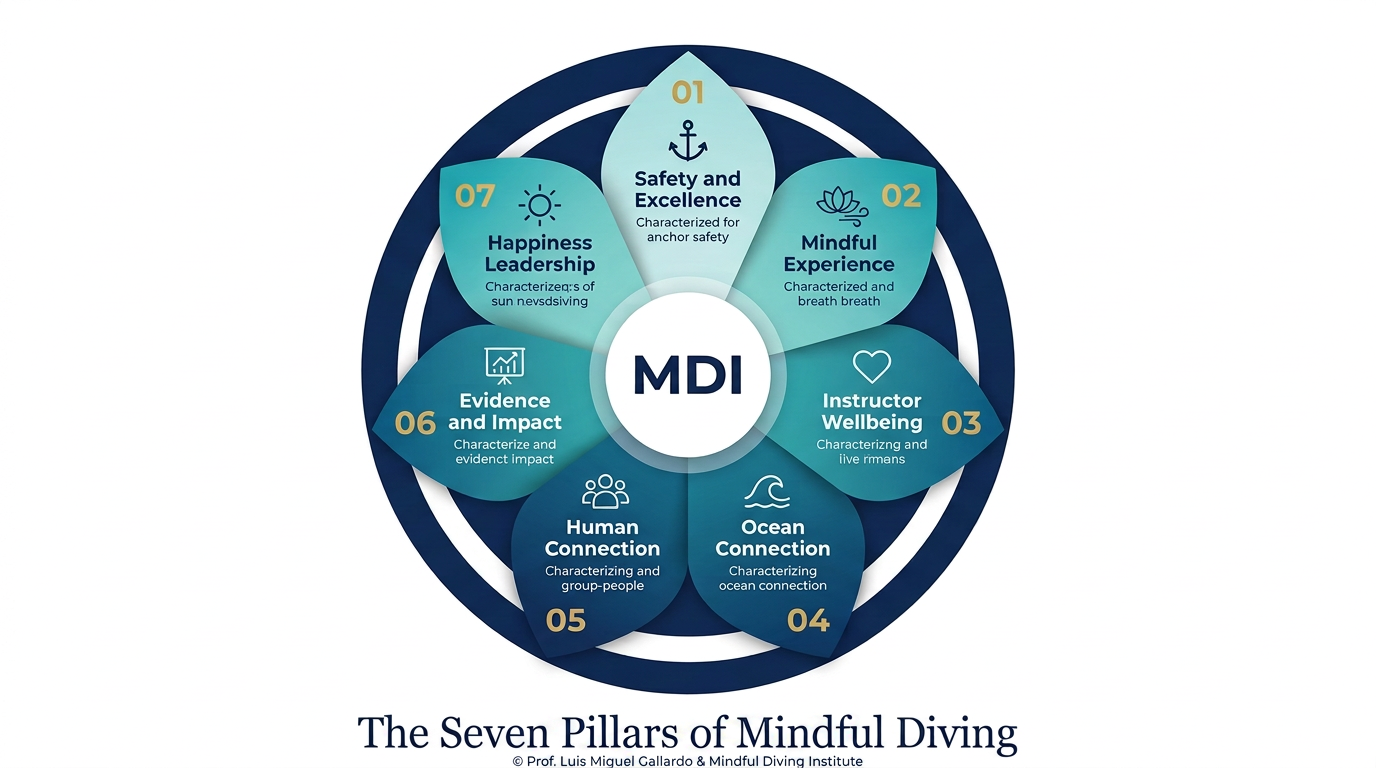
This paper serves a dual purpose: to establish the theoretical foundations of Mindful Diving as a distinct field of inquiry, and to propose a comprehensive research agenda for the Mindful Diving Institute. The MDI framework is organized around seven pillars—Safety & Excellence, Mindful Experience, Instructor Wellbeing, Ocean Connection, Human Connection, Evidence & Impact, and Happiness Leadership (Table 1)—that complement rather than replace traditional dive training systems (SSI, PADI, CMAS, RAID). Where conventional certification focuses on technical competency and risk management, MDI integrates these foundations with contemplative practice, psychological wellbeing, and ecological consciousness. This represents the first international standard connecting diving with wellbeing science, addressing a gap identified in the literature: limited systematically
synthesised evidence exists on Bluespace Prescription Programmes , and little empirical research has been undertaken exploring the impact of sea swimming on wellbeing .
The sections that follow develop these theoretical anchors, review the evidence base for blue space and contemplative practice, and outline a research agenda spanning physiological mechanisms, psychological outcomes, instructor training, ecological impact, and clinical applications. By positioning the ocean as a contemplative environment and diving as a mindfulness practice, this paper aims to establish Mindful Diving as a rigorous, evidence- grounded field at the intersection of marine science, psychology, and human flourishing.
| MDI pillar | Focus area | FP20 dimension(s) | E-co-flourishing principle(s) |
|---|---|---|---|
| 1. Safety & Excellence | Technical mastery; pre-dive protocols; honest self-assessment; no-pressure turnaround culture | Flexible attentional control (prerequisite for safe performance) | Ecological stewardship; do-no-harm diving ethics; responsible ocean conduct |
| 2. Mindful Experience | Breath awareness; present-moment attention; grounding rituals; structured post-dive reflection | Flexible attentional control; reduced self-referential rigidity | Relational presence with marine ecosystems; experiential connection with nature |
| 3. Instructor Wellbeing | Fair conditions; rest protocols; burnout prevention; continuous wellbeing training | Emotional coherence; compassionate self-awareness | Sustainable practice models; collective thriving of the teaching community |
| 4. Ocean Connection | Low-impact diving; buoyancy mastery; citizen science; measurable marine protection contribution | Reduced self-referential rigidity (expanded relational identity with ocean) | Reciprocal flourishing; conservation ethics; relational identity with nature |
| 5. Human Connection | Inclusive briefings; psychological safety; buddy culture built on trust; accessibility for all | Emotional coherence; compassionate self-awareness | Collective wellbeing; community flourishing; social dimensions of health |
| 6. Evidence & Impact | FP20 measurement; pre-post assessment with validated instruments; Univ. de Zaragoza research partnership | All four FP dimensions assessed via the FP20 scale | Scalable, evidence-based interventions; programme theory and pathway evaluation |
| 7. Happiness Leadership | Community wellbeing hubs; World Happiness Foundation science applied to dive centre leadership | Compassionate self-awareness; emotional coherence | Individual + collective + planetary flourishing; systemic change leadership |
© Prof. Luis Miguel Gallardo & Mindful Diving Institute
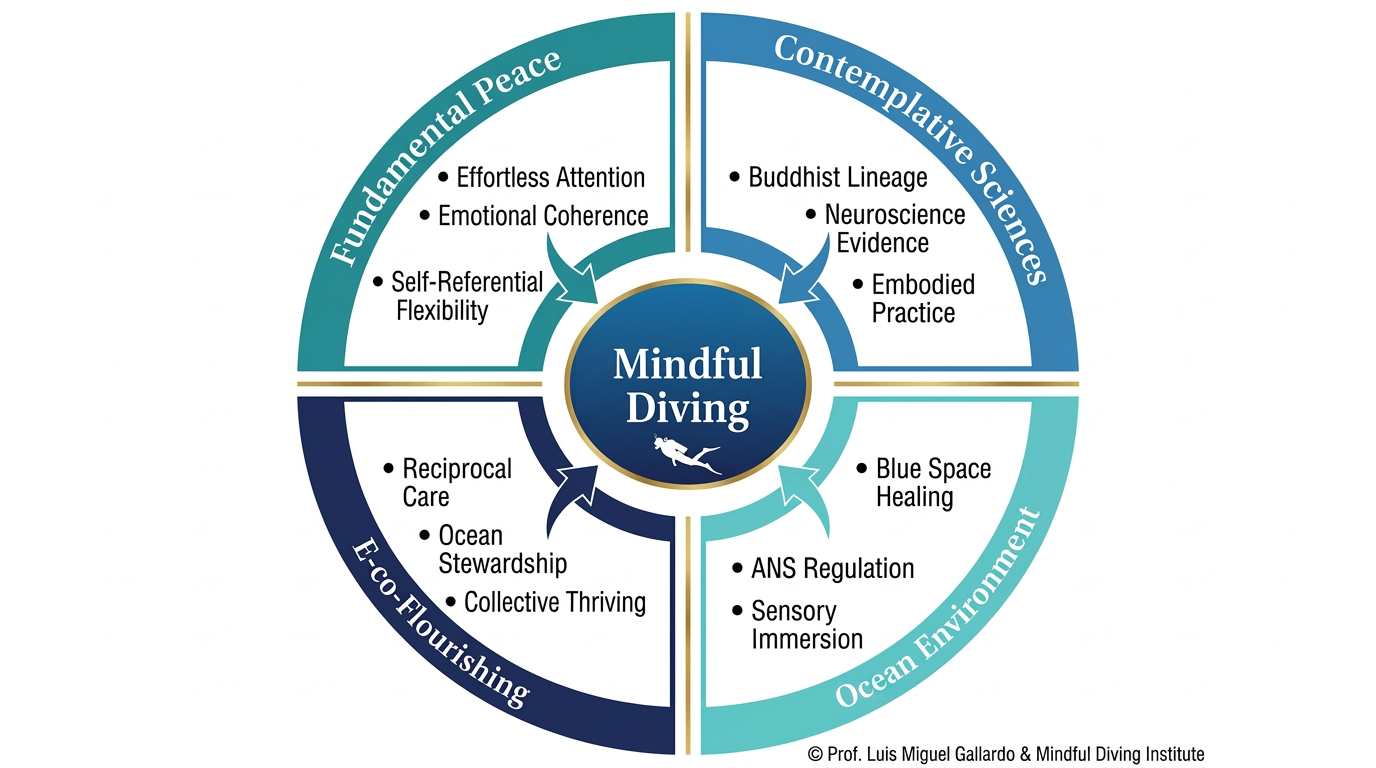
Therapeutics, and E-co-Flourishing at the center of the Mindful Diving practice model. © Prof. Luis Miguel Gallardo & Mindful Diving Institute.
Fundamental Peace as the Psychological Anchor
Mindful Diving is anchored in Fundamental Peace (FP), an integrative psychological state that transcends conventional wellbeing constructs. While traditional mindfulness research has focused on symptom reduction and stress management, FP represents a distinct phenomenological state characterized by four core components: effortless attentional focus, emotional coherence, reduced self-referential rigidity, and self-referential flexibility. This construct provides the theoretical foundation for understanding how the underwater environment may generate contemplative states distinct from land-based meditation practices. 2.1 The Neural Architecture of Fundamental Peace
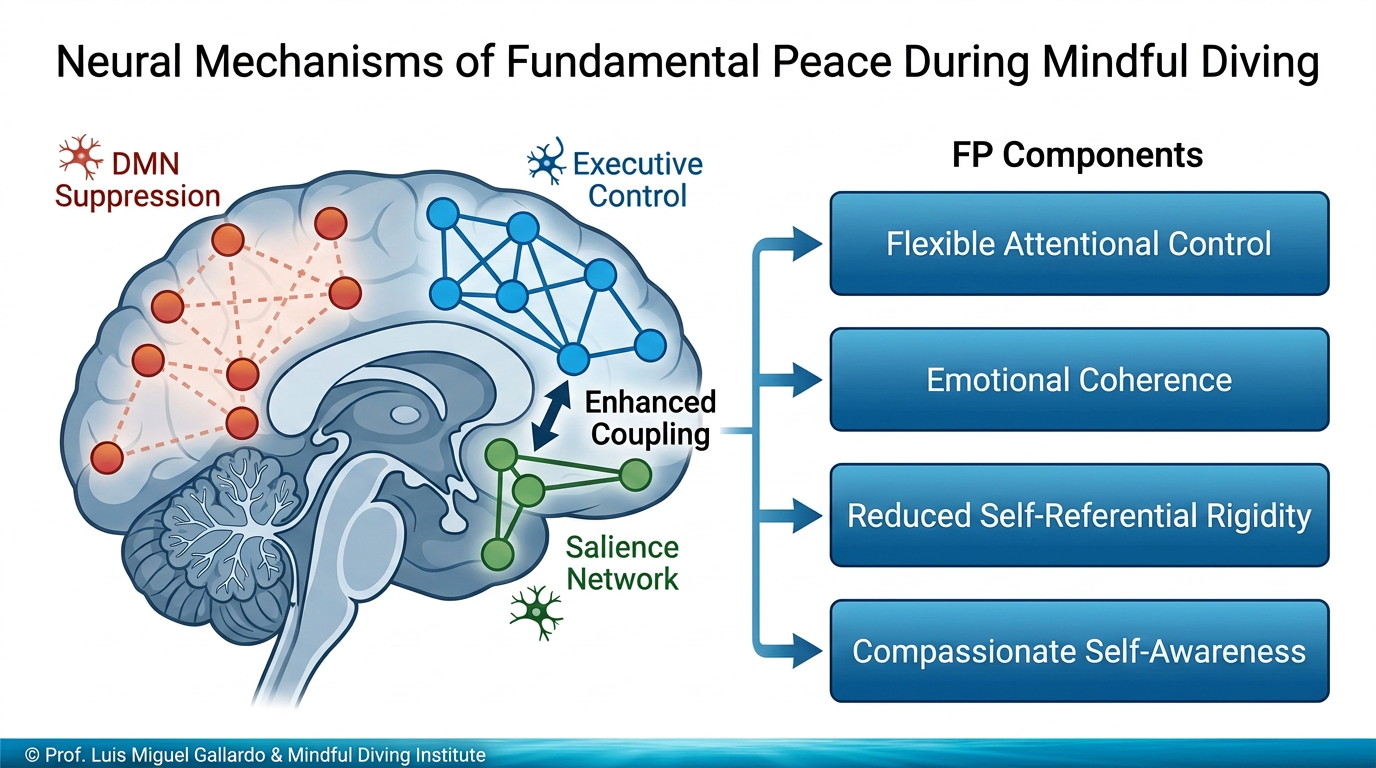
The neural model underlying FP involves coordinated changes across three major brain networks. Breath holding during apnea is characterized by increased EEG power and functional connectivity in the alpha band, with changes occurring in regions overlapping with cerebral signatures of several meditation practices . During prolonged static dry apnea performed by a world champion freediver, fMRI connectivity increased within the default mode network (DMN) and visual areas but decreased in pre- and postcentral cortices . These neural changes in the precuneus are associated with decreased attention towards irrelevant stimuli and a potential mind-body dissociation, reflecting altered somatosensory integration and processing of bodily self-consciousness .
The three-phase emergence model of FP begins with network reconfiguration. During apnea, fMRI connectivity analyses showed increased global connectivity in subcortical regions (thalamus and amygdala) and cortical regions (precuneus, frontal and occipital cortices), paralleled by decreased connectivity over sensorimotor, temporal, and lingual areas . This initial phase of DMN modulation and executive-salience network coupling creates the neural substrate for subsequent cognitive-affective reorganization. In the second phase, reduced self-referential processing emerges as attention shifts away from internal narrative toward present-moment sensory experience. The third phase represents the full emergence of FP, characterized by effortless attention, emotional coherence, and self-referential flexibility— the ability to fluidly shift between self-focused and externally-focused awareness without rigid attachment to either mode.
2.2 The Underwater Environment as FP Induction Context
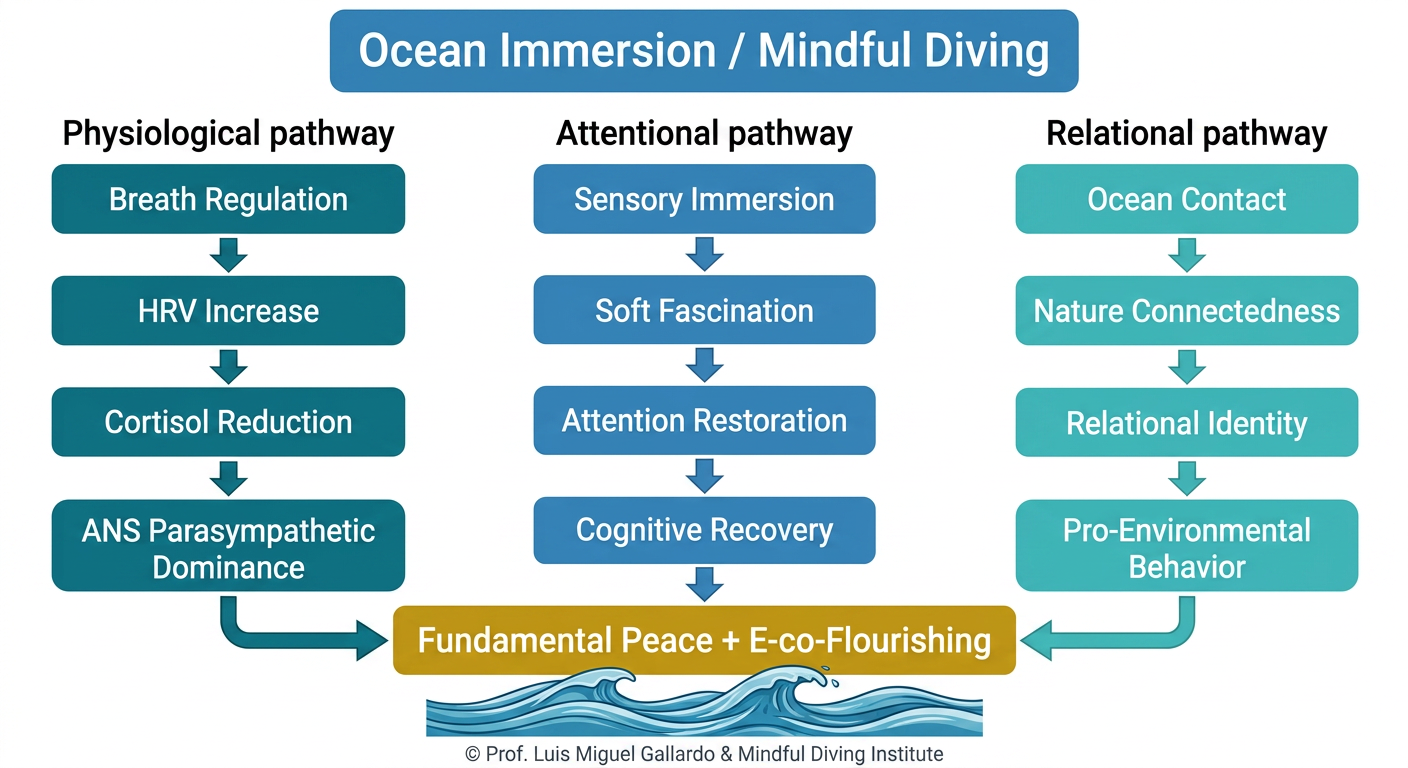
The underwater diving environment presents unique mechanisms that may naturally induce FP-like states. Breath regulation during scuba diving imposes slow, continuous breathing as a survival imperative. Sensory immersion provides visual, auditory, and proprioceptive novelty: the special intensity of the sensory experience of moving in water allows a closer connectedness to the surrounding natural world than land-based activities or swimming in artificial outdoor pools . Buoyancy demands continuous attention for spatial orientation and movement control, anchoring awareness in embodied presence. The present-moment demand of underwater safety requires sustained attention .
Participants in SCUBA diving reported improved concentration, increased focus, decreased stress, and decreased anxiety during diving . The sensation of weightlessness and the need for complete focus during SCUBA diving is described as calming and helping to regulate mood . Deep End Fitness (DEF) training, a community-based underwater fitness program, uniquely increased problem-based coping and produced a significant improvement in positive affect through psychophysiological variation experienced as "hunger for air" during underwater breath-hold exercises . Coastal and aquatic environments have been associated with feelings of embodiment and mental wellbeing .
2.3 Measurement and Evidence Integration
The FP20 measurement tool—a 20-item scale designed to assess the four core components of Fundamental Peace—provides the quantitative foundation for the MDI's Evidence & Impact pillar. By establishing baseline FP scores before dive training and tracking changes
across intervention phases, the FP20 enables systematic evaluation of how underwater contemplative practice generates psychological outcomes beyond symptom reduction. This measurement approach positions Mindful Diving within the broader landscape of contemplative sciences while addressing the unique phenomenology of underwater practice.
The convergence of breath regulation, sensory immersion, buoyancy demands, and present- moment safety requirements creates a natural laboratory for FP induction. Unlike land-based meditation, where practitioners must voluntarily sustain attention against internal distraction, the underwater environment imposes these conditions through physiological and environmental constraints. This externally-scaffolded attention may lower the threshold for accessing FP states, making contemplative experience accessible to individuals who struggle with traditional seated meditation practices.
Situating Mindful Diving Within Contemplative Sciences
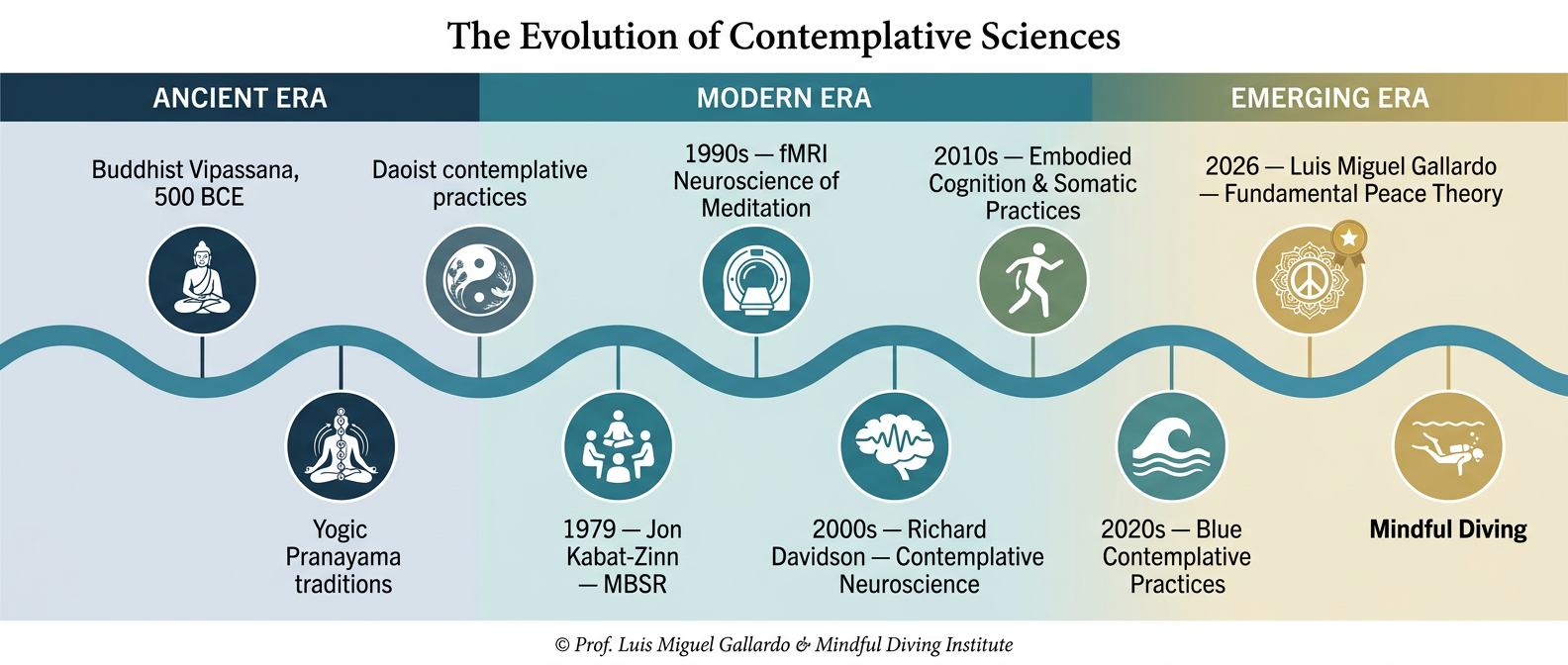
Mindful Diving emerges from a well-established lineage of contemplative sciences, extending terrestrial meditation practices into the aquatic realm. This section traces the historical development of contemplative research, reviews key empirical findings from meditation science, examines embodied and nature-based contemplative practices, and positions Mindful Diving as a distinctive "blue contemplative practice" that inherits established mechanisms while introducing unique aquatic dimensions. 3.1 Historical Lineage: From Buddhist Traditions to Neuroscience
The contemporary field of contemplative sciences rests on foundations laid by early Buddhist contemplative traditions, including vipassana (insight meditation), samatha (concentration meditation), and mindfulness of breathing practices. These ancient techniques emphasized systematic training of attention, awareness of present-moment experience, and cultivation of equanimity through sustained practice. While these traditions developed over millennia within monastic and lay Buddhist communities, their integration into Western science began in earnest in the late 20th century with the development of clinical mindfulness programs.
Contemporary contemplative sciences now constitute an interdisciplinary field integrating neuroscience, psychology, clinical medicine, and phenomenology to understand how systematic mental training alters cognition, affect, and wellbeing.
3.2 Empirical Foundations: Key Findings from Meditation Research
Attention Regulation. Meditation practices consistently demonstrate effects on attentional capacities.
Emotion Regulation and Self-Awareness. Participants in warm water immersion interventions described relaxation, calmness, pain reduction, and a means to control intrusive thoughts . Blue spaces were described as having the potential to reset the mind, emotions, and body, with participants incorporating blue spaces into self- and emotion-regulation practices [8]. Nature connectedness was positively associated with positive well-being and negatively associated with mental distress .
Autonomic Regulation. Perceived relaxation during subaquatic activities moderated demands- resources and stress indicators, decreasing burnout and increasing work engagement among 483 employees . Warm water immersion improved calmness and anxiety at 45 minutes .
3.3 Embodied and Somatic Contemplative Practices
While seated meditation has dominated contemplative research, embodied practices such as yoga, tai chi, qigong, and body scan meditation represent parallel traditions emphasizing somatic awareness and movement-based mindfulness. These practices share with seated meditation the cultivation of present-moment awareness, but anchor attention in bodily sensation, proprioception, and dynamic movement rather than static posture. Movement arises not specifically in the body, but in the nexus and intertwining of bodily engagement with the world, with intimate gestures of the flesh representing primordial attunements and motions of rhythm and reciprocity that emanate from the world in identification with it .
3.4 Nature-Based Mindfulness Interventions
The integration of contemplative practice with natural environments has generated a growing body of research on nature-based mindfulness interventions. Open water swimming contributes to improved mental health through five mechanisms: connecting with nature, escaping from daily stress, sensory stimulation, feeling part of a community, and enjoying the challenge . Spending time in coastal and lagoon ecosystems can significantly enhance efficiency for tasks requiring prolonged active attention while fostering relaxation and contemplation . Immersion in blue spaces can be a therapeutic accretive practice leading to palliative healing, with everyday encounters and liquid connections with the water world providing individuals with connection, belonging, and healing .
Surf therapy yields psychological benefits in part due to the unique affordances of immersion in a blue space such as the ocean, with benefits arising from the reciprocal relationship between individual, task, and environment . A combined diving and mindfulness program represents a synergistic, innovative approach with multidimensional benefits . The contemplation of the sea and marine beings, along with activities related to water such as fishing, swimming, rowing, and walking around a lake, has been associated with reduced anxiety, depression, and post-traumatic stress disorder symptoms and described as inducing a meditative state characterized by calm, peace, unity, happiness, and satisfaction .
3.5 Mindful Diving as Blue Contemplative Practice
Mindful Diving extends the established mechanisms of contemplative sciences into the underwater environment, creating what can be termed a "blue contemplative practice." This positioning is not an invention of contemplative practice from scratch but rather an aquatic innovation within an established scientific tradition. Being near, in, on, or under water promotes happiness, health, reduced stress, and improved performance through integration of neuroscience, evolutionary biology, and medicine to explain water's effects on the brain . Contact with marine blue spaces, directly (practicing a water sport) or indirectly (while commuting to work or through window views), can provide positive outcomes to several aspects of human health and well-being .
3.6 Unique Features Distinguishing Mindful Diving
Mindful Diving introduces several distinctive features that differentiate it from both land- based meditation and other aquatic activities:
Breath as Survival Imperative. Unlike terrestrial meditation where breath serves primarily as an awareness object, underwater diving transforms breath into a survival imperative. Every inhalation and exhalation carries functional consequence, anchoring attention through biological necessity rather than voluntary effort alone. This externally-imposed attentional demand may lower the threshold for accessing contemplative states.
Buoyancy as Continuous Attention Training. The three-dimensional aquatic environment demands continuous proprioceptive awareness for spatial orientation and movement control. Buoyancy provides immediate embodied feedback, requiring sustained attention to maintain neutral position and navigate the water column. This creates a natural laboratory for attention training where lapses in awareness produce immediate physical consequences.
Sensory Immersion in Non-Human Environment. The special intensity of the sensory experience of moving in water allows a closer connectedness to the surrounding natural world than land-based activities or swimming in artificial outdoor pools . The underwater realm presents visual, auditory, and tactile novelty that anchors awareness in present- moment sensory experience, with the ocean functioning as teacher through direct encounter with marine life and ecological systems.
Three-Dimensional Movement and Spatial Awareness. Unlike terrestrial environments where movement occurs primarily along a two-dimensional plane, underwater diving engages full three-dimensional spatial navigation. This demands heightened proprioceptive awareness and continuous recalibration of body position relative to the surrounding environment.
Silence and Reduced Verbal Processing. The underwater environment naturally reduces verbal communication and internal narrative, creating conditions conducive to non- conceptual awareness. The muffled acoustic environment and communication constraints shift attention away from language-based processing toward direct sensory experience.
Adaptive diving promotes psychophysical well-being through flow states normally experienced in outdoor recreation . Participants in SCUBA diving reported improved concentration, increased focus, decreased stress, and decreased anxiety during diving, with the sensation of weightlessness and the need for complete focus described as calming and helping to regulate mood . These unique features position Mindful Diving as a distinctive contemplative practice that inherits the attention regulation, emotion regulation, and self- awareness mechanisms documented in meditation research while adding aquatic dimensions unavailable in terrestrial settings.
The Ocean as Therapeutic and Contemplative Environment
The ocean environment functions as a uniquely potent setting for contemplative practice and psychological wellbeing through convergent physiological, sensory, and ecological mechanisms. Building on the established neural architecture of Fundamental Peace and the lineage of contemplative sciences, this section examines how blue space exposure, autonomic regulation, therapeutic diving interventions, and embodied immersion create conditions that naturally induce restorative and meditative states. 4.1 Blue Space Health Benefits and Attention Restoration
Spending time in coastal and lagoon ecosystems can significantly enhance efficiency for tasks requiring prolonged active attention while fostering relaxation and contemplation. Participants in an Italian lagoon ecosystem study exhibited improved performance on an attention test and completed the task 47.2±35.0 seconds faster after an excursion, which was 21.7% less than the time taken before the excursion. Participants assigned a higher restorative value to landscape views that included water than those without water.
Individuals living near the coast are generally healthier and happier than those living inland. Open water swimming may lead to improvements in mood and wellbeing and reductions
in mental distress symptomatology. All but one age group surveyed in a national-scale study of 717 Scottish open water swimmers perceived mental wellbeing benefits to be the most important benefit of open water swimming, while those aged over 65 identified physical rather than mental wellbeing benefits to be the most important outcome.
4.2 Blue Mind Theory and Meditative States
The term "blue mind" describes a meditative state experienced near water, with research revealing well-documented benefits for both mental and physical health. For Nichols, having the Blue Mind is a meditative state characterized by calm, peace, unity, happiness, and satisfaction inspired by water and its associated elements. The contemplation of the sea and marine beings has been proposed as a potential method for relaxation and healing, and is described as inducing a meditative state characterized by calm, peace, unity, happiness, and satisfaction.
Interacting with blue space—water sources in the form of lakes, rivers, ponds, oceans, and even swimming pools—may directly improve a person's physical and mental health. Being in or near water environments may lead to relaxation, improved social interactions, better brain health, and enhanced physical activity.
4.3 Mechanisms of Open Water Swimming
Open water swimming contributes to improved mental health through five mechanisms: connecting with nature, escaping from daily stress, sensory stimulation, feeling part of a community, and enjoying the challenge. Blue spaces involve embodiment, mindful presence, community and much more, offering for some a therapeutic accretion which
sustains mental health and wellbeing across a lifetime. Immersion in blue spaces can be a therapeutic accretive practice leading to palliative healing, with everyday encounters and liquid connections with the water world providing individuals with connection, belonging, and healing.
Sea swimming has been reported by participants as beneficial to their mental and physical health.
4.4 Autonomic Nervous System Regulation
Perceived relaxation during subaquatic activities moderated demands-resources and stress indicators, decreasing burnout and increasing work engagement among 483 employees. The relaxation sensation provided by the aquatic environment acts as a mechanism for attenuating work stress.
4.5 Therapeutic Diving Programs
The combined diving and mindfulness program is a synergistic, innovative approach with multidimensional benefits for adults with obesity, promoting lifestyle changes. The program could be integrated into comprehensive management of chronic conditions.
Deep End Fitness training, a community-based underwater fitness program involving breath- hold exercises, uniquely increased problem-based coping and produced a significant improvement in positive affect in volunteer athletes. This is supported by the hypothesis that psychological and biological stressors experienced during underwater, breath-hold training cause positive adaptive changes and benefits, specifically through psychophysiological variation experienced as "hunger for air."
Surf therapy yields psychological benefits in part due to the unique affordances of immersion in a blue space such as the ocean. Participants in an Australian surf therapy program reported that the water-based environment facilitated deeper understandings of mental health, acquisition of coping strategies, and fostered mastery experiences, leading to noticeable improvements in emotional well-being, attitudes, and confidence. This was attributed to the non-judgmental and supportive environment of the ocean, which allowed participants to enjoy respite from daily worries and experience freedom.
After participating in blue prescription programmes referred to or prescribed by health and social care professionals, service users had improvements in their physical, cognitive (mental), social health, and proenvironmental knowledge.
4.6 Freediving and Altered States of Consciousness
Freedivers modify their states of consciousness through techniques like visualizations, meditation, and self-hypnosis to prolong apnea, accept disagreeable sensations, stop thinking, and economize oxygen use. This mechanism involves disconnecting the conscious mind to achieve altered states, while simultaneously needing to maintain conscious connection during the end stages of a dive to fight against loss of consciousness and anoxic syncope.
The practice of freediving is presented as a powerful experimental device that pushes the body to its extremes, leading to a sensorial recalibration of the individual's flesh and an exploration of self. Freedivers intentionally modify their states of consciousness through techniques like visualization, meditation, consciousness rotation, and self-hypnosis to prolong their apnea, manage negative emotions, and welcome unpleasant sensations, ultimately broadening their "map of the senses."
Ecological-Collective Flourishing and Ocean Connection
The Mindful Diving Initiative extends beyond individual psychological restoration to embrace a broader ethical commitment: the flourishing of human and non-human life within shared ecosystems. This section establishes the ecological-collective-flourishing (e-co-flourishing) framework as the ethical foundation of Mindful Diving, connecting the Ocean Connection pillar to conservation ethics, pro-environmental behavior, and relational identity with the ocean. It argues that diving practice naturally embodies e-co-flourishing principles through direct encounter, breath-based presence, and the cultivation of reciprocal care. 5.1 The E-Co-Flourishing Framework
The ecological-collective-flourishing framework defines human flourishing as pursued alongside the flourishing of natural ecosystems and their collective and individual constituents, both human and non-human. E-co-flourishing reframes therapeutic interventions not as extractive—taking restoration from nature—but as reciprocal: human wellbeing emerges from and contributes to the health of the ecosystems that sustain it. This ethical stance positions individuals not as passive beneficiaries of natural environments but as active participants in collective and planetary flourishing.
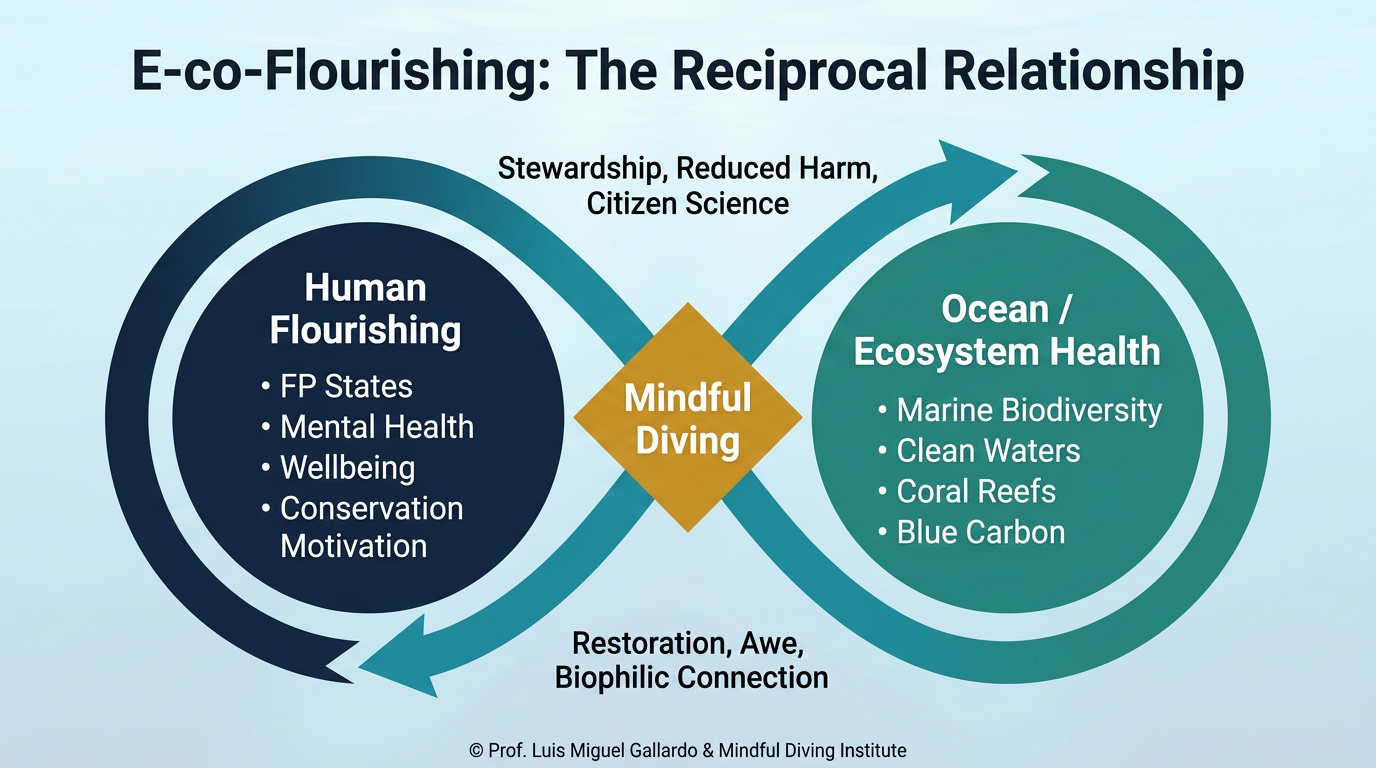
illustrating how individual wellbeing and ocean conservation co-create each other. © Prof. Luis Miguel Gallardo & Mindful Diving Institute.
5.2 Ocean Connection and Conservation Ethics
The Ocean Connection pillar of the Mindful Diving Initiative embodies e-co-flourishing through three interrelated dimensions: conservation ethics, pro-environmental behavior, and human- nature connectedness. Conservation ethics positions divers as ocean stewards, recognizing their responsibility to protect the ecosystems they encounter. Pro-environmental behavior encompasses both reduced harm—minimizing disturbance to marine life and habitats—and active conservation, such as participation in reef monitoring or marine debris removal. Human-nature connectedness describes a relational identity in which the diver's sense of self extends to include the ocean and its inhabitants, dissolving the boundary between observer and ecosystem.
Participants in a UK qualitative study reported that cold-water swimming generated a deeper connectedness to nature, with the authors identifying it as a promising form of ecotherapy for wellbeing . Open-water swimming in Ireland was reported as necessary for maintaining mental and emotional well-being and forming meaningful connections with the social environment, nature, and participants' true selves . These findings indicate that immersive blue space practices cultivate relational identity, a core component of e-co-flourishing.
5.3 Mindful Diving as Embodied E-Co-Flourishing
Mindful Diving naturally embodies e-co-flourishing principles through the convergence of direct ocean encounter, breath-based presence, and contemplative attention. Direct ocean encounter fosters ecological awareness by placing divers in intimate contact with marine ecosystems, where the health and vitality of the environment become immediately perceptible. Breath-based presence—central to both diving safety and contemplative practice—cultivates reciprocal care by attuning divers to their physiological interdependence with the underwater environment. Contemplative attention reveals interconnectedness, as sustained observation of marine life and ecosystems discloses the intricate relationships that sustain ocean health.
An autoethnographic study of novice water-riding experiences explored how categorical boundaries between the body and the sea can be blurred, suggesting a human-nature relational identity where the surfer and sea form an assemblage . This dissolution of boundaries between self and environment exemplifies the relational identity central to e-co- flourishing.
Conservation motivation emerges organically from this connection. When divers experience the ocean not as a resource or backdrop but as a living community to which they belong, the impulse to protect it arises not from external obligation but from relational care. This shift from instrumental to relational engagement with nature is a hallmark of e-co-flourishing interventions.
5.4 Empirical Foundations: Nature Connectedness and Pro-Environmental Behavior
A growing body of empirical literature supports the link between nature connectedness and pro-environmental behavior. Participants who preferred lake swimming reported greater concern regarding possible environmental damage caused by the increasing popularity of open water swimming compared to those engaging in river or sea swimming, though the majority of participants perceived the risks to the environment from open water swimming to be minimal . This finding suggests that immersive blue space practices can heighten environmental awareness, though the relationship between awareness and behavior is complex and context-dependent.
The Blue Mind Hub initiative in Plymouth, UK, demonstrated that mean Warwick Edinburgh Mental Wellbeing Scale scores for participants with poor mental health improved from well below the general UK population mean to general population levels after an 8-week program of ocean-based activities . While this study focused on mental health restoration, it underscores the potential for blue space interventions to foster the wellbeing that underpins ecological engagement.
A scoping review identified five themes for how open water swimming contributes to improved mental health: connecting with nature, escaping from daily stress, sensory stimulation, feeling part of a community, and enjoying the challenge . The theme of "connecting with nature" directly supports the hypothesis that immersive blue space practices cultivate the relational identity necessary for e-co-flourishing.
5.5 The Reciprocal Relationship: Ocean and Human Flourishing
E-co-flourishing is fundamentally reciprocal: the ocean supports human wellbeing, and humans support ocean health. Immersion in blue spaces can be a therapeutic accretive practice leading to palliative healing, with everyday encounters and liquid connections with the water world providing individuals with connection, belonging, and healing . This therapeutic accretion—the cumulative wellbeing benefit of repeated immersive encounters— depends on the health and accessibility of marine ecosystems.
Conversely, human flourishing that arises from ocean connection generates motivation and capacity for conservation. The Blue Mind Hub uses Blue Mind Theory to encourage ocean empathy, with a recognition of an individual's role in the health of the ocean and the role of the ocean in their physical and mental health . This dual recognition—that ocean health enables human wellbeing and that human wellbeing enables ocean stewardship—is the core of the e-co-flourishing framework.
Small-scale blue space interventions, co-designed with community involvement, effectively enhanced user frequency, accessibility, inclusivity, diversity, and the local community's general health and well-being, as evidenced by pre-post assessments at Teat's Hill, Plymouth, UK . This participatory approach fostered ownership and relevance among stakeholders, ensuring alignment with community needs and environmental values. Such interventions demonstrate that e-co-flourishing is not an abstract ideal but a practical framework for designing health-promoting, ecologically-responsible blue space programs.
5.6 Conclusion
The e-co-flourishing framework positions Mindful Diving as an ethical practice that integrates individual psychological restoration with collective and planetary flourishing. Through direct ocean encounter, breath-based presence, and contemplative attention, divers cultivate relational identity with marine ecosystems, fostering both personal wellbeing and conservation motivation. This reciprocal relationship—in which ocean health supports human flourishing and human flourishing supports ocean health—is the ethical foundation of the Mindful Diving Initiative and the basis for its Ocean Connection pillar.
Synthesis—Mindful Diving as Integrative Practice
Mindful Diving represents a convergent practice in which four theoretical frameworks— Fundamental Peace, contemplative sciences, ocean environment, and e-co-flourishing— operate simultaneously rather than sequentially. The underwater environment does not merely host contemplative practice; it transforms it through physiological, sensory, and ecological mechanisms unavailable in terrestrial settings. This synthesis examines how these frameworks interact, identifies emergent properties of their convergence, and positions the MDI's seven pillars as operationalization of this integrative vision. 6.1 Simultaneous Activation Across Frameworks
The defining characteristic of Mindful Diving is that breath regulation activates both contemplative attention and mammalian dive reflex simultaneously. Freediving training involves controlling breathing and maintaining a stable heart rate, techniques also employed in the preparation and meditation of postures to enhance focus and clarity of mind . This dual activation creates a physiological-contemplative coupling absent in land-based meditation, where breath serves primarily as an awareness object rather than a survival imperative. The special intensity of the sensory experience of moving in water allows a closer connectedness to the surrounding natural world than land-based activities or swimming in artificial outdoor pools .
Ocean immersion provides both attention restoration and conservation motivation through direct encounter. Divers' motivations and experiences, including connection with nature and well-being, resulted in pro-environmental behaviors and attitudes . Tests of a model where childhood exposure to blue spaces was linked to adult subjective well-being serially through intrinsic motivation and then recent blue and green space visits exhibited a good fit in an 18-country sample . This suggests that the restorative and ecological dimensions of blue space engagement are not separate benefits but mutually reinforcing processes.
The FP state supports both individual wellbeing and collective flourishing through relational identity. Immersion in blue spaces can be a therapeutic accretive practice, with everyday encounters and liquid connections with the water world providing individuals with connection, belonging, and health and wellbeing benefits . Swimming across the lifecourse is built on multiple 'blue moments' that represent an affective place capture around water that helps promote wellbeing in its broadest sense . This therapeutic accretion—the cumulative wellbeing benefit of repeated immersive encounters—depends on the health and
accessibility of marine ecosystems, creating reciprocal dependence between human and ocean flourishing.
Buoyancy trains both embodied attention and self-transcendence. Scuba diving has the potential to benefit injured veterans due to the requirement of complete focus and the feeling of weightlessness when underwater . Participants described a sense of relaxation, calmness, pain reduction, and a means to control intrusive thoughts during warm water immersion . The three-dimensional aquatic environment demands continuous proprioceptive awareness for spatial orientation and movement control, anchoring awareness in embodied presence while simultaneously dissolving the boundary between self and environment.
6.2 Emergent Properties of Convergence
The convergence of these frameworks generates properties not predictable from any single framework alone. Recreational freediving provides mental and physical health benefits from relaxation and other physical aspects through diving . Participants in SCUBA diving reported improved concentration, increased focus, decreased stress, and decreased anxiety during diving, with the sensation of weightlessness and the need for complete focus described as calming and helping to regulate mood .
The physical challenge of safely immersing oneself in cold water in lochs forced the need to 'be present,' as participants reported that the body's physical adjustment to cold water meant they had to focus on something else other than their worries . This "forced mindfulness" represents an externally-scaffolded attention mechanism distinct from voluntary meditation practice. Perceived relaxation during subaquatic activities moderated demands-resources and stress indicators, decreasing burnout and increasing work engagement among 483 employees .
When sophrology (a dynamic relaxation method for body, mind, and emotions) is practiced in water, aquatic immersion appears to reinforce the effects of dynamic relaxations and "contemplations-senso-perceptives" through visualization, favoring deeper relaxation and anchoring of positive feelings . The unique characteristics of water amplify the benefits of contemplative practices, leading to deeper relaxation and positive feelings.
6.3 Theoretical Tensions and Open Questions
The integration of these frameworks introduces measurement challenges. The FP20 scale was developed for terrestrial contexts; validating it in aquatic environments where communication is constrained and physiological demands are elevated requires methodological adaptation. Participants reported positive mental health benefits from diving with four themes emerging: human connection, meaningful leisure, embodiment, and the calm . However, translating these qualitative themes into quantitative FP20 subscales in underwater settings remains an open question.
Individual differences in response to underwater practice represent a significant tension. All participants in a scuba diving and occupational therapy study significantly improved their occupational performance and satisfaction with performance, and reduced symptoms of
PTSD, depression and stress . However, the positive perceptions from scuba diving were more pronounced in those whose injuries were predominantly psychological, rather than physical . Not all divers may experience FP states or conservation motivation; the mechanisms determining who benefits most from underwater contemplative practice are not yet understood.
Scalability constraints include cost, access, and geographic limitations. After participating in blue prescription programmes referred to or prescribed by health and social care professionals, service users had improvements in their physical, cognitive (mental), social health, and proenvironmental knowledge . However, service user-related contextual factors included referral information, free equipment, transportation, social support, blue space environments, and skills of service providers . These contextual factors suggest that delivering Mindful Diving interventions at scale requires addressing structural barriers beyond the practice itself.
Instructor training and fidelity represent practical challenges. Small-scale blue space interventions, co-designed with community involvement, effectively enhanced user frequency, accessibility, inclusivity, diversity, and the local community's general health and well-being at Teat's Hill, Plymouth, UK . This participatory approach fostered ownership and relevance among stakeholders, ensuring alignment with community needs and environmental values . Ensuring that instructors can reliably deliver the integrative vision of Mindful Diving— simultaneously attending to safety, contemplative guidance, ecological awareness, and community building—requires training models not yet established.
Mechanism specificity remains unclear. Both beach and scuba diving activities reduced POMS scores after carrying out the activities, with no significant differences found between beach and scuba diving activities, nor between two different scuba diving experiences . This raises the question of which components of Mindful Diving are necessary versus sufficient for generating FP states and conservation motivation. Is breath regulation essential, or can surface swimming generate similar effects? Does direct marine life encounter matter, or is sensory immersion in blue space sufficient?
6.4 MDI's Seven Pillars as Operationalization
The MDI's seven pillars translate this integrative vision into practice. Safety & Excellence provides the foundation for all else; without physical safety and technical competence, the attentional and physiological demands of diving generate stress rather than restoration. Mindful Experience operationalizes the contemplative practice dimension, integrating breath awareness, sensory immersion, and present-moment attention into dive protocols. Instructor Wellbeing ensures the sustainability of teaching; instructors who experience their own FP states and ocean connection can authentically guide others.
Ocean Connection operationalizes the e-co-flourishing framework through conservation ethics, pro-environmental behavior, and relational identity with marine ecosystems. The Blue Mind Hub uses Blue Mind Theory to encourage ocean empathy, with a recognition of an individual's role in the health of the ocean and the role of the ocean in their physical and mental health. Human Connection addresses the collective dimension of flourishing, recognizing that open water swimming contributes to improved mental health through five mechanisms: connecting with nature, escaping from daily stress, sensory stimulation, feeling part of a community, and enjoying the challenge .
Evidence & Impact operationalizes the FP20 measurement tool and research agenda, providing systematic evaluation of how underwater contemplative practice generates psychological outcomes. Happiness Leadership positions Mindful Diving as a vehicle for systemic change, extending the benefits of underwater contemplative practice beyond individual divers to organizational and community levels.
6.5 Conclusion
Mindful Diving is more than the sum of its theoretical parts. The convergence of Fundamental Peace, contemplative sciences, ocean environment, and e-co-flourishing generates emergent properties—forced mindfulness, therapeutic accretion, relational identity with marine ecosystems—that distinguish underwater contemplative practice from terrestrial meditation and other aquatic activities. The MDI's seven pillars operationalize this integrative vision, translating theoretical convergence into practical protocols. However, significant questions remain regarding measurement validity, individual differences, scalability, instructor training, and mechanism specificity. Addressing these tensions will determine whether Mindful Diving can fulfill its promise as a foundational practice for individual, collective, and planetary flourishing.
Proposed Research Agenda for the Mindful Diving Institute
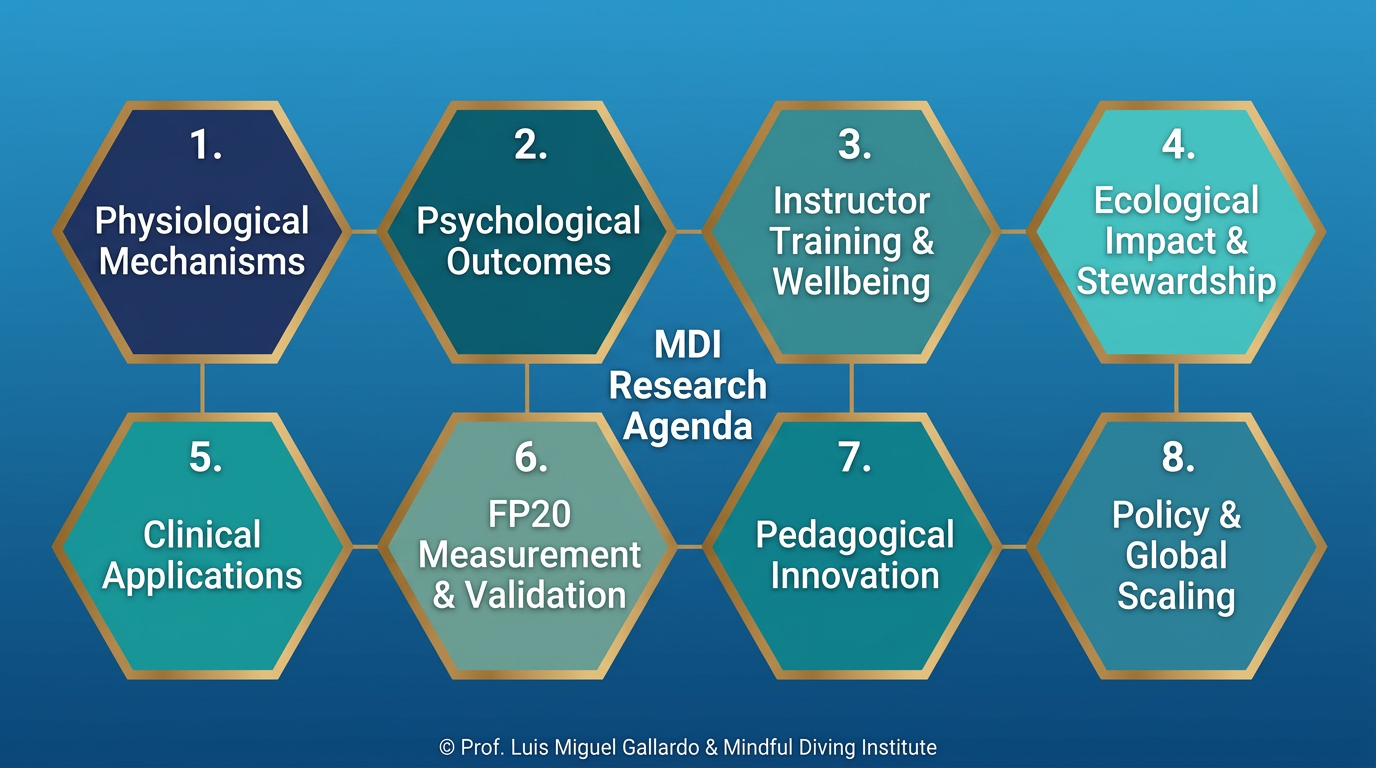
The Mindful Diving Institute's Evidence & Impact pillar, in partnership with Universidad de Zaragoza's Cátedra de Ciencias Contemplativas, requires a systematic research program to validate the theoretical foundations established in preceding sections and translate them into evidence-based practice. This agenda prioritizes feasibility, methodological rigor, and translational impact across eight interconnected domains.
7.1 FP20 Measurement Studies The FP20 scale provides the quantitative foundation for evaluating Mindful Diving interventions, yet its validity in aquatic contexts remains unestablished. Pre-post assessment studies should measure FP20 scores before and after MDI certification programs (Levels 1-5), tracking changes across intervention phases to establish baseline trajectories and dose- response relationships. Validation studies must address whether the FP20, developed for terrestrial contemplative practices, captures the unique phenomenology of underwater states—particularly when communication is constrained and physiological demands are elevated. Comparative studies should examine FP20 performance against established mindfulness measures to determine construct validity. Does the FP20 capture dimensions of underwater contemplative experience that traditional mindfulness scales miss, or does it simply replicate existing constructs? Dose-response investigations should correlate FP20 changes with dive frequency, duration, depth, and cumulative practice hours to identify optimal training parameters. The challenge lies in distinguishing FP state changes from general wellbeing improvements or novelty effects, requiring longitudinal designs that track FP trajectories beyond initial training phases.
7.2 Randomized Controlled Trials Establishing causal efficacy requires controlled experimental designs that isolate Mindful Diving's active components. A recreational diving group compared with a multisport control group showed that divers had a significant reduction in perceived stress score with a sustainable effect . However, this design did not control for underwater exposure itself, leaving open whether mindfulness training or aquatic immersion drives observed effects. Three-arm RCTs should compare Mindful Diving against standard recreational diving (controlling for underwater exposure) and land-based MBSR (controlling for mindfulness training). Primary outcomes should include FP20, validated wellbeing scales, and clinical measures of stress, anxiety, and depression. Secondary outcomes should encompass neurophysiological markers (HRV, cortisol), pro-environmental behavior scales, and human- nature connectedness measures. The standard diving control arm addresses whether contemplative guidance adds value beyond aquatic immersion; the MBSR arm tests whether underwater practice generates outcomes distinct from terrestrial meditation.
Waitlist control designs provide ethical access while establishing temporal precedence. However, participant blinding is impossible, and expectancy effects may inflate treatment estimates. Attention-matched controls—such as underwater photography training without explicit mindfulness instruction—could isolate contemplative components more precisely. Sample size calculations must account for anticipated effect sizes, attrition rates in longitudinal follow-up, and clustering effects if interventions are delivered in group formats.
7.3 Neurophysiological Markers Objective biomarkers complement self-report measures and illuminate mechanisms underlying FP states. During prolonged static dry apnea performed by a world champion freediver, breath holding was characterized by increased EEG power and functional connectivity in the alpha band, along with decreased delta band connectivity . fMRI connectivity was increased within the default mode network (DMN) and visual areas but decreased in pre- and postcentral cortices . These neural changes suggest altered somatosensory integration and processing of bodily self-consciousness . EEG studies should assess DMN suppression, alpha/theta power ratios, and inter-regional coherence during and after Mindful Diving practice, comparing novice and experienced practitioners. Portable EEG systems enable field-based measurement, though signal quality in aquatic environments presents technical challenges. HRV monitoring can track parasympathetic activation and vagal tone as indices of autonomic regulation, with wearable sensors providing continuous assessment across dive sessions. Cortisol sampling (salivary or hair) offers a biomarker of chronic stress reduction, though collection logistics in dive settings require careful protocol design.
fMRI studies, while resource-intensive, could map network connectivity changes associated with sustained Mindful Diving practice, testing whether underwater training produces neural signatures distinct from land-based meditation. The challenge lies in translating findings from elite freedivers—whose neural adaptations may reflect years of specialized training—to recreational practitioners with limited experience.
7.4 Longitudinal Studies Short-term efficacy does not guarantee sustained benefit. For the diving group, effects on perceived stress remained statistically significant at 1-month follow-up . However, longer follow-up periods are needed to assess maintenance of FP states, wellbeing improvements, and conservation behaviors at 3-month, 6-month, and 12-month intervals. Trajectory analysis should identify who benefits most, when benefits emerge, and why some individuals show greater response than others. Dose-response investigations must correlate cumulative dive hours and practice frequency with outcome persistence, distinguishing between initial training effects and long-term maintenance. Attrition poses a significant challenge in longitudinal designs, particularly if participants discontinue diving due to cost, access, or loss of interest. Intention-to-treat analyses preserve randomization benefits but may underestimate true efficacy in adherent subgroups.
Qualitative follow-up interviews can illuminate mechanisms sustaining practice and identify barriers to long-term engagement. Do participants continue diving for wellbeing benefits, social connection, or intrinsic enjoyment of the underwater environment? Understanding these motivations informs retention strategies and program refinement.
7.5 Instructor Wellbeing MDI's Instructor Wellbeing pillar recognizes that instructors who experience their own FP states and ocean connection can authentically guide others. However, teaching contemplative practices in high-risk environments may generate unique stressors. Instructor FP20 scores and their relationship to teaching quality should be assessed, testing whether instructors' own contemplative depth predicts student outcomes. Burnout prevention and flourishing require systematic monitoring of compassion fatigue and vicarious trauma, particularly when instructors work with clinical populations experiencing PTSD or chronic pain. Instructor training outcomes from the Mindful Diving Instructor Academy should be evaluated using pre-post designs that assess contemplative competence, safety management skills, and capacity to integrate ecological awareness into dive instruction.
The challenge lies in balancing instructor autonomy with fidelity to MDI protocols. Overly rigid standardization may undermine authentic teaching presence, while excessive flexibility risks diluting core intervention components. Mixed-methods designs combining quantitative fidelity checklists with qualitative assessments of teaching presence may capture this balance.
7.6 Ocean Conservation Behavior The e-co-flourishing framework posits that FP states and ocean connection generate pro- environmental attitudes and actions, yet the mechanisms linking contemplative experience to conservation behavior remain underspecified. Human-nature connectedness scales should be administered alongside behavioral measures such as reef protection activities, plastic reduction commitments, and conservation advocacy engagement. Mediation analyses can test whether FP states mediate the relationship between underwater immersion and conservation behavior, addressing whether contemplative depth is necessary for ecological motivation or whether direct sensory encounter suffices. Longitudinal designs should track conservation behaviors over time, distinguishing between immediate post-dive intentions and sustained behavioral change.
The challenge lies in measuring conservation behavior objectively rather than relying on self- reported intentions, which may overestimate actual engagement. Behavioral tracking (e.g., participation in reef cleanups, donations to marine conservation organizations) provides more valid indices but raises privacy and logistical concerns.
7.7 Diverse Populations Generalizability requires testing Mindful Diving across clinical and non-clinical populations, age ranges, cultural contexts, and accessibility needs. A systematic review of blue space interventions found evidence that blue care can have direct benefit for mental health and psycho-social wellbeing . Clinical populations—including individuals with PTSD, anxiety, depression, chronic pain, and addiction—represent high-priority targets given the potential for Mindful Diving to serve as an adjunct therapy. Participants described a sense of relaxation, calmness, pain reduction, and a means to control intrusive thoughts during warm water immersion . Non-clinical populations seeking stress management and wellbeing enhancement provide a broader base for preventive interventions.
Age-specific adaptations should address developmental differences in contemplative capacity and safety considerations, with studies spanning adolescents, adults, and older adults. Cross-cultural validation is essential to ensure FP20 and intervention protocols translate across linguistic and cultural contexts, potentially integrating indigenous ocean practices where appropriate. Adaptive diving protocols must address accessibility for individuals with physical disabilities, ensuring equity in program access.
The challenge lies in recruiting and retaining diverse samples, particularly when cost, geographic access, and swimming competence create structural barriers. Partnerships with community organizations, subsidized program access, and adaptive equipment provision may mitigate these constraints.
7.8 Digital and Mixed-Methods Integration Quantitative outcome measures alone cannot capture the lived experience of Mindful Diving. Qualitative phenomenology should explore the subjective dimensions of underwater contemplative states, using in-depth interviews and narrative analysis to complement FP20 scores. Twenty-six freedivers aged between 18 and 43 years were recruited to participate in a qualitative study using in-depth interviews specifically designed to collect data about the forms of experience, learning, motivation, and positive mental involvement through recreational freediving activities . Experience sampling methods enable real-time assessment during and immediately after dives, reducing retrospective bias and capturing state-level fluctuations in FP, mood, and attention. Digital biomarkers from wearable sensors and dive computers can provide continuous physiological monitoring (heart rate, breathing patterns, depth profiles) that correlates with self-reported states, triangulating subjective and objective data streams.
Mixed-methods designs should integrate quantitative pre-post assessments with qualitative interviews, using thematic analysis to identify mechanisms and moderators that quantitative models alone cannot reveal. For example, why do some participants describe underwater immersion as "forced mindfulness" while others report anxiety or discomfort? Qualitative data can generate hypotheses for subsequent quantitative testing, creating an iterative cycle of discovery and validation.
The challenge lies in managing the complexity of multi-method data integration, ensuring that qualitative and quantitative findings are synthesized rather than reported in parallel. Convergent designs, where both data types are collected simultaneously and compared for consistency, offer one approach; explanatory sequential designs, where qualitative follow-up explains unexpected quantitative results, offer another.
7.9 Methodological Challenges and Future Directions Several cross-cutting challenges constrain this research agenda. A 1995 review identified a need for systematic research on intervention strategies for reducing stress in anxious divers . Participant safety in underwater research requires rigorous screening, trained dive supervision, and emergency protocols, particularly when working with clinical populations. Measurement validity in aquatic contexts demands adaptation of terrestrial instruments or development of dive-specific tools. Scalability constraints—cost, geographic access, instructor availability—limit the populations that can be reached, necessitating research on low-cost delivery models and digital augmentation. Mechanism specificity remains unclear: which components of Mindful Diving are necessary versus sufficient for generating FP states and conservation motivation? Component analysis designs that systematically vary breath regulation, sensory immersion, and ecological framing can isolate active ingredients. Individual differences in response—who benefits most, under what conditions—require moderator analyses that test demographic, psychological, and experiential predictors of treatment response.
This research agenda positions the Mindful Diving Institute to generate the evidence base necessary for scaling interventions, informing policy, and establishing underwater contemplative practice as a credible complement to land-based mindfulness training. Rigorous, multi-method investigation will determine whether Mindful Diving fulfills its promise as a foundational practice for individual, collective, and planetary flourishing.
Limitations and Future Directions
The theoretical integration presented in this report represents a foundational synthesis rather than an empirically validated framework. While the convergence of Fundamental Peace, contemplative sciences, ocean environment, and ecological-collective flourishing offers a compelling conceptual model for Mindful Diving, significant limitations constrain current claims and substantial gaps remain for future investigation.
8.1 Nascent Field and Limited Empirical Evidence The evidence base for Mindful Diving specifically is nascent. Most supporting evidence derives from related domains—freediving, recreational scuba diving, open water swimming, and land-based mindfulness—rather than from systematic study of underwater contemplative practice as an integrated intervention. The theoretical synthesis presented here is preliminary; the proposed mechanisms linking breath regulation, sensory immersion, buoyancy demands, and FP states require empirical validation. Causal pathways are hypothesized rather than demonstrated. For example, while breath holding during apnea is characterized by increased EEG power and functional connectivity in the alpha band , these findings come from a single world champion freediver in dry conditions and may not directly translate to the effects of apnea during water immersion with a diving response.
8.2 Measurement Challenges The FP20 scale, central to the MDI's Evidence & Impact pillar, was developed for hypnosis contexts and requires validation in aquatic and diving environments where communication is constrained and physiological demands are elevated. Real-time assessment underwater presents technical challenges; self-report measures administered post-dive are vulnerable to retrospective recall biases and social desirability effects, particularly when participants have invested time and resources in dive training. Physiological monitoring—EEG, HRV, cortisalivary biomarkers—faces logistical constraints in underwater settings, including signal quality degradation, equipment waterproofing, and participant safety during instrumented dives.
8.3 Scalability and Equity Concerns Diving interventions face inherent scalability constraints. Cost barriers include dive equipment, certification courses, travel to suitable dive sites, and ongoing training. Geographic access is limited to coastal or inland water environments with adequate visibility, safety conditions, and marine biodiversity. Dive certification prerequisites require time, financial investment, and medical clearance, excluding individuals with cardiovascular, respiratory, or psychological contraindications. These structural barriers raise equity concerns: who has access to Mindful Diving, and does it risk becoming an elite or privileged practice accessible only to those with disposable income and geographic proximity to dive sites? A non-linear dose-response relationship was detected in a study of sea swimming and snorkeling, where those engaging more than three days per week showed smaller mental well-being gains than those engaging one to three days per week , suggesting that even when access is available, optimal engagement patterns are not straightforward.
8.4 Individual Differences and Adverse Reactions Not all divers may experience FP states or conservation motivation. Individuals characterized by elevated levels of trait anxiety are more likely to have greater state anxiety responses when exposed to a stressor, placing this subgroup of the diving population at increased risk . Efforts to demonstrate that selected interventions such as hypnosis, imagery, meditation, and relaxation can reduce stress responses in anxious divers have not yielded consistent findings, and there is a need for systematic research dealing with the efficacy of selected intervention strategies . While subjects with regular medication intake due to a chronic or psychiatric illness showed a significantly higher POMS reduction score than other subjects in one scuba diving study , this finding also indicates that response to underwater practice varies by baseline psychological and medical status. Adverse reactions—anxiety, panic, claustrophobia, flashbacks in individuals with PTSD—have been documented . Diving is not suitable for everyone; medical contraindications and psychological vulnerabilities must be carefully screened.
8.5 Instructor Training and Fidelity Ensuring quality and consistency across MDI centers globally requires robust instructor training and fidelity monitoring. Instructors must possess both advanced diving skills and contemplative teaching competence—a rare combination. How to ensure consistent delivery of the integrative Mindful Diving model—simultaneously attending to safety, contemplative guidance, ecological awareness, and community building—remains an open question. Instructor wellbeing and sustainability of teaching a demanding practice in high-risk environments also require attention.
8.6 Potential Risks and Over-Promising Diving carries inherent safety risks; scuba diving is a high-risk sport, with an estimated 3 to 9 deaths per 100,000 divers occurring annually in the US alone . Psychological contraindications include dissociation and trauma triggers; adverse reactions including anxiety, panic, and trauma triggers have been documented in diving contexts , and psychological contraindications must be carefully screened. Over-promising benefits without empirical validation risks "wellness washing"—marketing Mindful Diving as a panacea without rigorous evidence. Realistic expectations must be established, and commercialization must be tempered by scientific integrity.
8.7 Gaps in Current Literature Several critical gaps constrain the current evidence base. Mechanistic studies are needed to identify active ingredients: which components of Mindful Diving—breath regulation, sensory immersion, buoyancy, ecological encounter—are necessary versus sufficient for generating FP states and conservation motivation? Both beach and scuba diving activities reduced POMS scores, with no significant differences found between beach and scuba diving activities, nor between two different scuba diving experiences , raising questions about mechanism specificity. Long-term outcomes remain unclear; the appropriate duration, intensity, and quantity of participation needed for sustained improvements require further investigation . Diverse populations are underrepresented in the current literature on sea swimming and blue space interventions , limiting generalizability. Comparative effectiveness studies are absent: how does Mindful Diving compare to land-based MBSR, other blue space interventions, or standard recreational diving? Further research is necessary to fully comprehend the effects of blue spaces and related infrastructure on health, as the pathways underlying such associations remain unclear and need to be addressed, as do potential risks . The current theoretical integration establishes a conceptual foundation, but translating this vision into evidence-based practice requires systematic investigation of these limitations and gaps.
Conclusion
This paper establishes Mindful Diving as a foundational practice at the intersection of contemplative science, marine psychology, and planetary health. By positioning the ocean as Earth's greatest classroom of presence, we have introduced three major theoretical
contributions that together define a new field of inquiry. Fundamental Peace provides the psychological anchor—an integrative state characterized by effortless attentional focus, emotional coherence, and self-referential flexibility that may be uniquely accessible through underwater contemplative practice. E-co-flourishing establishes the ethical framework, recognizing that individual wellbeing and ocean health are not separate pursuits but reciprocal dimensions of collective thriving. The ocean itself emerges not as backdrop but as active participant—a contemplative environment whose physiological demands, sensory immersion, and ecological encounter create conditions for presence unavailable in terrestrial meditation settings. The convergence of these frameworks generates emergent properties that distinguish Mindful Diving from both land-based mindfulness and conventional recreational diving. Breath regulation becomes simultaneously a survival imperative and a contemplative anchor. Buoyancy demands continuous embodied attention while dissolving the boundary between self and environment. Sensory immersion in marine ecosystems cultivates both psychological restoration and conservation motivation. These mechanisms operate not sequentially but simultaneously, creating a practice where safety, presence, wellbeing, and ecological awareness arise as integrated dimensions of a single experience.
The Mindful Diving Institute's seven pillars—Safety & Excellence, Mindful Experience, Instructor Wellbeing, Ocean Connection, Human Connection, Evidence & Impact, and Happiness Leadership—translate this theoretical vision into operational practice. This framework complements rather than replaces traditional dive training systems, integrating technical competency with contemplative guidance, psychological wellbeing, and ecological consciousness. The FP20 measurement tool and the proposed research agenda provide the empirical foundation for validating these theoretical claims and refining interventions across diverse populations and contexts.
Yet this paper represents a beginning, not a conclusion. The evidence base for Mindful Diving specifically remains nascent, with most supporting findings drawn from related domains rather than systematic study of underwater contemplative practice as an integrated intervention. The proposed mechanisms linking breath regulation, sensory immersion, and Fundamental Peace states require empirical validation through randomized controlled trials, neurophysiological studies, and longitudinal follow-up. The FP20 scale requires validation in aquatic contexts where communication is constrained and physiological demands are elevated. Individual differences in response—who benefits most, under what conditions, and why—remain largely unexplored. Scalability constraints including cost, geographic access, and instructor training present practical challenges that must be addressed for Mindful Diving to fulfill its promise as a global movement.
The call to action is clear and urgent. Researchers must test the hypotheses presented here through rigorous experimental designs, validate measurement tools in underwater settings, and conduct longitudinal studies that track outcomes beyond initial training phases. Practitioners must implement MDI standards with fidelity while collecting systematic data that informs program refinement and shares insights across the growing network of Mindful Diving
centers. Dive professionals must integrate mindfulness into training protocols, prioritize instructor wellbeing, and recognize their role as stewards of both human flourishing and ocean health. Policymakers must support ocean conservation, promote equitable access to blue spaces, and recognize the societal value of nature-based interventions that address public health challenges while protecting planetary ecosystems.
The vision for Mindful Diving extends beyond individual wellbeing to collective and planetary flourishing. As climate change, biodiversity loss, and mental health crises converge, the need for practices that unite human and ecological health becomes increasingly urgent. Mindful Diving offers a model for this integration—a practice where the ocean supports human flourishing and humans, in turn, become advocates for ocean stewardship. The reciprocal relationship is not metaphorical but material: healthy oceans provide the blue spaces that restore mental health, and mentally healthy individuals possess the psychological resources to engage in conservation action.
Scaling this vision worldwide requires building an evidence base robust enough to inform policy, training instructors who embody both technical excellence and contemplative depth, and creating delivery models that address equity barriers while maintaining program fidelity. It requires partnerships across disciplines—psychology, neuroscience, marine science, contemplative studies, public health—and across sectors, uniting researchers, practitioners, conservation organizations, and health systems in shared purpose. It requires humility about what we do not yet know and commitment to the rigorous investigation that will transform theoretical promise into validated practice.
The ocean has always been humanity's teacher. It has taught us navigation, sustained our communities, and inspired wonder across cultures and millennia. Now, as we face unprecedented challenges to both human and planetary health, the ocean offers a new lesson: that presence, wellbeing, and ecological care are not separate pursuits but dimensions of a single practice. Mindful Diving invites us to enter this classroom with intention, to breathe with awareness, to move with presence, and to emerge not only restored but transformed—committed to the flourishing of all life, human and non-human, within the blue spaces that sustain us.
This is the foundational vision of the Mindful Diving Institute. The work of realizing it begins now.
Conflict of Interest
The author declares no conflicts of interest. The Mindful Diving Institute is an initiative of the World Happiness Foundation. This paper establishes the theoretical and empirical foundations of the Institute's research agenda and does not report outcomes of any commercial program.
Acknowledgments
The author gratefully acknowledges the Mindful Diving Institute, the World Happiness Foundation, and the Cátedra de Ciencias Contemplativas at the Universidad de Zaragoza for
their support in developing the theoretical framework presented here. Acknowledgment is also given to all diving instructors, practitioners, and researchers whose work has contributed to the emerging field of underwater contemplative practice.
The eight research domains
- 01 Physiological
- 02 Psychological
- 03 Instructor
- 04 Ecological
- 05 Clinical
- 06 FP20 validation
- 07 Pedagogical
- 08 Policy & global scaling
References
- [1] Gibert, L., Coulange, M., Reynier, J.C., et al. (2022). Comparing meditative scuba diving versus multisport activities to improve post-traumatic stress disorder symptoms: a pilot, randomized controlled clinical trial. European Journal of Psychotraumatology, 13(1), 2031590. https://doi.org/10.1080/20008198.2022.2031590
- [2] Miller, N., & Gabitova, E. (2024). "It's the experience, it's not exercise": Blue Therapy for health and mental well-being among adults in the UK. PsyArXiv. https://doi.org/10.31234/osf.io/kde38
- [3] Georgiou, M., Morison, G., Smith, N., et al. (2021). Mechanisms of Impact of Blue Spaces on Human Health: A Systematic Literature Review and Meta-Analysis. International Journal of Environmental Research and Public Health, 18(5), 2486. https://doi.org/10.3390/IJERPH18052486
- [4] Annen, J., Panda, R., Martial, C., et al. (2021). Mapping the functional brain state of a world champion freediver in static dry apnea. Brain Structure & Function, 226(4), 1155–1165. https://doi.org/10.1007/S00429-021-02361-1
- [5] Morgan, W.P. (1995). Anxiety and Panic in Recreational Scuba Divers. Sports Medicine, 20(6), 398–421. https://doi.org/10.2165/00007256-199520060-00005
- [6] Pouso, S., Britton, E., Vert, C., et al. (2023). Contact with marine blue spaces for human health and well-being. In Ocean Health (pp. 421–438). https://doi.org/10.1016/b978-0-323-
- [7] Wright, K., Eden, S., & Hancox, A. (2024). A qualitative exploration of the contribution of blue space to well-being in the lives of people with severe mental illness. People and Nature, 6(2), 714–726. https://doi.org/10.1002/pan3.10620
- [8] Alejandre, J.C., Chastin, S.F.M., et al. (2021). Understanding the contexts and mechanisms of bluespace prescription programmes implemented in health and social care settings: a realist review. medRxiv. https://doi.org/10.1101/2021.10.15.21264908
- [9] Nejade, R., Grace, D., & Bowman, L. (2022). What is the impact of nature on human health? A scoping review. Journal of Global Health, 12, 04099. https://doi.org/10.7189/jogh.12.04099
- [10] Denton, H., & Aranda, K. (2020). The wellbeing benefits of sea swimming: Is it time to revisit the sea cure? Qualitative Research in Sport, Exercise and Health, 12(5), 647–663. https://doi.org/10.1080/2159676X.2019.1649714
- [11] Reyes, A.T., Song, H., Serafica, R., et al. (2025). The Positive Effects of Water Immersion for Symptoms of PTSD in Veterans: A Mixed Methods Study. International Journal of Clinical Practice. https://doi.org/10.1155/ijcp/1369052
- [12] Benfield, R.D., Dingley, C., & Reyes, A.T. (2025). A Warm Water Immersion Intervention for Symptoms of PTSD in Military Veterans: A Qualitative Descriptive Study. Canadian Journal of Nursing Research. https://doi.org/10.1177/08445621241309148
- [13] Dahl, D., & Bäckström, Å. (2023). Meeting, Moving, Mastering: A Text Analysis of the Aesthetic Attractions of "Wild Swimming." International Journal of Aquatic Research and Education, 14(1). https://doi.org/10.25035/ijare.14.01.12
- [14] Cansler, R., Heidrich, J., Whiting, A., et al. (2023). Influence of CrossFit and Deep End Fitness training on mental health and coping in athletes. Frontiers in Sports and Active Living, 5, 1061492. https://doi.org/10.3389/fspor.2023.1061492
- [15] Krpalek, D., Achondo, N., Daher, N., et al. (2020). Reducing Veterans' Symptoms of Depression, Anxiety, Stress, and PTSD with SCUBA Diving and Occupational Therapy. Journal of Veterans Studies, 6(1). https://doi.org/10.21061/JVS.V6I1.158
- [16] Satariano, B. (2019). Blue therapeutic spaces on islands: coastal landscapes and their impact on the health and wellbeing of people in Malta. Island Studies Journal. https://doi.org/10.24043/ISJ.100
- [17] Makuyana, T., & Lucrezi, S. (2025). Adaptive diving in South Africa: A perspective of disabled people and their support structure. Tourism in Marine Environments. https://doi.org/10.3727/216901925x17361523459298
- [18] Zampieri, F. (2023). Blue mind life: cómo el color azul influye directamente en nuestro cerebro y en nuestro inconsciente. Brazilian Journal of Development, 9(9). https://doi.org/10.34117/bjdv9n9-055
- [19] Smith, S.J. (2006). Gesture, landscape and embrace: a phenomenological analysis of elemental motions. The Indo-Pacific Journal of Phenomenology, 6(sup1). https://doi.org/10.1080/20797222.2006.11433914
- [20] Griffiths, K., El Housseini, A., Richer, G., et al. (2025). A combined diving and mindfulness program as a catalyst for behavioural change in adults with obesity: a qualitative study. International Journal of Qualitative Studies on Health and Well-being, 20(1), 2571942. https://doi.org/10.1080/17482631.2025.2571942
- [21] Nichols, W.J. (2014). Blue Mind: The Surprising Science That Shows How Being Near, In, On, or Under Water Can Make You Happier, Healthier, More Connected, and Better at What You Do. Little, Brown and Company. https://doi.org/10.3813/9783777629346
- [22] Stocco, A., & Pranovi, F. (2025). Enhancing attention restoration in adults through immersive experiences in aquatic landscapes. https://doi.org/10.14293/p2199-
- [23] Britton, E., Kindermann, G., Domegan, C., et al. (2020). Blue care: a systematic review of blue space interventions for health and wellbeing. Health Promotion International, 35(1), 50– 69. https://doi.org/10.1093/HEAPRO/DAY103
- [24] Lecaër, F., & Roques, O. (2024). La sensation de relaxation au cours des activités subaquatiques: un moyen pour atténuer le mécanisme du stress au travail? Management & Avenir Santé. https://doi.org/10.3917/mavs.010.0102
- [25] Boocock, E. (2024). Navigating grief: an autoethnographic tale of open water swimming and loss. Leisure Studies, 43(5), 687–700. https://doi.org/10.1080/02614367.2024.2302345
- [26] Woods, C.T., & Muldrew, D. (2026). How open water swimming contributes to improved mental health: a scoping review. Mental Health Practice. https://doi.org/10.7748/mhp.2026.e1763
- [27] White, M.P., Elliott, L.R., et al. (2021). Associations between green/blue spaces and mental health across 18 countries. Scientific Reports, 11, 8903. https://doi.org/10.1038/S41598-021-
- [28] McKenzie, R.J., Chambers, T.P., Nicholson-Perry, K., et al. (2021). "Feels Good to Get Wet": The Unique Affordances of Surf Therapy Among Australian Youth. Frontiers in Psychology, 12, 721238. https://doi.org/10.3389/FPSYG.2021.721238
- [29] Oliver, D.M., McDougall, C.W., Robertson, T., et al. (2023). Self-reported benefits and risks of open water swimming to health, wellbeing and the environment. PLOS ONE, 18(8), e0290834. https://doi.org/10.1371/journal.pone.0290834
- [30] Foley, R.J. (2024). Theorising therapeutic accretion. Irish Geography. https://doi.org/10.55650/igj.2023.1478
- [31] Alejandre, J.C., Chastin, S.F.M., Irvine, K.N., et al. (2023). Contextual Factors and Programme Theories Associated with Implementing Blue Prescription Programmes: A Systematic Realist Review. Health & Social Care in The Community. https://doi.org/10.1155/2023/6551521
- [32] Conrad, K., Cleland, R., & Reyes, N. (2021). The Blue Mind. In: The Blue Mind (pp. 67–84). Springer. https://doi.org/10.1007/978-3-030-55012-7_5
- [33] Overbury, K., Conroy, B.W., & Marks, E. (2023). Swimming in nature: A scoping review of the mental health and wellbeing benefits of open water swimming. Journal of Environmental Psychology, 90, 102073. https://doi.org/10.1016/j.jenvp.2023.102073
- [34] White, M.P., Pahl, S., Wheeler, B.W., et al. (2016). The "Blue Gym": What can blue space do for you and what can you do for blue space? Journal of the Marine Biological Association of the United Kingdom, 96(1), 5–12. https://doi.org/10.1017/S0025315415002209
- [35] Washiya, Y. (2023). Blurring the lines — a novice approach to riding on water. The Ethnographic Edge, 6(1). https://doi.org/10.24135/ee.v6i1.262
- [36] Murray, E., & Fox, J. (2021). The meaning of open-water swimming for adults in Ireland: a qualitative study. Irish Journal of Occupational Therapy. https://doi.org/10.1108/IJOT-10-
- [37] Thomson-Alberts, F., & Bridge, N. (2025). Blue Prescriptions for Human Wellbeing. Ocean Sciences Meeting. https://doi.org/10.5194/oos2025-564
- [38] Solikhin, M.N., Fauzi, F., Sulistiyono, et al. (2024). Exploring Beginner Free diver's Experience of Benefit Recreational Freediving Activity. Retos, 57. https://doi.org/10.47197/retos.v57.101365
- [39] Walker, P.A., & Kampman, H. (2021). "It didn't bring back the old me but helped me on the path to the new me": exploring posttraumatic growth in British veterans with PTSD. Disability and Rehabilitation. https://doi.org/10.1080/09638288.2021.1995056
- [40] Gouet-Riot, V.S. (2025). Les effets de la sophrologie renforcés par les bienfaits de l'eau. HEGEL. https://doi.org/10.3917/heg.153.0051
- [41] Carreño, A., Gascon, M., Vert, C., et al. (2020). The Beneficial Effects of Short-Term Exposure to Scuba Diving on Human Mental Health. International Journal of Environmental Research and Public Health, 17(19), 7238. https://doi.org/10.3390/IJERPH17197238
- [42] Vitale, V., Martin, L., Bell, S., et al. (2024). Mechanisms underlying childhood exposure to blue spaces and adult subjective well-being: An 18-country analysis. Zenodo. https://doi.org/10.5281/zenodo.7186748
- [43] Solikhin, M.N., Sumaryanti, S., Sulistiyono, et al. (2024). Benefit of breath-holding training on the concept of recreational freediving in healthy adults: a systematic literature review. https://doi.org/10.56984/8zg2ef8z2j
- [44] Lucrezi, S., & du Plessis, M. (2022). Assessing experiences in diving recreation and their relation to proenvironmental behaviour and attitude: a study of divers in South African kelp forests. Tourism in Marine Environments, 17(4). https://doi.org/10.3727/154427322x16475700356817
- [45] McDougall, C.W., Foley, R., Hanley, N., et al. (2022). Freshwater Wild Swimming, Health and Well-Being: Understanding the Importance of Place and Risk. Sustainability, 14(10), 6364. https://doi.org/10.3390/su14106364
- [46] Morgan, A., Sinclair, H., Tan, A.W.E., et al. (2019). Can scuba diving offer therapeutic benefit to military veterans experiencing physical and psychological injuries as a result of combat? Disability and Rehabilitation, 41(14), 1710–1717. https://doi.org/10.1080/09638288.2018.1480667
- [47] Beneton, F., Michoud, G., Coulange, M., et al. (2017). Recreational Diving Practice for Stress Management: An Exploratory Trial. Frontiers in Psychology, 8, 2193. https://doi.org/10.3389/FPSYG.2017.02193
- [48] Youngson, L., Foster, C., & Lambert, J. (2023). The physical and mental health benefits of lifestyle sports for disabled people: a scoping review. International Journal of Disabilities Sports & Health Sciences. https://doi.org/10.33438/ijdshs.1197978
- [49] Maharja, C., Praptiwi, R.A., Roberts, B.R., et al. (2022). Sea swimming and snorkeling in tropical coastal blue spaces and mental well-being: Findings from Indonesian island communities during the COVID-19 pandemic. Journal of Outdoor Recreation and Tourism, 40, 100584. https://doi.org/10.1016/j.jort.2022.100584
- [50] Gallardo, L.M., & Chetri, S. (2026). Hypnosis as a Mechanism of Emotion Regulation and Self-Integration: An Integrative Review of Neural, Cognitive, and Experiential Pathways to Fundamental Peace. Behavioral Sciences, 16(3), 395. https://doi.org/10.3390/behavsci16030395
- [51] Maloney, S., Moore, J., Wilhelm, K., et al. (2026). Ecological-collective-flourishing (e-co- flourishing): a framework to guide innovation and research. The Lancet Planetary Health. https://doi.org/10.1016/j.lanplh.2026.101490