Specialty — optional, at any level
The Diving Mind — The Psychology of Fear
Understand the feeling. Clarify the situation. Choose the next step.
Fear deserves a better answer than “just relax”. Learn to distinguish what you feel, what you know and what needs attention. Six short lessons turn the psychology in The Diving Mind into useful preparation, clearer buddy conversations and practical learning decisions.
- ≈90 minutes online
- €55 · one payment
- No prerequisite
- On land · no water sessions
Who it is for
For divers of any agency, learners preparing for diving, buddies, instructors and instructor trainers. No MDI course is required. All activities in this specialty take place on land.
Scope
One standalone specialty, outside the five MD levels. About 90 minutes: six 12-minute lessons, a 10-minute assessment and an 8-minute preparation plan. Pause and return whenever you need. No diving exercise, breathing challenge or disclosure of personal history is required.
What you leave with
You leave with a more precise way to explain a concern, a conversation you can rehearse and a plan you can review. Success is a better question or decision; feeling fearless is not a requirement.
You will be able to
- Distinguish fear, doubt, anxiety and panic without diagnosing yourself or another person.
- Separate a demand, an interpretation and a response; keep physical causes in view.
- Turn a specific uncertainty into a useful question or request.
- Distinguish feeling calm from evidence of readiness for a particular activity.
- Rehearse a coaching conversation that respects instruction, choice and urgent action.
- Build a preparation and review plan without making a promise about fear or safety.
Three modules, six lessons
1 · 24 min
Understand the experience
Describe the concern before choosing an explanation.
- Lesson 1 · Fear is information, not an identity
- Lesson 2 · Stress: separate demand, meaning and response
2 · 24 min
Prepare a useful response
Clarify uncertainty and check what readiness requires.
- Lesson 3 · When you fear becoming afraid
- Lesson 4 · Calm is not the same as ready
3 · 42 min
Speak, decide and learn
Practise a conversation, review a case and complete your plan.
- Lesson 5 · A coaching conversation that changes the next step
- Lesson 6 · Turn the experience into a practical plan
Read lesson 1 free: Fear is information, not an identity
The free sample. The other lessons, practice checks, assessment and tools open after enrolment.
Begin with a person in a situation, not a label.
Marta pauses beside her equipment. “I do not want to hold everyone up.” Her instructor thinks she lacks confidence. Marta has actually missed part of the briefing. This fictional case has two stories: the behaviour we can observe and the explanation we have added.
Why it works this way
Fear concerns perceived threat. The threat may involve the environment, a bodily sensation, an uncertain task or the prospect of disappointing someone. Memory and expectations influence what feels significant. That influence does not tell us whether the danger is real, absent or fully understood. We still need information.
Your behaviour also depends on your body, the task, equipment, conditions and people around you. Psychological understanding improves a question when it keeps those contributors visible.
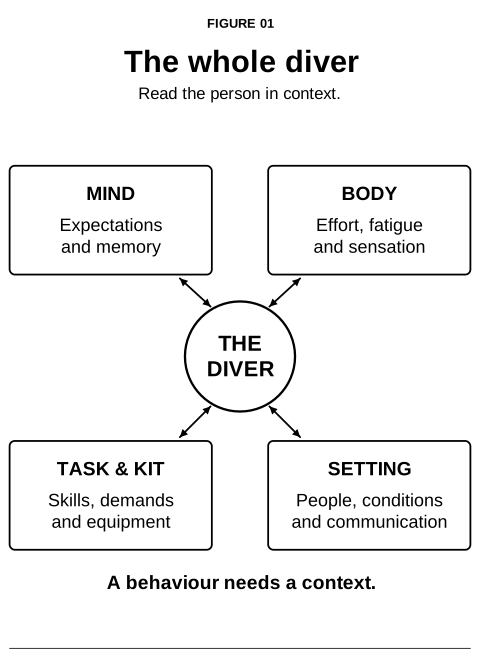
Figure 1. Understanding the whole diver requires attention to the person and the circumstances. These connected areas are prompts for inquiry; their placement does not rank causes or assign blame.
From The Diving Mind, by Luis Miguel Gallardo · World Happiness Press
Open the original figure (SVG) — enlarge or downloadFour words, different questions
- Fear: What feels threatening?
- Doubt: What is uncertain or not understood?
- Anxiety: What am I anticipating?
- Panic: Has fear or discomfort surged, or has effective action become difficult?
These experiences can overlap. They are not four compulsory stages. Panic can describe a personal experience, observed behaviour or a clinical event; a buddy cannot settle a diagnosis from appearance. Distress may be loud or quiet. A concerning change requires the appropriate trained response, not a long psychological conversation underwater.
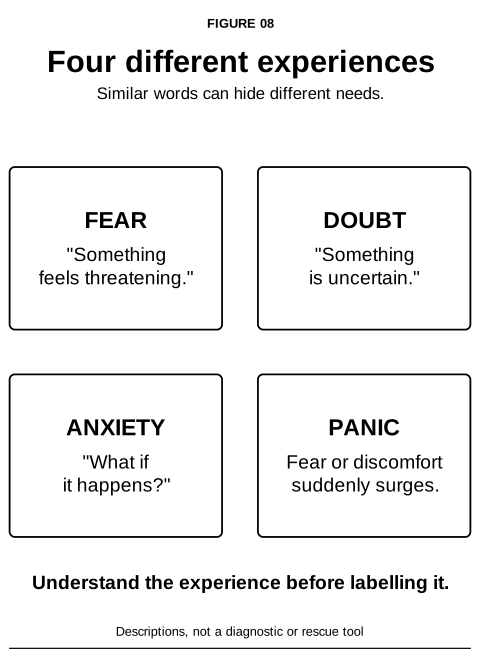
Figure 8. Fear, doubt, anxiety, and panic point to different questions and may overlap. Panic can include an urge to escape, but visible agitation is not required. These descriptions neither diagnose a diver nor establish a fixed progression.
From The Diving Mind, by Luis Miguel Gallardo · World Happiness Press
Open the original figure (SVG) — enlarge or downloadPractise on land · three minutes
Use Marta's case or an ordinary, non-urgent learning situation. Write two columns on paper: observed or reported and my interpretation. “She asked to repeat the briefing” belongs in the first. “She is incapable” belongs in the second. Add one question that could change your interpretation: “Which part was unclear?”
You may use the fictional case throughout this course. No personal disclosure is needed. If a reflection is uncomfortable, stop it or choose a different example.
The coaching question
“What is different for you today?” invites useful information. Listen to the answer before choosing encouragement, explanation or another response. When information is missing, give clear instruction.
Take with you: a feeling is real; our first explanation may be incomplete.
Based on The Diving Mind, chapters 1 and 5–8. The examples are teaching constructions, not clinical assessments.
On completion
Completed an online educational specialty. This records learning, not medical fitness, in-water competence, rescue qualification or authority to teach.
An educational specialty, not therapy, medical advice or an agency certification. It adds no in-water drill. On scuba, breathe continuously as your instructor taught you, and follow your agency standards and dive plan.
Where it can lead — optional, purchased separately
- Mindful Diving MD-1 — presence, buddy practice and the Before–Below–Between–Beyond arc
- Mindful Breath Diver™ — the breathing person and bounded practices on land
- Read the book: The Diving Mind (EPUB, sold separately)
Also on Amazon. Two editions only: English and Spanish.
Questions
- Do I need MD-1 or a Mindful Breath course first?
- No. DM-F is a standalone educational specialty. It can be taken before or alongside the existing programmes. Their own prerequisites still apply.
- Will this cure anxiety or prevent panic?
- No such outcome is promised. The course teaches psychological understanding, preparation and communication. It is not therapy, medical assessment or a substitute for rescue training.
- What does €55 include?
- The complete online specialty: six lessons, eight book figures, six practice checks, the final assessment, three printable tools and a completion certificate when requirements are met. One payment, no subscription. MD, Mindful Breath and the full book are separate purchases. Any applicable tax is shown at checkout.
- Do I have to share personal experiences?
- No. Use the fictional cases. Keep your preparation plan privately; only completion acknowledgement is required. Emotional scores and personal disclosures are not assessed.
- Which languages are included?
- English, Castilian Spanish, German, French, Italian, Dutch, Japanese, Simplified Chinese, Traditional Chinese, Korean and Indonesian. Course text, questions, feedback, diagrams and practical tools are provided in each language. The full book is separately available in English and Spanish.