免费参考资料 · Mindful Diving Institute
Scuba diving hand signals
以下是潜水者实际使用的手势。它们供参考,并非标准:水下使用哪些手势,由您所属机构的培训与潜前简报决定。每次潜水前,都要与潜伴确认——包括那些您认为不言自明的手势。
本页面是对 SSI、PADI、CMAS、RAID 及其他机构的安全标准和培训的补充,绝不能替代这些标准和培训。信号须在潜水简报中约定。绝不得在关键任务阶段使用正念练习,水肺潜水时绝不得屏息。
The essential five
Agreed before every dive, by every diver, in every language.
OK
如何
Thumb and index finger joined in a circle, the other three fingers extended. With gloves or at distance, arm over the head in a circle.方式
Both a question and an answer. Asked, it must be answered — silence is not an OK.Not OK / problem
如何
Flat hand, palm down, rocked side to side, then point at what is wrong.方式
Something is off. Say it early, at amber, not late at red.Up / end the dive
如何
Closed fist, thumb up.方式
An instruction, not an opinion. Any diver may end any dive, at any time, without giving a reason.Down / descend
如何
Closed fist, thumb down.方式
Begin or continue the descent, at the agreed rate.Stop / hold
如何
Flat open palm facing the buddy.方式
Stop adding tasks and stabilise here. The most under-used signal in diving.
Gas and pressure
Numbers vary by agency and by region. Agree yours on the surface.
How much gas?
如何
Flat hand tapped twice against the open palm of the other hand, or two fingers to the palm.方式
Answer with numbers, honestly and immediately.Half / turn pressure
如何
Flat hand held horizontally at chest height, or the agreed number shown on fingers.方式
The turn point of the dive plan has arrived.Low on gas
如何
Closed fist to the centre of the chest.方式
Reserve reached. Begin the ascent plan now, together.Out of gas
如何
Flat hand drawn across the throat.方式
An emergency. Follow the out-of-gas procedure you trained with your agency and rehearsed with this buddy.Share gas
如何
Fingers of a flat hand brought to the mouth, then reaching toward the buddy's alternate.方式
Give me your alternate air source. Practised on land, then in shallow water, before it is needed.
Direction, depth and pace
Most task-loading happens here. Keep signals slow and single.
Look / watch me
如何
Two fingers pointed toward your own eyes, then toward the object.方式
Direct your attention here.Go that way
如何
Flat hand held vertically, fingers pointing in the direction of travel.方式
The agreed heading.Slow down
如何
Flat hand, palm down, pressed gently downward.方式
Reduce pace and workload. Almost always the right answer.Level off / stay at this depth
如何
Flat hand, palm down, held steady and horizontal.方式
Hold this depth.Safety stop
如何
Three fingers raised over a flat horizontal hand: three minutes, five metres.方式
Hold the stop as planned. A good moment for slow, continuous breathing — nothing else.Stay together
如何
Two index fingers held side by side.方式
Close the distance and dive as a pair.
Problems and the body
Naming a small problem early is the whole skill.
Ear problem
如何
Point to the ear.方式
Equalisation is not working. Stop the descent, ascend slightly, try again gently. Never force.Cold
如何
Arms crossed over the chest, hands rubbing the upper arms.方式
Thermal reserve is going. Cold is a common quiet cause of anxiety and short dives.Cramp
如何
Two fists brought together and pulled apart.方式
Stop, stretch, let the buddy help.Slow your breathing
如何
Flat hand moved slowly up and down in front of the chest.方式
Return to slow, continuous breathing. Never breath-holding, skip-breathing or hypoventilation.Dizzy / disoriented
如何
Index finger circled beside the head.方式
Hold on to something stable, hold depth, signal the buddy and end the dive if it persists.
水之影像馆
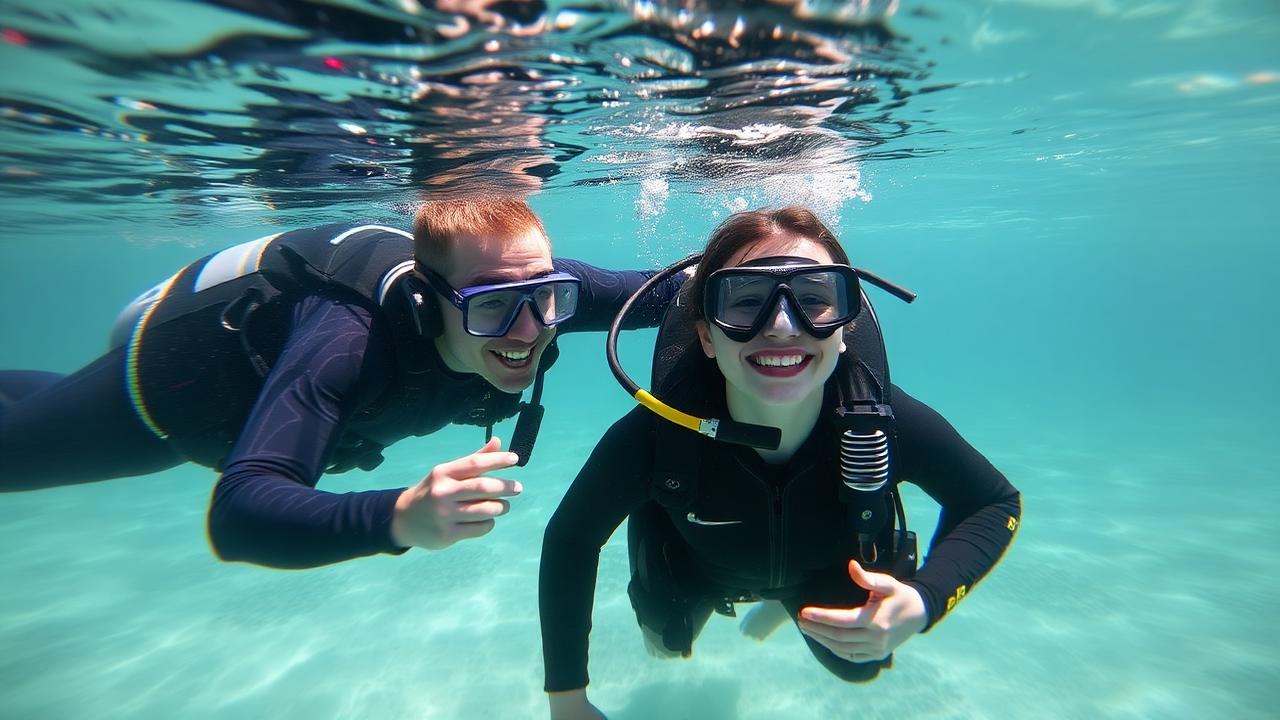
我们在水面共同约定的三项补充
标准手势能有效应对紧急情况,却几乎无法表达紧急情况发生前的状态。这三个手势须在入水前通过潜伴协议达成一致,作为你所属机构手势的补充——绝不替代它们。
Amber
Flat hand tilted side to side, then the OK question. Agreed in the Buddy Agreement before entry.
I am not in trouble, and I am not fine. Slow down, stay close, check me again in a minute.
Settle
Open palm lowered slowly, held still for one full breath cycle.
Nothing is wrong. Take one breath here before the next task. The in-water form of STILL.
Notice this
Two fingers to the eyes, then held open toward the water rather than at an object.
Not a fish or a hazard — the whole scene. An invitation to look wide for a moment.
学习卡片
一次学习一种信号。读名称,想象手势,再翻卡核对手势和含义。
快速检查
八种信号,各有一种手势。每个答案都附有解释——理解含义比分数更重要。
…
常见问题
Are scuba hand signals the same in every agency and country?
The essential signals — OK, up, down, stop, out of gas — are effectively universal across SSI, PADI, CMAS, RAID and others. Beyond those, details differ by agency, region and dive site. That is why the briefing, not the internet, is the final authority: agree your signals with your buddy and guide before every dive.
What is the most important hand signal in diving?
The thumb up. It ends the dive, it is an instruction rather than a request, and any diver may give it at any time without providing a reason. A close second is the flat open palm — stop — because most incidents grow out of tasks added on top of a situation that was already full.
Why is thumb up 'ascend' rather than OK?
Because on land the thumb up means approval, and underwater it means end the dive. Confusing the two costs dives and occasionally more. Underwater, OK is always the finger-and-thumb circle, never the thumb alone.
How do I signal that I am anxious but not in danger?
Most standard signal sets have no word for this, which is why divers stay silent until the situation is red. Mindful Diving™ adds an agreed amber signal — not in trouble, not fine — so the pair can slow down and stay close early. It is agreed on the surface in the Buddy Agreement and never replaces an agency signal.
Can I practise hand signals before diving?
Yes, and it is the cheapest safety practice there is. Run through the whole set on land with your buddy, then again with masks on in shallow water. Signals you have rehearsed together arrive faster than signals you have only read.
从信号中,感知当下。
MD-1 Mindful Diver™ 训练潜前约定、早期信号和平稳应对,让你在需要时能够运用。所有训练都在你已持有的潜水机构认证范围内进行。
寂静也有自己的语言。